


Waist to Height Ratio (WHtR) Calculation
Pelank Life ©
Research shows that the waist-to-height ratio (WHtR) is one of the most accurate indicators for assessing abdominal obesity and predicting cardiometabolic disease risk. 🔬❤️
In many scientific sources, the “0.5 rule” is used as a simple guideline:
Your waist circumference should be less than half of your height. 📏➡️👤
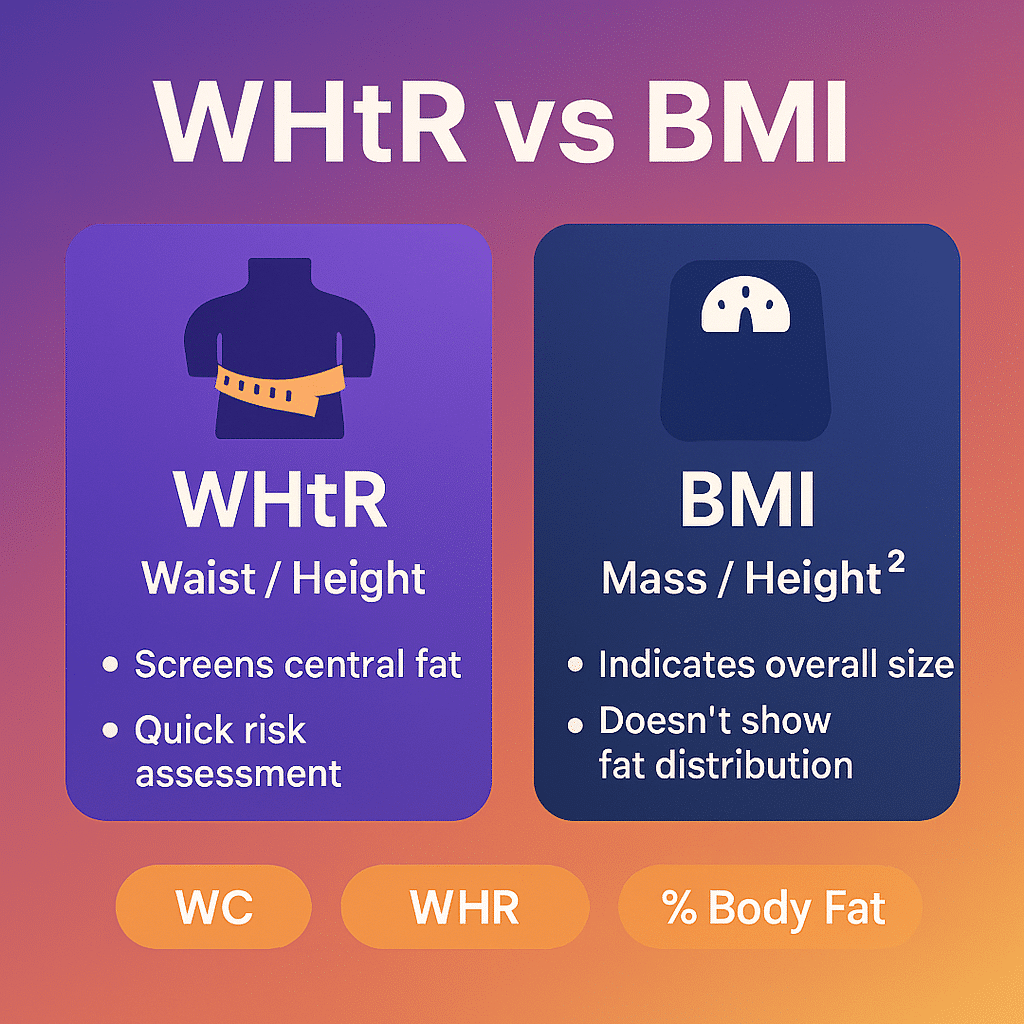
Unlike BMI, which only considers weight and height, WHtR focuses directly on the most critical area for health: abdominal fat and visceral fat. 🧠🔥
Just enter your height and waist measurement on this page, and within seconds you’ll be able to:
- 📊 See your abdominal fat status
- 💡 Understand your healthy WHtR range
- 🔍 Find out whether you’re in a low-risk zone or need improvement
You’ll also learn in the rest of the article:
- What this number actually means
- How it’s interpreted based on age and sex
- And the most effective ways to bring your WHtR to an ideal level 💪✨
Waist-to-Height Ratio (WHtR)
A simple abdominal obesity indicator based on waist and height.
Enter your details to see the result
After calculation, your WHtR, risk range, colored meter, reference chart and practical interpretation will appear here.
—
Your waist divided by your height will appear here.
Simple rule: waist should usually be less than half of height.
What does this mean?
—
Scientific details and reference ranges
—
| WHtR Range | Category | Simple meaning |
|---|---|---|
| < 0.40 | Under / low risk | Low waist-to-height ratio; interpret with BMI and nutrition status. |
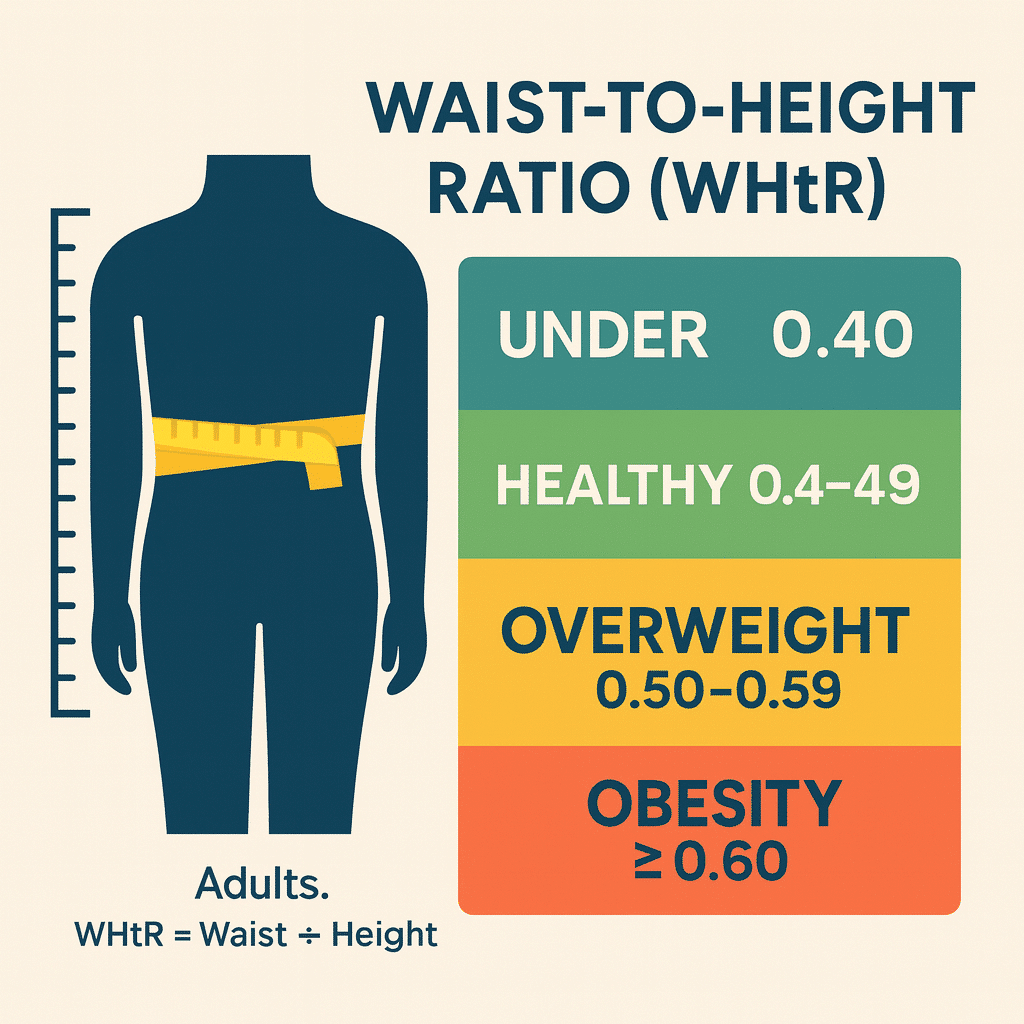
| 0.40 – 0.49 | Healthy range | Waist is less than half of height. |
| 0.50 – 0.59 | Increased risk | Waist is above half of height. |
| ≥ 0.60 | High risk | Abdominal risk is high; medical context matters. |
This tool is for general awareness and does not replace professional medical advice.
Pelank Life | Body Health Assessment
The Best Body Health Calculators Using Scientific Methods
Developed by Pelank Life ©
What Is the Waist-to-Height Ratio?
What Is WHtR and What Is It Used For?
📏 The waist-to-height ratio (WHtR) is a simple yet highly accurate indicator for measuring abdominal fat and evaluating metabolic health.
It’s calculated by dividing your waist circumference by your height, showing how much fat has accumulated in the abdominal area — the most dangerous type of body fat.
🔥 Unlike BMI, which only looks at weight and height, WHtR focuses directly on central fat and visceral fat — the type strongly linked to higher risks of heart disease, type 2 diabetes, high blood pressure, and metabolic syndrome.
Multiple studies have shown that WHtR:
✔️ Is a more accurate predictor of cardiovascular disease than BMI
✔️ Has a stronger correlation with visceral fat
✔️ Is more reliable for women, men, children, and older adults
✔️ And is a better indicator for muscular individuals whose BMI can be misleading 🏋️♂️🏃♀️
For this reason, WHtR is now used in many research studies and nutrition clinics as one of the simplest and most effective tools for screening abdominal health.
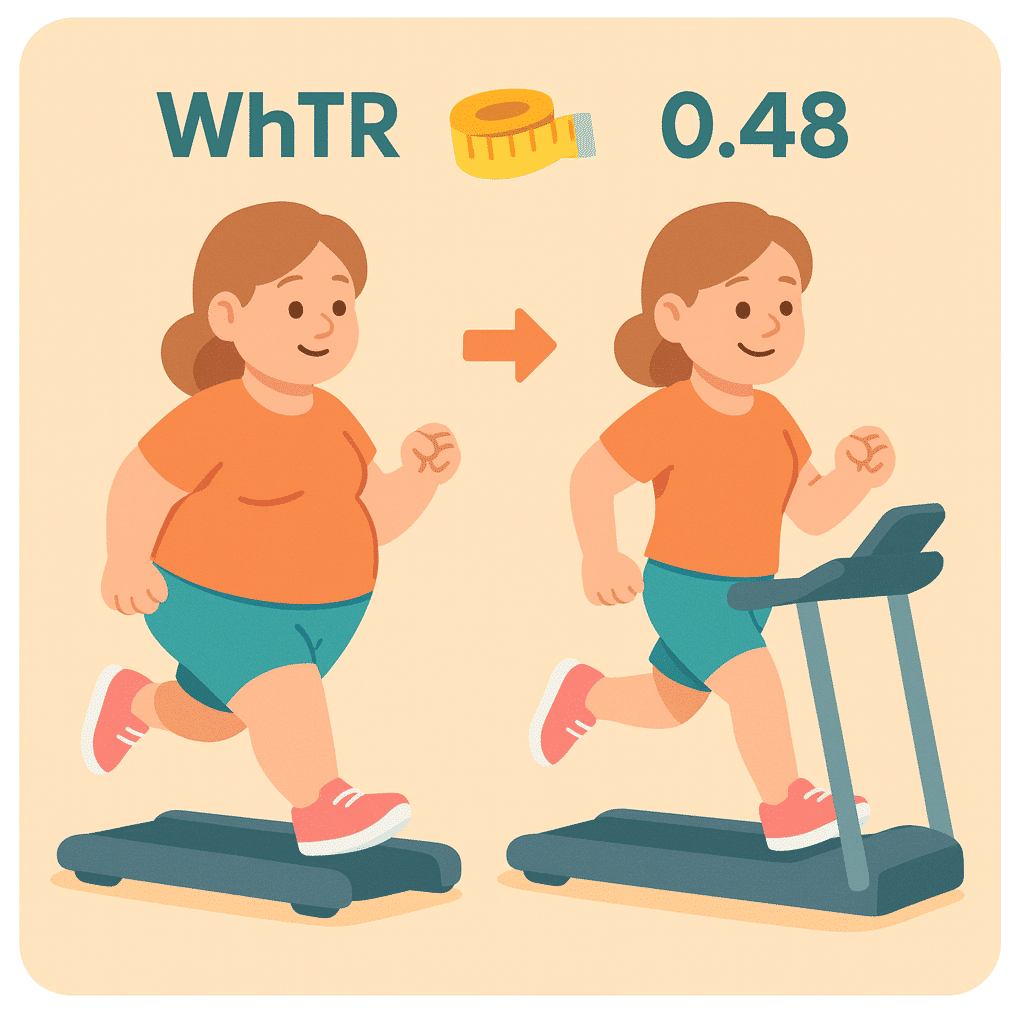
Why Is WHtR Better Than BMI?
⚠️ The main problem with BMI is that it’s calculated only from height and weight, providing no information about where fat is stored or how much abdominal fat you carry. This means someone can have a “normal” BMI but still store a high amount of visceral fat in the abdomen — a condition known as hidden obesity, which carries a high metabolic risk.
📏 WHtR is more accurate because it directly evaluates the area most strongly linked to heart disease, diabetes, and metabolic disorders: abdominal fat. It doesn’t have the limitations of BMI and responds even to small changes in waist circumference.
🏋️ For muscular individuals (such as bodybuilders), BMI often shows a high number and labels them as overweight or obese, while WHtR correctly reflects their low abdominal fat and healthy body status.
👩🦰 For women, whose fat distribution differs, WHtR provides a more accurate picture of abdominal health. Many women with a normal BMI still have a higher WHtR and face metabolic risks.
🧒 In children and teenagers, WHtR outperforms BMI because their growth and weight change rapidly, while the waist-to-height ratio remains more stable and better indicates the risk of abdominal obesity.
👵 In older adults, where muscle mass decreases, BMI is often misleading. WHtR, however, can still accurately reflect the risk of abdominal fat accumulation.
🧪 A real example:
A person who is 170 cm tall and weighs 75 kg:
BMI ≈ 26 (overweight)
But if their waist circumference is 78 cm:
WHtR = 0.45 → completely healthy
Conversely:
A person with a normal BMI but a WHtR of 0.56 → in the high-risk range
This difference shows why WHtR is a more accurate and practical indicator than BMI.
Waist-to-Height Ratio Formula
How to Calculate It
📐 The WHtR formula is extremely simple — it’s calculated by dividing your waist circumference by your height. This simplicity is one of the reasons it’s so popular and highly accurate for assessing abdominal fat.
📘 WHtR Formula
\text{WHtR} = \frac{\text{Waist, Circumference}}{\text{Height}}
Note:
Your waist and height must both be measured in the same unit (centimeters or meters). 📐 The WHtR formula is very simple—just divide your waist circumference by your height. This simplicity is one of the reasons it’s so popular and highly accurate for assessing abdominal fat.
🧮 A Simple Example of Calculating WHtR
Let’s say a person has a waist circumference of 80 cm and a height of 170 cm:
\text{WHtR} = \frac{80}{170} \approx 0.47
🔎 Result:
WHtR = 0.47 → falls within the healthy range for adults.
📏 How to Properly Measure Waist Circumference (Men & Women)
🔹 Men:
The best measurement point is between the navel and the lowest ribs. The tape should be placed horizontally and rest on the skin or over a thin layer of clothing.
🔹 Women:
Because the shape of the abdomen and pelvis is different, the best point is the narrowest area between the chest and hips.
If the narrowest point isn’t clearly visible, the navel line is a suitable reference.
🎯 A key rule for everyone:
The tape measure should not be too tight or too loose.
Do not pull your stomach in while measuring.
Best time to measure: in the morning after waking up.
Waist-to-Height Ratio Interpretation Table for Men and Women
📊 Once you calculate your WHtR, it needs to be interpreted to determine your level of abdominal fat. Research suggests that the following ranges are appropriate for adult men and women.

👨 WHtR Interpretation Chart for Men
WHtR Range | Status | Description |
|---|---|---|
Less than 0.40 | 🔵 Low Risk (Low Abdominal Fat) | There may be excessive leanness or low muscle mass. |
0.40 to 0.49 | 🟢 Healthy Range | The ideal zone for abdominal fat and metabolic health. |
0.50 to 0.59 | 🟠 Moderate Risk | Abdominal fat is above optimal; metabolic risk may be elevated. |
0.60 and higher | 🔴 Very High Risk | Severe abdominal obesity; a significant risk for cardiometabolic disease. |
👩 WHtR Interpretation Chart for Women
WHtR Range | Status | Description |
|---|---|---|
Less than 0.42 | 🔵 Low Risk (Low Abdominal Fat) | Usually not a problem; however, severe underweight should be monitored. |
0.42 to 0.49 | 🟢 Healthy Range | The best healthy range for most adult women |
0.50 to 0.57 | 🟠 Moderate Risk | Abdominal fat is increasing; lifestyle adjustments are recommended. |
0.58 and higher | 🔴 Very High Risk | Excess abdominal fat with a significantly increased risk of cardiometabolic disease. |
🧠 A practical note on the difference between men and women
Women naturally have a higher body fat percentage, but when visceral fat begins to accumulate in women, it becomes more dangerous than in men. That’s why the risk ranges for women are defined slightly differently.
What Is the Ideal WHtR for Men and Women?
💚 Ideal WHtR for General Health
Research shows that the best WHtR range for heart health, blood sugar control, and reducing visceral fat risk falls within the values below:
👨 Adult Men
✔️ WHtR between 0.40 and 0.49 → the healthiest range
Within this range, abdominal fat is low, muscle mass is typically adequate, and metabolic risk is at its lowest.
👩 Adult Women
✔️ WHtR between 0.42 and 0.49 → the healthiest range
Because of physiological differences, the lower limit for women is slightly higher than for men, but the healthy range is similar.
💪 Ideal WHtR for Fitness and Aesthetics
Fitness / Aesthetic
In the fitness and physique world, the “healthy range” alone isn’t enough; most people aim for the lowest acceptable level of abdominal fat combined with a lean, attractive, and muscular shape.
👨 Men (Fitness Goals)
WHtR between 0.42 and 0.46 → the most aesthetic range
This range is typically associated with a flat stomach, a defined waistline, and about 10–15% body fat.
👩 Women (Fitness Goals)
WHtR between 0.44 and 0.47 → the most aesthetic range
This range often corresponds to a flat abdomen, a narrow waistline, and roughly 18–24% body fat.
✨ Short Summary
The 0.40–0.49 range (for both genders) is the best zone for health.
The mid-to-lower end of this range usually produces a fitter, leaner, more muscular appearance.
Values below 0.40 or 0.42 usually indicate excessive leanness or low muscle mass.
Waist to Height Ratio in Children and Teenagers
🧠 WHtR is more sensitive in children and adolescents
During growth years, height and weight change rapidly, and BMI often cannot distinguish between normal growth and true abdominal obesity. WHtR, however, is more stable and continues to reflect abdominal fat and metabolic health accurately—even as a child grows taller or gains weight.
🔍 Studies show that WHtR in children:
Identifies abdominal obesity better than BMI
Predicts future diabetes and high blood pressure more accurately
Works across all ages and both sexes
And unlike BMI, doesn’t require complex growth charts
📏 Standard WHtR Ranges in Children and Teenagers
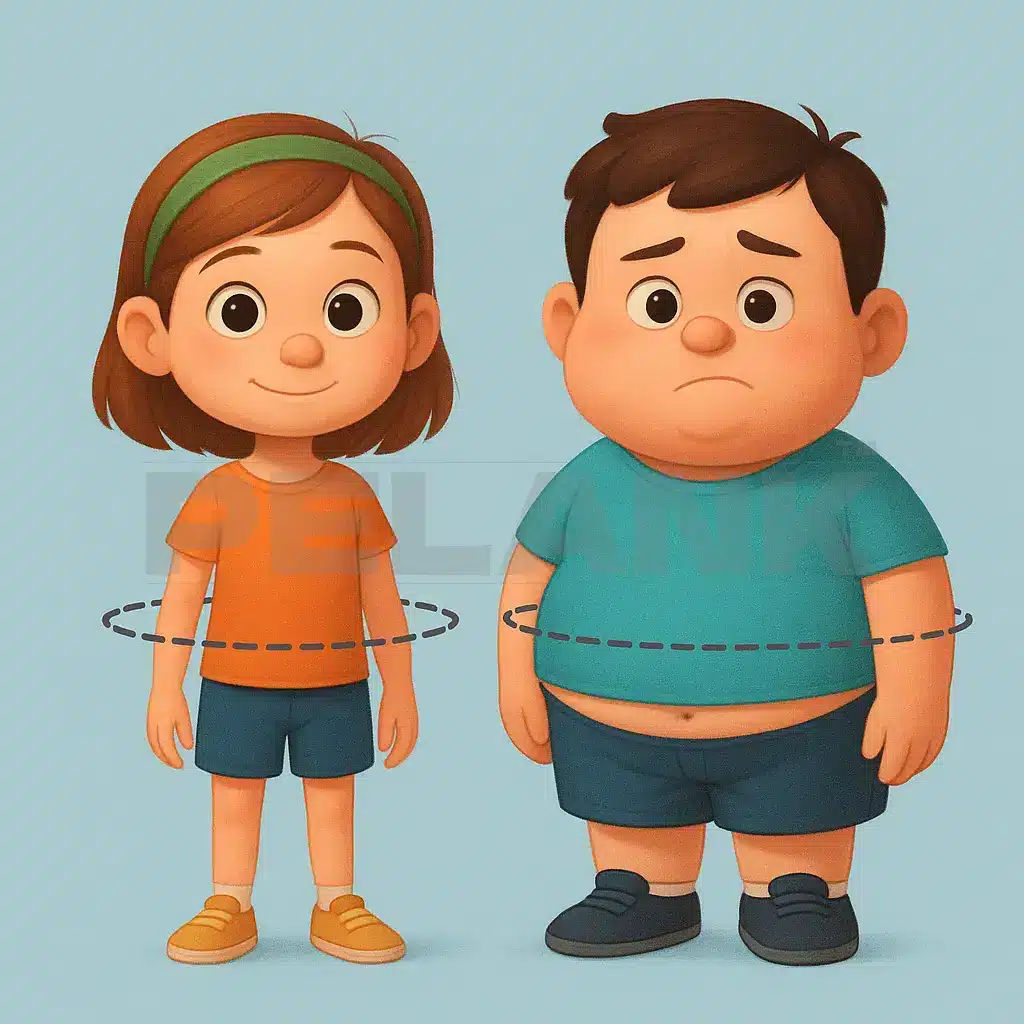
The good news is that most studies confirm the 0.5 rule is valid for children as well:
👧🧒 Simple and practical interpretation:
WHtR below 0.50 → healthy
WHtR equal to or above 0.50 → possible abdominal obesity and increased future risk
This rule is used as a quick screening tool in many countries, including schools and clinics.
🧩 Why Is WHtR More Logical for Children?
- BMI in children changes with age and relies on growth charts, while WHtR stays consistent at all ages.
- Children who have a normal BMI but a WHtR above 0.50 often carry hidden visceral fat.
- Both girls and boys benefit equally from this indicator, and there is no need for separate gender-based charts.
✅ A very simple and practical table for parents
This table helps parents understand their child’s abdominal fat status without growth charts or complex calculations.

👨👩👧👦 WHtR Interpretation Table for Children and Teenagers
WHtR Range | Status | Explanation for Parents |
|---|---|---|
Less than 0.45 | 🟢 Healthy and Normal | Low abdominal fat and appropriate growth. No cause for concern. |
0.45 to 0.49 | 🟡 Approaching the Risk Zone | Physical activity and nutrition may need slight adjustments. Early signs of abdominal fat accumulation. |
0.50 and above | 🔴 High Risk | Possible abdominal obesity and increased future health risk. Diet, activity level, and habits should be reviewed. |
💡 Important Note
Most studies consider 0.50 the warning threshold; values above it indicate abdominal fat levels higher than what is appropriate for age.
How to Properly Measure WHtR?
📏 For WHtR to be accurate, the most important step is correctly measuring your waist circumference.
Even a small mistake of a few centimeters can shift your result from the healthy range into the risk range — so precision is essential.
🎯 Proper Waist Measurement Guide
🧍♂️ 1. Stand upright and breathe normally
Your body should be relaxed. Do not suck in your stomach or lift your chest excessively.
📌 2. Locate the correct measurement point
For men: between the navel and the lowest ribs
For women: the narrowest area between the chest and hips (if unclear, use the navel line)
🎀 3. Hold the tape horizontally around your waist
The tape must not be tilted or angled. It should wrap around the body at the same level all the way.
🫲 4. Keep the tape snug, but not too tight or too loose
Pulling the tape too tight will give a false lower number.
📝 5. Record the number at the end of a normal exhale
Measuring during a deep inhale is inaccurate.

⚠️ Common Mistakes Users Make
❌ Measuring over thick clothing
This increases waist size inaccurately.
❌ Measuring on a full stomach or after eating
Temporary bloating and food intake can raise the measurement.
❌ Sucking in the stomach while measuring
Pulling the abdomen inward artificially lowers WHtR.
❌ Using the wrong measurement point
For example, measuring around the hips or upper abdomen — this invalidates the formula.
🕒 Best Time to Measure WHtR
⏰ In the morning, before breakfast
This is when the body has the least daily bloating, making measurements more accurate.
🔄 Natural fluctuations occur throughout the day
Activity, food, stress, and prolonged sitting can all change waist size.
📆 Periodic measurement
To track abdominal fat trends, measure WHtR once per week at the same time of day.
The Impact of Body Fat Percentage and Abdominal Fat Distribution on WHtR
🔥 WHtR has a direct relationship with visceral fat
Visceral fat is the deep, dangerous fat inside the abdomen that surrounds vital organs like the liver and pancreas. This type of fat has the strongest link to cardiometabolic diseases.
WHtR is much more sensitive than BMI, and when visceral fat increases, the WHtR number rises quickly.
This means:
WHtR high → high likelihood of elevated visceral fat
WHtR healthy → abdominal fat likely under control
For this reason, WHtR can reveal hidden risks even when body weight appears normal.
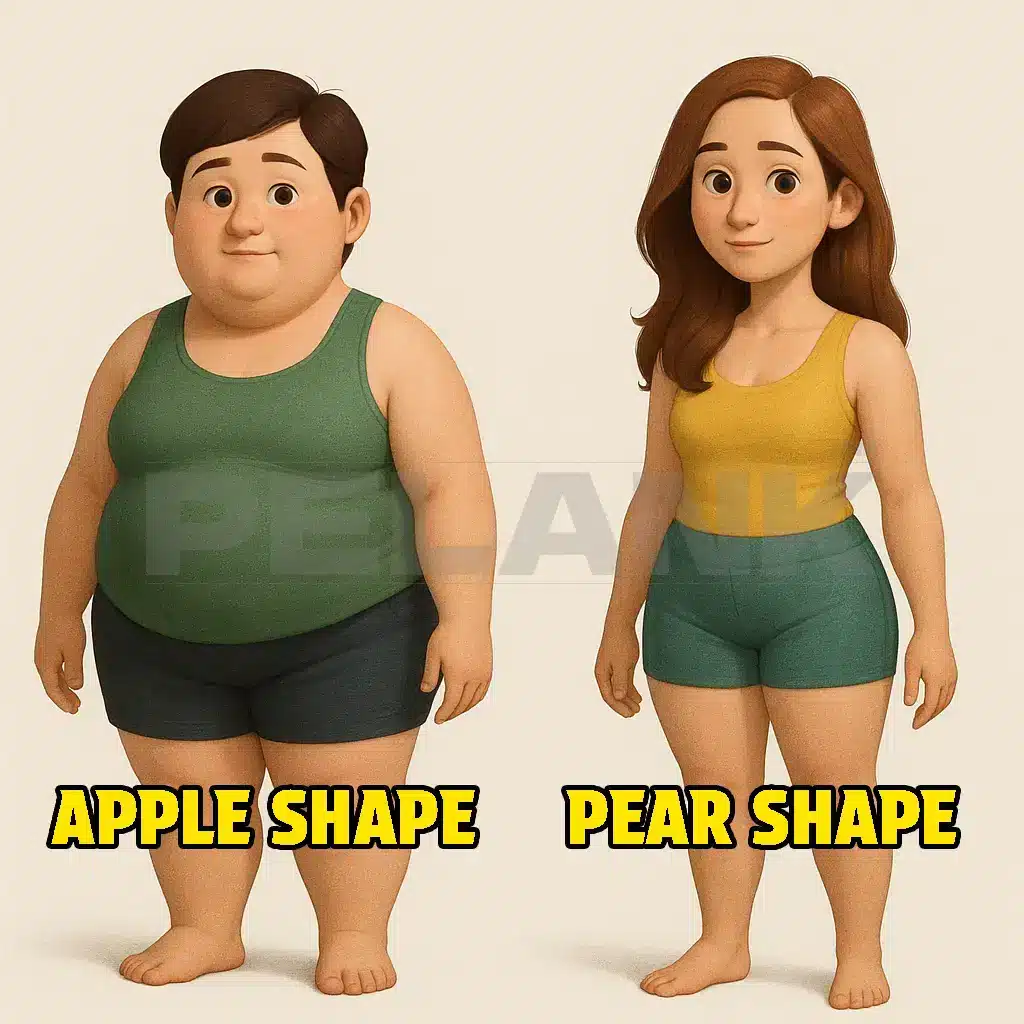
🍏 Apple vs. Pear Obesity
Apple Shape / Pear Shape
Fat distribution varies from person to person, and this difference affects WHtR.
🍎 Apple Obesity (Fat stored in the abdomen)
- More fat around the abdomen and waist
- Strongest association with visceral fat
- Significant increase in WHtR
- Highest risk of diabetes and heart disease
- People with this pattern usually have a higher WHtR even if their BMI is normal.
🍐 Pear Obesity (Fat stored in hips and thighs)
- Fat stored in the hips, thighs, and lower body
- Low association with visceral fat
- WHtR is usually lower
- Much lower metabolic risk
This is why two people with the same weight can have completely different health risks.
🏋️♂️ WHtR in Bodybuilding and Fitness
Bodybuilders and athletes often have a high BMI because of greater muscle mass, so their BMI is interpreted incorrectly. However:
Why is WHtR more accurate for athletes?
Their body fat percentage is usually low → narrower waist → healthy WHtR
It reflects small changes in abdominal fat quickly
It’s a great indicator for competition readiness, waistline definition, and abdominal muscle sharpness
Very useful for tracking the effects of fat-loss diets
📌 Important Note:
In bodybuilding, a WHtR below 0.42 (men) and 0.44 (women) typically indicates low body fat and an aesthetically desirable physique.
Ideal WHtR Table for Different Goals
📊 WHtR is not just a health indicator; in fitness and professional sports it’s also used as an aesthetic and performance metric. Below is a comprehensive table for people with different goals.
🧍♂️ WHtR for the General Population
General Health
Target: Prevent abdominal fat, control metabolic disease risk
Men: 0.40 to 0.49
Women: 0.42 to 0.49
📌 This range offers the best balance between aesthetics and health.
🏋️ WHtR for Bodybuilders
Bodybuilding
Target: Visible muscle definition, flat stomach, and low body fat
Men: 0.42 to 0.46
Women: 0.44 to 0.47
🔥 This range is typically associated with 10–15% body fat in men and 18–24% in women.
🔥 WHtR for the Fat-Loss Phase
Cutting Phase
Target: Reducing central fat and achieving a sharp, defined abdominal look
Men: 0.40 to 0.45
Women: 0.42 to 0.46
📉 A WHtR in this range indicates visceral fat is at a minimum.
🏃♂️🏆 WHtR for Professional Athletes
Athletes
Target: Efficiency, cardiovascular performance, speed, and power-to-weight ratio
Men: 0.39 to 0.44
Women: 0.41 to 0.45
⚠️ A WHtR significantly below this range may indicate excessive leanness or reduced muscle mass.
📋 Complete WHtR Table for Different Goals
Target Group | Ideal WHtR for Men | Ideal WHtR for Women | Description |
|---|---|---|---|
🧍 General Population | 0.40 – 0.49 | 0.42 – 0.49 | Best range for overall health |
🏋️ Bodybuilders | 0.42 – 0.46 | 0.44 – 0.47 | Ideal fitness condition and a muscular appearance |
🔥 Cutting Phase | 0.40 – 0.45 | 0.42 – 0.46 | Goal: reducing abdominal and visceral fat |
🏆 Professional Athletes | 0.39 – 0.44 | 0.41 – 0.45 | The most suitable range for athletic performance |
Ways to Reduce WHtR
Reducing Abdominal Fat
🔥 Lowering WHtR means reducing abdominal and visceral fat. WHtR only decreases when belly fat — especially visceral fat — truly goes down. This happens through the right combination of training, nutrition, sleep, and stress management.

🏋️ Training: Best Exercises for Reducing Abdominal Fat
🔥 1. HIIT workouts
- Short, intense, and extremely effective
- Boosts fat burning even after the workout (Afterburn effect)
- Great for people with limited time
🏃♂️ 2. Moderate Cardio
- 30–45 minutes of brisk walking, light jogging, or cycling
- Directly reduces visceral fat
🏋️♀️ 3. Strength Training
- Increases muscle mass → boosts metabolism
- Helps reduce abdominal fat even at rest
- Squats, deadlifts, lunges, presses, pull-ups, etc. are highly effective
🧘♂️ 4. Stress-Reduction Training
- Yoga and breathing exercises lower cortisol levels
- High cortisol = increased abdominal fat
🍎 Nutrition: The Most Important Factor in Lowering WHtR
🥗 1. Reduce excess calories — but not too much
Severe calorie restriction leads to muscle loss and slows metabolism.
🍚 2. Increase fiber and protein intake
Protein: boosts satiety + preserves muscle
Fiber: reduces abdominal fat accumulation
Great sources: eggs, fish, chicken, lentils, vegetables, oats
🍬 3. Eliminate sugary drinks and simple sugars
These are major contributors to increased visceral fat.
🥑 4. Healthy fats instead of unhealthy fats
Good: olive oil, avocado, nuts
Bad: trans fats, fried foods, fast food
💧 5. Drink enough water
Dehydration increases appetite and causes blood sugar fluctuations.
😴 Sleep: The Hidden but Very Important Factor
🌙 Lack of sleep increases abdominal fat.
Studies show that sleeping less than 6 hours per night raises cortisol levels, insulin resistance, and visceral fat.
✔️ Optimal sleep duration:
7 to 9 hours of quality sleep for adults
😣 Stress: the number one enemy of reducing abdominal fat
😮💨 High cortisol → increased abdominal fat
Even with great diet and training, chronic stress can keep WHtR elevated.
Strategies:
5-minute breathing exercises
Yoga and meditation
Spending time in nature
Limiting phone use before bed
Short breaks throughout the day
⚠️ Common Mistakes That Prevent WHtR Reduction
❌ Doing only ab exercises for fat loss
Ab exercises build muscle but do not burn fat in that area.
❌ Very low-calorie crash diets
They cause muscle loss and lead to rapid regaining of belly fat.
❌ Ignoring sleep and stress
Two extremely powerful factors that increase visceral fat.
❌ Incorrect waist measurement
Wrong location or pulling the tape too tight → inaccurate results and poor decisions.
❌ Relying entirely on BMI
WHtR may be high even when BMI is “normal,” causing a false sense of health.
What Does WHtR Not Show?
Limitations
🧱 Although WHtR is a very useful indicator, it is not perfect.
It only measures the relationship between height and waist circumference and cannot reflect every aspect of body composition. Therefore, a few important limitations should be kept in mind when interpreting WHtR.
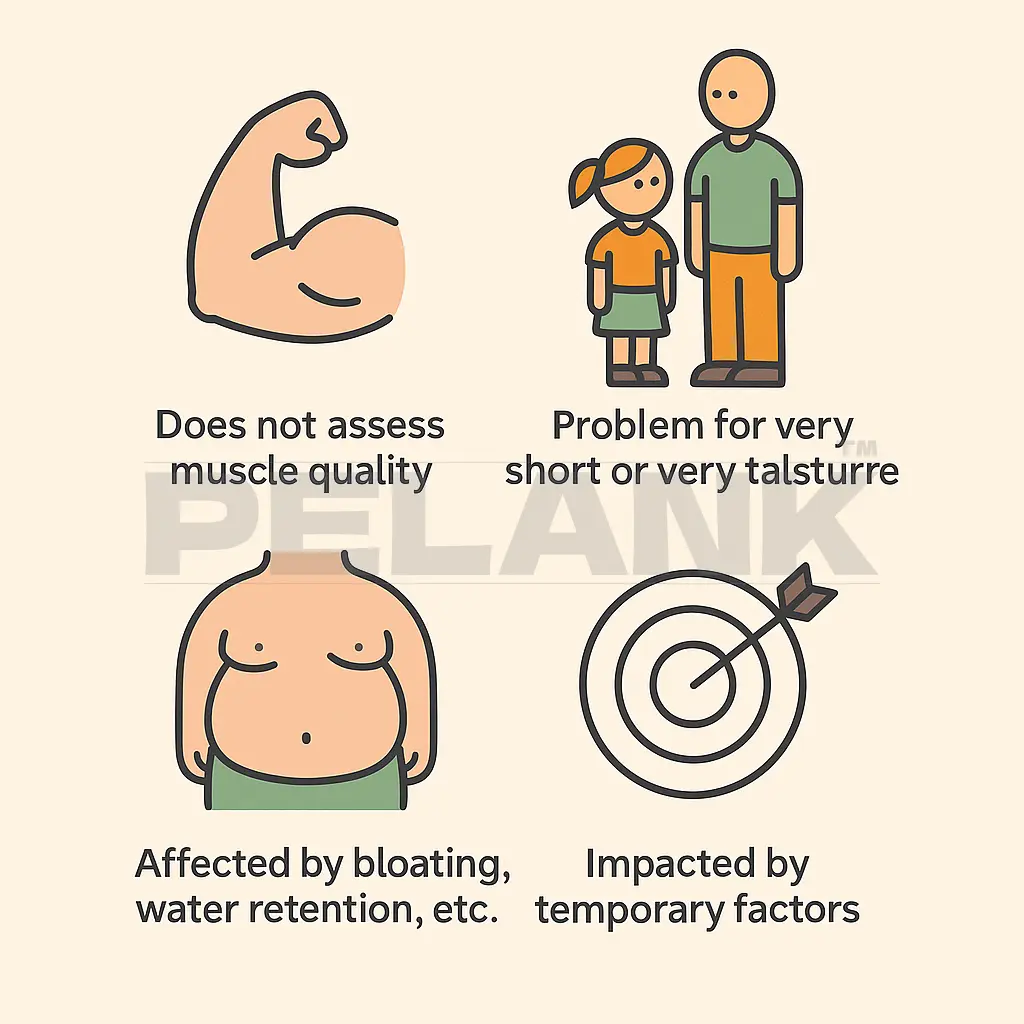
1️⃣ It Does Not Measure Muscle Quality or Muscle Mass
WHtR cannot tell you:
- Whether you have high or low muscle mass
- How dense or developed your muscles are
- What your strength level is
For example:
Two people with the same WHtR can look completely different — one muscular, the other with low muscle mass.
So WHtR does not show the exact muscle-fat ratio; it only focuses on abdominal fat.
2️⃣ Less Accurate for Very Short or Very Tall Individuals
In people with atypical height:
Very short height: WHtR may appear higher than it actually is
Very tall height: WHtR may appear lower than it truly is
Although this issue is not very common, WHtR should be interpreted with extra caution for individuals outside the average height range.
3️⃣ Influence of Temporary Factors Like Bloating and Water Retention
WHtR can be affected by short-term factors such as:
- Daily bloating
- Overeating in a single meal
- Water retention (e.g., during menstruation or after high salt intake)
- Stress or poor sleep causing abdominal inflammation
These can change waist circumference by 1 to 4 cm, but the change is temporary and does not indicate real fat gain.
🎯 Summary of This Section
WHtR is an excellent indicator for assessing abdominal fat and health risk, but:
- It does not reflect muscle quality
- It may be slightly inaccurate for people outside the typical height range
- and it is affected by temporary body fluctuations.
For this reason, it’s always best to combine WHtR with complementary indicators such as body fat percentage, progress photos, and how your body feels.
Comparison of Three Indicators: WHtR vs BMI vs WHR
Limitations

1️⃣ WHtR — Waist-to-Height Ratio
The Most Accurate for Abdominal Fat
WHtR = waist circumference ÷ height
This index shows abdominal fat and visceral fat accumulation very accurately.
⭐ Advantages:
Best indicator for evaluating belly fat
Useful for men, women, children, and older adults
Suitable for athletes and muscular individuals
Strong predictor of cardiometabolic diseases
🧠 Mental shortcut:
“If your waist is more than half your height → you likely have high abdominal fat.”
2️⃣ BMI — Body Mass Index
Weight relative to height
BMI uses only weight and height and does not show where fat is stored.
So someone may have high weight but low belly fat — or the opposite.
⭐ Advantages:
Suitable for assessing weight at the population level
A simple tool for identifying underweight or overall obesity
Standardized and used worldwide
❗ Limitations:
Does not distinguish between muscle and fat
Labels muscular individuals as “overweight” or “obese” incorrectly
Does not show abdominal or visceral fat
🧠 Mental shortcut:
“BMI only tells you how much you weigh — not whether that weight comes from fat or muscle.”
3️⃣ WHR — Waist-to-Hip Ratio
Fat distribution
WHR shows where most of your fat is stored:
In the abdomen (apple shape) or in the hips/thighs (pear shape).
⭐ Advantages:
Very useful for assessing body shape
Distinguishes between abdominal and lower-body fat
Commonly used in research to evaluate fat distribution
❗ Limitations:
Only compares the waist and hips
Does not show visceral fat as accurately as WHtR
🧠 Mental shortcut:
“If your waist-to-hip ratio is high → most fat is stored in the abdomen.”
🟦 Quick Comparison of the Three Indicators for Users
Fat distribution
Indicator | What does it measure? | Best use | Limitation |
|---|---|---|---|
WHtR | Abdominal fat + visceral fat | Heart health, metabolic health, bodybuilding | Affected by bloating / unusual heights |
BMI | Weight relative to height | Overall weight assessment | Does not distinguish muscle from fat |
WHR | Body fat distribution | Identifying apple vs. pear obesity | Lower accuracy for visceral fat |
🎯 Quick Conclusion
✔️ Most important indicator for abdominal health: WHtR
✔️ Best indicator for overall weight: BMI
✔️ Best indicator for body shape and fat distribution: WHR
WHtR Thresholds
Based on Age, Gender, and Ethnicity + Guide for Children
Why Is This Section Important?
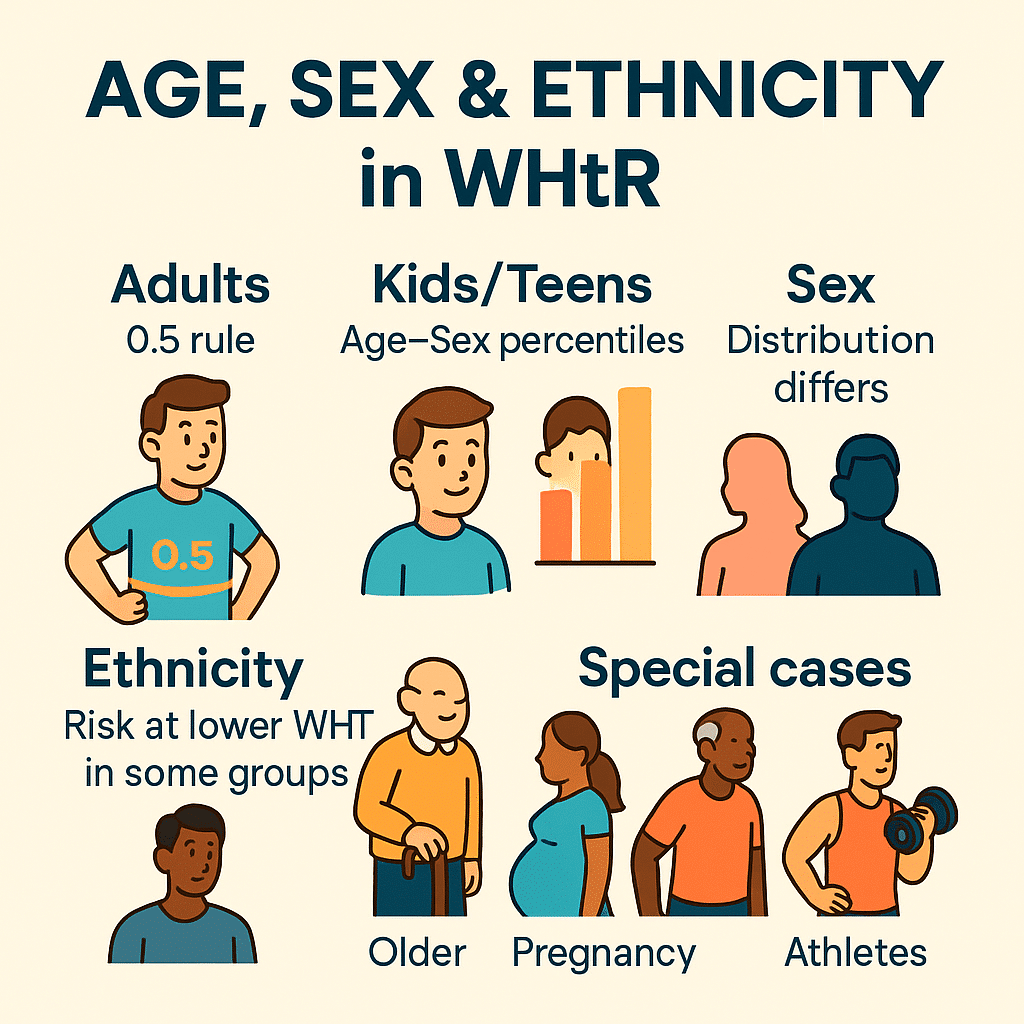
For adults, the rule “waist ≤ half of height (WHtR ≈ 0.5)” is a quick and reliable screening method; however, for children and adolescents, age- and sex-specific percentiles must be used. In addition, sex and ethnic differences can alter risk even at similar WHtR values, so interpretation should always be context-dependent.
Adults: Practical Thresholds
Rule of Thumb: Keep your waist circumference below half of your height.
Underweight | Healthy Weight | Overweight | Obesity |
|---|---|---|---|
WHtR less than 0.40 | WHtR between 0.40 and 0.50 | WHtR between 0.50 and 0.60 | WHtR greater than 0.60 |
Quick Table "Height ↔ Maximum Waist Circumference (0.5 Rule)"
Measurement note: Height should be taken barefoot with an upright posture; waist circumference should be measured at the midpoint between the lowest rib and the iliac crest (hip bone), or at the level of the navel—just be consistent with whichever method you choose.
Height (cm) | Maximum Waist Circumference (cm) |
|---|---|
150 | 75 |
155 | 77.5 |
160 | 80 |
165 | 82.5 |
170 | 85 |
175 | 87.5 |
180 | 90 |
185 | 92.5 |
190 | 95 |
195 | 97.5 |
200 | 100 |
Gender Differences
Men tend to store more visceral fat on average, while women store more peripheral fat (hips/thighs); however, the 0.5 cutoff is applicable to both sexes in adults. Some studies suggest a slightly lower threshold for women, but clinical screening consensus still centers around 0.5.
Ethnic Differences
In some populations (e.g., South/East Asia and parts of the Middle East), metabolic risk may be high even at lower WHtR values; therefore, the range of 0.48–0.52 should be interpreted with more caution, while simultaneously assessing blood pressure, fasting glucose, lipids, and family history.
Children and Adolescents (5 to 19 years)
Use age- and sex-specific percentile charts for WHtR/WC.
“0.5” can serve as a warning sign, but it is not diagnostic.
Interpret WHtR alongside BMI-for-age, WC-for-age, and clinical findings.
If results are borderline or risk factors are present, a professional evaluation is recommended.
Special Cases
Elderly: Loss of height (kyphosis/osteoporosis) can seemingly increase WHtR. Measure current height accurately or use alternative methods (knee height).
Pregnancy: WHtR is not valid during pregnancy and early postpartum.
Athletes: BMI may mistake muscle for fat; WHtR is more useful for abdominal fat, but abdominal wall hypertrophy or temporary bloating can alter waist measurements.
Conclusion
- If you are an adult: Aim for
waist ≤ 0.5 × height. - For children/adolescents:
Age-gender percentiles are the primary criteria for interpretation. - In high-risk populations and borderline values, complement the interpretation with other indices and tests.
Frequently Asked Questions
FAQ
If WHtR is greater than 0.50, it’s generally considered a risk zone. Values of 0.60 or higher indicate severe abdominal obesity and a significantly increased risk of cardiometabolic disease.
Bodybuilders typically have a WHtR between 0.42 and 0.46. This range reflects low body fat, a narrow waist, and a well-defined abdomen in either a controlled bulking phase or a cutting phase.
It’s accurate for both, but studies show WHtR is even more reliable than BMI for women, because visceral fat in women changes more subtly and WHtR captures these shifts better.
Yes. As we age, metabolism slows and abdominal fat tends to increase. Therefore, WHtR usually rises in later decades of life even if body weight stays the same.
For metabolic health, WHtR is far superior to BMI. BMI cannot identify abdominal or visceral fat, while WHtR focuses precisely on this area.
WHtR is generally more accurate because it reflects visceral fat better. WHR only shows fat distribution, but WHtR has much stronger predictive power for disease risk.
For most adults:
Men: 0.40 to 0.49
Women: 0.42 to 0.49
This range carries the lowest risk of visceral fat.
WHtR only decreases when actual abdominal fat is reduced. No localized exercise or slimming belt can lower WHtR on its own. Diet, training, and sleep are the key factors.
Yes; this is very common and is known as “hidden obesity.” A person may have normal weight but high abdominal fat. WHtR reveals this problem quickly.
For children and teenagers, the global guideline is:
WHtR below 0.50 → healthy
WHtR 0.50 and above → possible abdominal obesity
This measure is more accurate than BMI for children.

Mohsen Taheri
December 01, 2025