

Introduction
✅ The thigh muscles are among the most important muscle groups in the body, playing a key role in fundamental movements such as walking, running, jumping, squatting, and weightlifting. These muscles are not only essential for stabilizing the hips and knees but also make a significant contribution to strength, endurance, and overall athletic performance.
🦵 The thigh is made up of three main muscle groups, classified according to Gray’s Anatomy:
1️⃣ Anterior group – responsible for knee extension and hip flexion
2️⃣ Medial group – responsible for hip adduction (bringing the legs closer together)
3️⃣ Posterior group – responsible for knee flexion and hip extension
✅ In this section, each muscle will be examined through its basic information, anatomy, physiology, nerve supply, significance in sports, strengthening exercises, and scientific insights — all based on reputable sources, including Gray’s Anatomy.
🚀 Our goal is to help you optimize your athletic performance and prevent injuries by gaining a precise understanding of these muscles!
1. Anterior Thigh Muscles
Sartorius Muscle
✅ The sartorius muscle is the longest muscle in the body, extending from the hip to the inner side of the knee. It plays an important role in twisting and flexion movements of the thigh and has a significant impact on activities such as sitting cross-legged or running.

🔷 Full explanation
Click on the title to study the sections.
✅ Persian Name: Khiyāteh
✅ Latin Name: Sartorius
✅ Common Name: Sartorius (Tailor’s Muscle)
✅ Location:
🟡 A long, thin muscle that originates from the pelvis (specifically the Anterior Superior Iliac Spine) and attaches to the inner side of the shin bone (tibia).
🟡 Located on the front (anterior) part of the thigh, running diagonally from the outside toward the inside.
🟡 It is one of the superficial thigh muscles, lying on top of the quadriceps muscles.
✅ 🦾 Origin
✔ Anterior Superior Iliac Spine (ASIS)
✅ 🦿 Insertion
✔ Medial surface of the upper part of the tibia
✔ One of the three muscles that form part of the “Pes Anserinus” structure.
✅ 📌 Function
✔ Hip flexion – assists in bending the thigh
✔ Knee flexion – assists in bending the knee
✔ Lateral (external) rotation of the hip – rotates the thigh outward
✔ Hip adduction – helps bring the thigh toward the midline
✔ Medial (internal) rotation of the leg – rotates the shin inward after the knee is bent
🔹 Movement Example: This muscle is active when sitting cross-legged or when placing one foot on the opposite knee.
✅ 💪🏻 Muscle Fiber Type
✔ A combination of slow-twitch (type I) and fast-twitch (type II) fibers
✔ Due to its long length, it has a high endurance capacity but also plays a role in fast movements.
✅ 🏋🏻♂️ Role in Motor and Athletic Performance
✔ Plays a key role in sports like soccer, running, gymnastics, martial arts, and yoga.
✔ An important muscle for hip flexion and thigh rotation movements.
✅ 🧗🏻♂️ Muscle Strength and Endurance
✔ Weakness in this muscle can lead to reduced control over hip and knee movements.
✔ Endurance training helps maintain its proper function.
🧠 Innervation
✔ Femoral nerve (L2, L3)
🩸 Blood Supply
✔ Branches of the femoral artery and the inferior gluteal artery
✅ 🤼♂️ Role in Sports and Physical Activities
✔ Soccer: Active during kicking and sudden direction changes.
✔ Running: Assists in starts and acceleration.
✔ Gymnastics and Yoga: Essential for hip and knee flexibility.
✅ 🏌🏻♂️ Interaction with Other Muscles and Joints
✔ Works alongside the quadriceps, adductors, and hip flexors to coordinate precise leg movements.
✔ Plays a crucial role in stabilizing the knee and hip joints during complex motions.
✅ 💉 Vulnerability and Potential Issues
✔ Prone to injury during intense rotational movements or sudden stretches.
✔ May develop inflammation and pain in the groin area.
✔ Weakness can lead to instability in the knee and hip joints.
✅ 🏋🏻♂️ Key Exercises to Strengthen the Sartorius Muscle
1️⃣ Lateral Lunges – engage the sartorius during side-to-side movements
2️⃣ Mountain Climbers – boost core stability and hip strength
3️⃣ Step-Ups – excellent for strengthening and stabilizing the thigh muscles
4️⃣ Butterfly Stretch – improves flexibility and stretches the muscle
5️⃣ Resistance Band Exercises – target external rotation of the hip for added strength
✅ 🧘🏻♀️ Stretching and Recovery
✔ Seated Butterfly Stretch – helps relieve tension and improve flexibility
✔ Pigeon Pose (Yoga) – opens the hip joint and eases muscle tightness
✅ Interesting Fact
✔ The sartorius is the longest muscle in the body and is named for its diagonal path across the thigh.
✔ Historically, tailors used to sit cross-legged for long periods—engaging this muscle— which is why it’s called the “Tailor’s Muscle” (Sartorius)!
✅ Practical Tip
✔ Strengthening this muscle is essential to prevent knee and hip injuries.
✔ Combining strength exercises like lunges with stretches such as the Butterfly Stretch helps enhance its performance.
🔴 Name and Location: A long, slender muscle that extends from the pelvis down to the knee.
🟠 Anatomy: Originates from the Anterior Superior Iliac Spine (ASIS) and attaches to the tibia.
🟡 Function: Assists in hip flexion and rotation, knee bending, and stabilizing body posture.
🟢 Physiology: Composed of a mix of slow- and fast-twitch muscle fibers, supporting both endurance and leg rotation.
🔵 Innervation: Controlled by the femoral nerve (L2, L3).
🟣 Importance: Plays a key role in sports such as soccer, running, yoga, and gymnastics.
🟤 Exercises: Lateral lunges, step-ups, butterfly stretch, resistance training, and seated butterfly stretches.
⚫ Interesting Fact: It’s the longest muscle in the body, and its name comes from the way tailors used to sit cross-legged!
Quadriceps Femoris Muscle
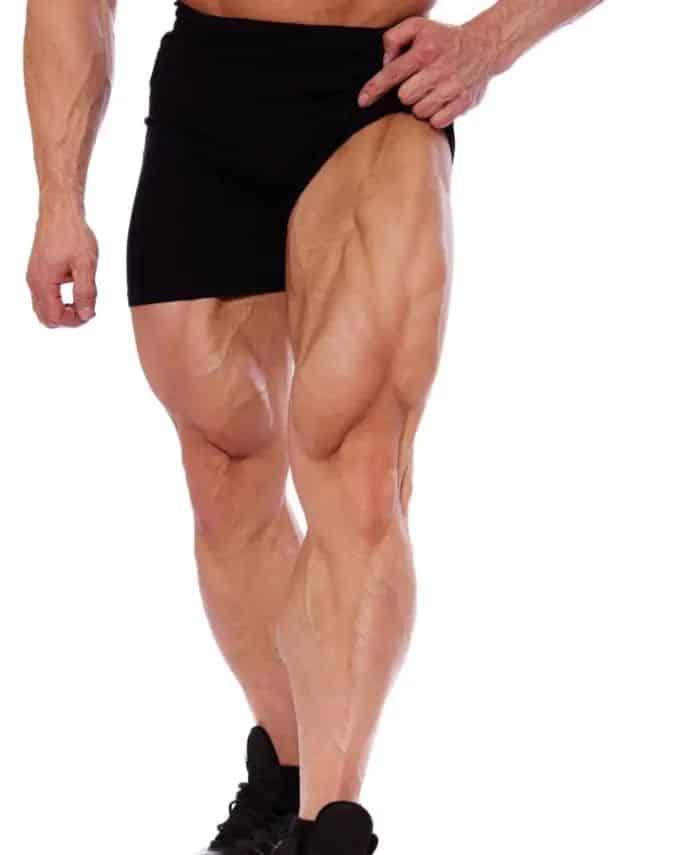
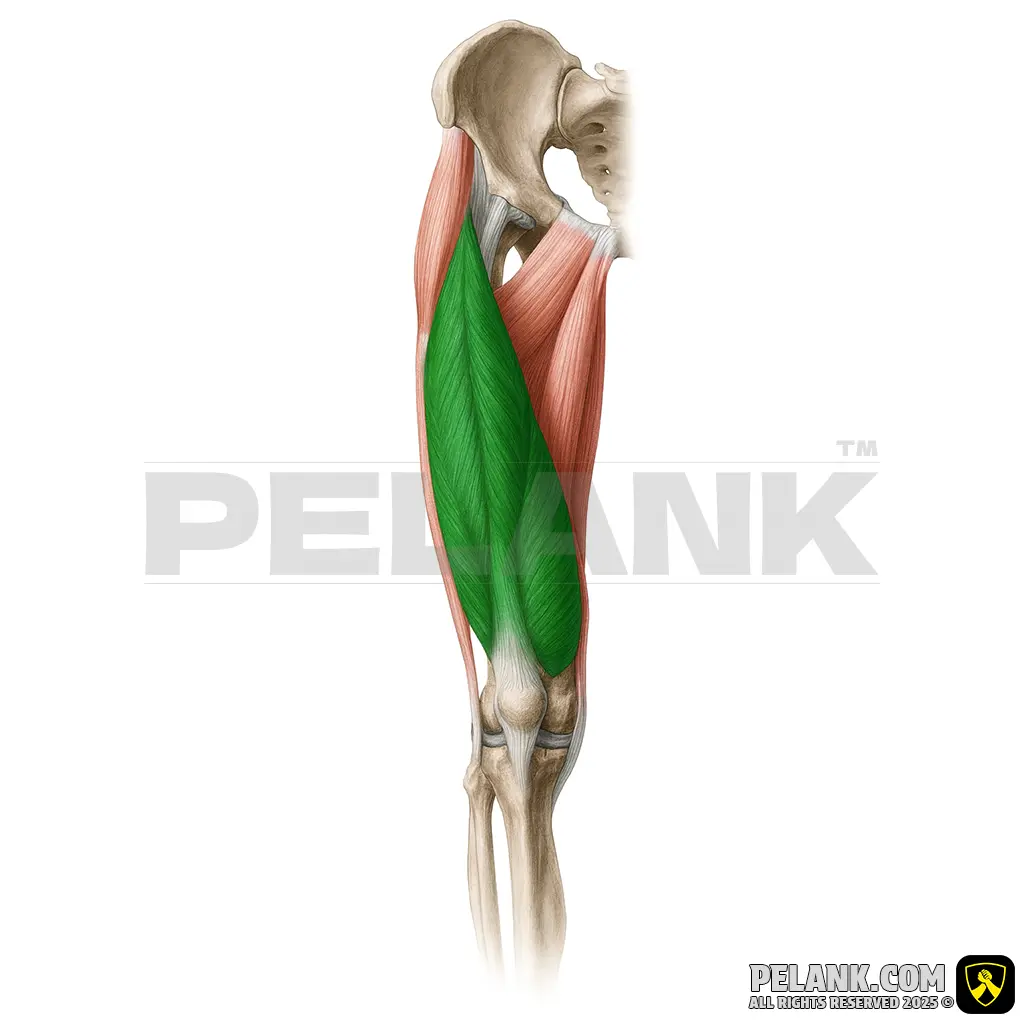
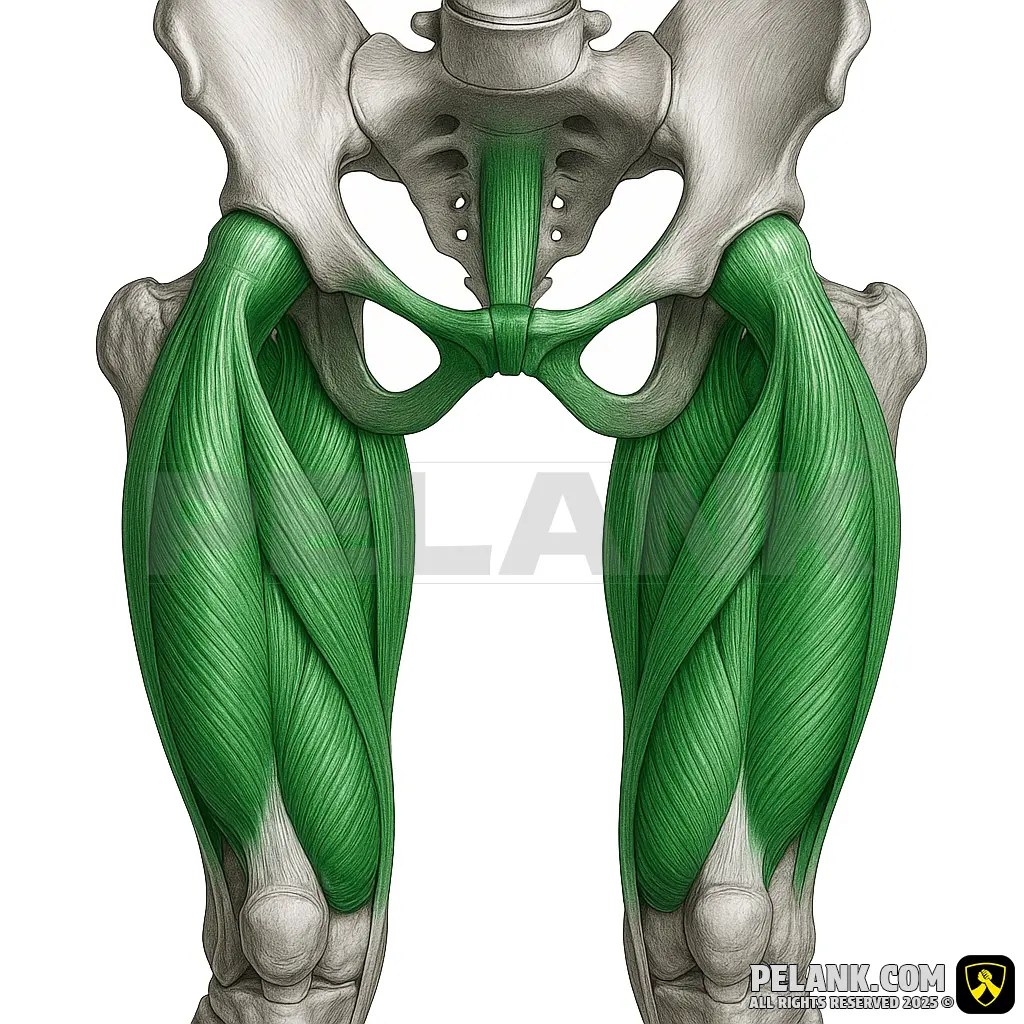
✅ The quadriceps muscle is one of the strongest and most important muscles of the leg, located at the front of the thigh. It plays a key role in knee extension, knee joint stabilization, and hip flexion.
🔹 The quadriceps group consists of four distinct muscles that work together:
1️⃣ Rectus femoris – the only quadriceps muscle that acts on the hip joint.
2️⃣ Vastus lateralis – the largest quadriceps muscle, located on the outer part of the thigh.
3️⃣ Vastus medialis – an inner muscle that helps stabilize the patella.
4️⃣ Vastus intermedius – a deep quadriceps muscle located beneath the rectus femoris.
🖼️ Image Gallery
Click on the images to enlarge them.
🔷 Full explanation
Click on the title to study the sections.
✅ Persian Name: Chaharsar Rani
✅ Latin Name: Quadriceps Femoris
✅ Common Names: Front Thigh Muscle, Quads
✅ Location:
🟡 Located at the front of the thigh, originating from the pelvis and femur.
🟡 Connected to the kneecap (patella) via the common quadriceps tendon, which then attaches to the tibia.
🟡 It is the primary knee extensor and plays an essential role in walking, running, jumping, and sitting.
✅ 🦾 Origin
✔ Rectus Femoris: Anterior Inferior Iliac Spine (AIIS)
✔ Vastus Lateralis: Lateral surface of the femur
✔ Vastus Medialis: Medial surface of the femur
✔ Vastus Intermedius: Anterior and lateral surfaces of the femur
✅ 🦿 Insertion
✔ All four muscles converge into the quadriceps tendon.
✔ The quadriceps tendon attaches to the kneecap (patella), which connects via the patellar ligament to the tibial tuberosity on the shinbone (tibia).
✅ 📌 Function
✔ Knee extension – straightening the knee, as seen in squats and jumping
✔ Knee stabilization – maintaining knee balance during standing and movement
✔ Hip flexion – performed only by the rectus femoris muscle
🔹 Movement Example: Active during stair climbing, running, and lifting weights in squats.
✅ 💪🏻 Muscle Fiber Types
✔ A combination of ✔ A combination of slow-twitch fibers (Type I) and fast-twitch fibers (Type II).
✔ Type I fibers for endurance during walking and standing.
✔ Type II fibers for fast, powerful contractions in activities like sprinting and jumping.
✅ 🏋🏻♂️ Role in Motor and Athletic Performance
✔ Plays a key role in all strength, endurance, and speed-based sports.
✔ Essential for weightlifters, runners, basketball players, and gymnasts.
✅ 🧗🏻♂️ Muscle Strength and Endurance
✔ Strengthening this muscle improves movement performance and helps prevent knee injuries.
✔ Weakness, especially in the vastus medialis, can lead to kneecap discomfort known as Patellar Tracking Disorder.
🧠 Innervation
✔ Femoral nerve (L2, L3, L4)
🩸 Blood Supply
✔ Femoral artery and its branches, including the deep femoral artery.
✅ 🤼♂️ Role in Sports and Physical Activities
✔ Bodybuilding: Vital in squats, lunges, and leg presses.
✔ Soccer and Basketball: Essential for running and quick direction changes.
✔ Track and Field: Key for acceleration and high jumps.
✔ Cycling: Responsible for generating power during pedaling.
✅ 🏌🏻♂️ Interaction with Other Muscles and Joints
✔ Works in coordination with the gluteal muscles, hamstrings, and calf muscles to stabilize leg movements.
✔ Strengthening this muscle enhances knee stability and reduces joint injuries.
✅ 💉 Vulnerability and Potential Issues
✔ Quadriceps strains commonly occur in sports involving sudden movements.
✔ Quadriceps tendinitis can develop from intense training without adequate rest.
✔ Weakness in this muscle increases stress on the knee, leading to problems like Patellofemoral Pain Syndrome (PFPS).
✅ 🏋🏻♂️ Key Exercises to Strengthen the Quadriceps
1️⃣ Squats – the most effective exercise for the quads
2️⃣ Leg Press – focuses on knee extension
3️⃣ Lunges – improves knee strength and stability
4️⃣ Step-Ups – enhances functional muscle capacity
5️⃣ Leg Extensions (machine) – isolates the quadriceps for targeted strengthening
✅ 🧘🏻♀️ Stretching and Recovery
✔ Standing Quad Stretch
✔ Seated Quadriceps Stretch
✔ Foam Rolling to enhance recovery and reduce muscle tension
✅ Interesting Fact
✔ The quadriceps femoris is the strongest knee extensor muscle in the body!
✔ The rectus femoris is the only muscle in this group that also crosses and acts on the hip joint.
✅ Practical Tip
✔ To prevent knee injuries, strengthening the quadriceps along with the hamstrings and gluteal muscles is essential.
✔ Combining strength exercises (like squats and lunges) with stretches (such as the Standing Quad Stretch) improves performance and reduces injury risk.
🔴 Name and Location: A group of four muscles at the front of the thigh, attaching to the kneecap.
🟠 Anatomy: Comprises four parts—rectus femoris, vastus lateralis, vastus medialis, and vastus intermedius.
🟡 Function: Knee extension, knee stabilization, and hip flexion (only by rectus femoris).
🟢 Physiology: A mix of slow- and fast-twitch fibers for both strength and endurance.
🔵 Innervation: Femoral nerve (L2–L4).
🟣 Exercises: Squats, lunges, step-ups, leg press.
⚫ Interesting Fact: The strongest knee extensor muscle group in the body!
Analysis of the Four Quadriceps Muscles
Rectus Femoris Muscle
✅ The rectus femoris is one of the four quadriceps muscles, located at the front of the thigh. It is the only biarticular muscle in the quadriceps group, meaning that it acts on both the hip joint and the knee joint.
🔹 The rectus femoris is responsible for knee extension and hip flexion, playing a key role in movements such as running, jumping, and squatting.

🔷 Full explanation
Click on the title to study the sections.
✅ Persian name: Rast Rani
✅ Latin name: Rectus Femoris
✅ Common name: Straight Thigh
✅ Location:
🟡 A long, superficial muscle situated in the center of the thigh, lying above the other quadriceps muscles.
🟡 Originates from the pelvis (ilium) and attaches to the knee.
🟡 One of the four muscles of the quadriceps femoris group.
✅ 🦾 Origin
✔ Anterior Inferior Iliac Spine (AIIS)
✔ Superior rim of the acetabulum (hip socket)
✅ 🦿 Insertion
✔ Attaches to the kneecap (patella) via the quadriceps tendon.
✔ Connects to the tibia (shinbone) through the patellar ligament.
✅ 📌 Function and Classification
The rectus femoris is part of the quadriceps group, but unlike the other three muscles, it crosses the hip joint, giving it a dual function:
1️⃣ Knee Extension
✔ Responsible for straightening the knee joint during movements like squats and kicking.
2️⃣ Hip Flexion
✔ One of the few quadriceps muscles involved in hip flexion, such as lifting the knee during running.
✅ Main Functions:
✔ Assists in walking, running, and jumping.
✔ Stabilizes the knee joint during standing and movement.
✔ Provides strength and balance to the thigh and knee.
✅ 💪🏻 Muscle Fiber Types
✔ A mix of fast-twitch (Type II) and slow-twitch (Type I) fibers.
✔ Fast-twitch fibers are active during sprinting and jumping.
✔ Slow-twitch fibers support endurance activities like walking and prolonged standing.
✅ 🏋🏻♂️ Role in Movement and Athletic Performance
✔ A vital muscle in sports like soccer, basketball, sprinting, bodybuilding, and cycling.
✔ One of the key muscles engaged in squats and lunges for strengthening the legs.
✅ 🧗🏻♂️ Muscle Strength and Endurance
✔ The strength of the rectus femoris directly affects running speed, vertical jump, and muscular endurance.
✔ Weakness in this muscle can lead to knee problems and kneecap pain.
🧠 Innervation
✔ Femoral nerve (L2, L3, L4), which controls and stimulates this muscle.
🩸 Blood Supply
✔ Femoral artery, which supplies blood to this muscle.
✔ Branches of the deep femoral artery also play a supportive role.
✅ 🤼♂️ Role in Sports and Physical Activities
✔ Bodybuilding: A key muscle in exercises like squats, lunges, and leg presses.
✔ Track and Field: Acts as a primary driver for acceleration and running speed.
✔ Soccer and Basketball: Involved in powerful movements like kicking and vertical jumping.
✅ 🏌🏻♂️ Interaction with Other Muscles and Joints
✔ Works in coordination with the hamstrings, gluteal muscles, and calf muscles to maintain leg strength.
✔ Directly contributes to knee stability and helps prevent injuries during athletic movements.
✅ 💉 Vulnerability and Potential Issues
✔ Prone to injuries such as strains and tendonitis, especially in professional athletes.
✔ Weakness can lead to anterior knee pain, commonly known as patellofemoral syndrome.
✅ 🏋🏻♂️ Key Exercises to Strengthen the Rectus Femoris Muscle
1️⃣ Squats – the best exercise for strengthening the quadriceps
2️⃣ Lunges – strengthens the quads and improves balance
3️⃣ Leg Press – increases thigh and knee strength
4️⃣ Romanian Deadlift – helps balance strength between quads and hamstrings
5️⃣ Knee Raises – improves hip flexion ability
✅ 🧘🏻♀️ Stretching and Recovery Movements
✔ Quadriceps Stretch – to relieve pressure on the knee
✔ Cobra Stretch – to improve thigh flexibility
✅ Interesting Fact
✔ The rectus femoris is the only quadriceps muscle that crosses the hip joint, which is why it also plays a role in running and hip movements.
✅ Practical Tip
✔ Strengthening this muscle not only boosts running speed but also helps prevent knee and hip injuries.
🔴 Name and Location: The muscle at the front of the thigh that extends from the pelvis down to the knee.
🟠 Anatomy: A part of the quadriceps group responsible for hip flexion and knee extension.
🟡 Function: Moves the knee, flexes the hip, and helps stabilize body balance.
🟢 Physiology: Composed of a mix of strength-oriented and endurance muscle fibers.
🔵 Innervation: Stimulated by the femoral nerve (L2, L3, L4).
🟣 Importance: Plays a vital role in running, jumping, squats, lunges, and other athletic movements.
🟤 Exercises: Squats, lunges, leg press, knee raises, Romanian deadlifts.
⚫ Interesting Facts: It’s the only quadriceps muscle that also plays a role in hip flexion!
Vastus Medialis Muscle
✅ The vastus medialis is one of the four muscles of the quadriceps group, located on the inner front side of the thigh. It helps stabilize the patella and plays a key role in knee extension.
Strengthening this muscle improves knee strength and stability, helping to prevent injuries such as Patellofemoral Pain Syndrome (kneecap pain syndrome).
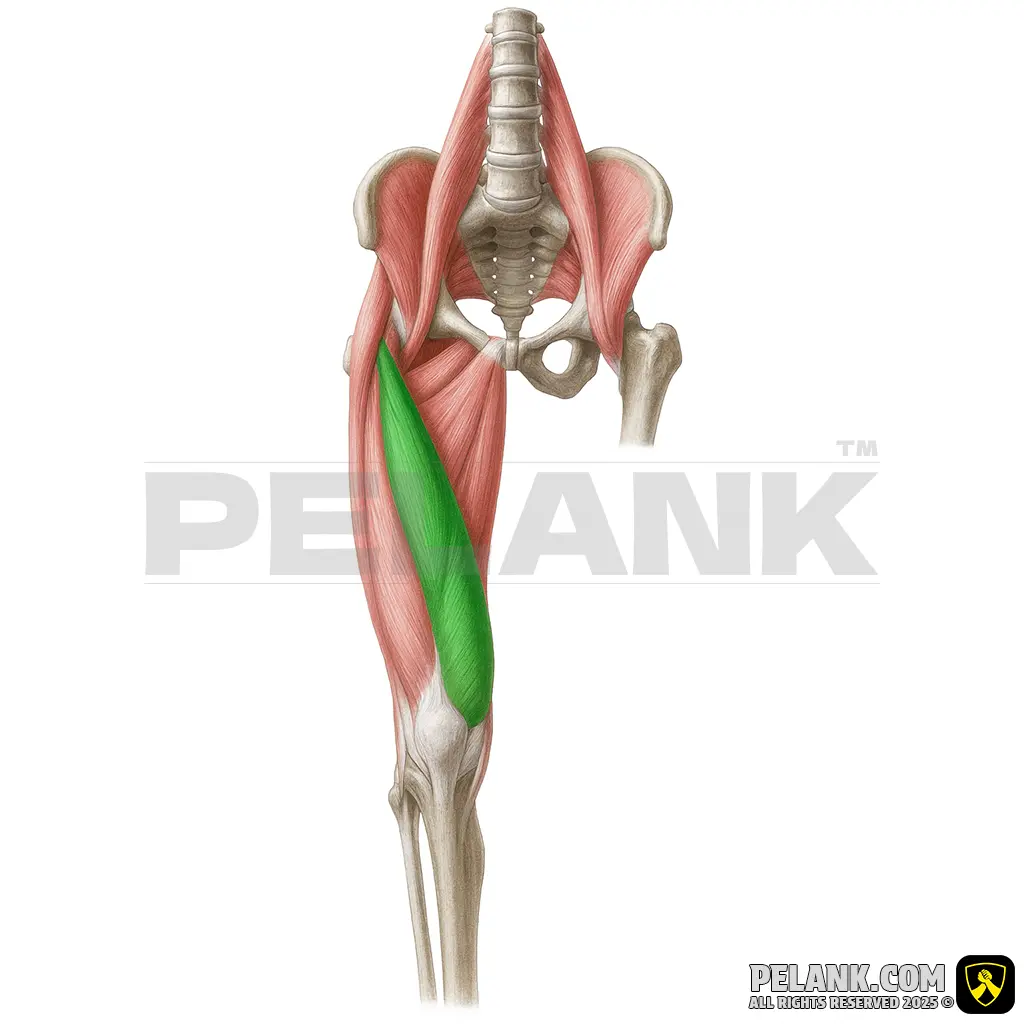
🔷 Full explanation
Click on the title to study the sections.
✅ Persian Name: Vastus Medialis | Pahn Dakheli Raan
✅ Latin Name: Vastus Medialis
✅ Common Name: Inner Quadriceps Muscle
✅ Location:
🟡 Located on the inner front part of the thigh, close to the kneecap.
🟡 Part of the quadriceps group, attaching to the knee joint and patella.
🟡 One of the key muscles involved in stabilizing and balancing the knee during movement and standing.
✅ 🦾 Origin
✔ Medial supracondylar line of the femur (inner and upper surface of the thigh bone)
✔ Medial lip of the linea aspera (roughened line on the inner side of the femur)
✅ 🦿 Insertion
✔ Attaches to the kneecap (patella) via the quadriceps tendon
✔ Connects to the tibia (shinbone) through the patellar ligament
✅ 📌 Function and Classification
🔹 The vastus medialis includes a specialized part called the Vastus Medialis Obliquus (VMO), which controls the angle of the kneecap and prevents its displacement.
✅ Main Functions:
✔ Knee extension during walking, running, and standing.
✔ Stabilizes the kneecap, preventing lateral deviation during movement.
✔ Supports knee stability in sports activities such as running, jumping, and resistance training.
✅ 💪🏻 Muscle Fiber Types
✔ Slow-twitch fibers (Type I): provide endurance and control of the kneecap.
✔ Fast-twitch fibers (Type II): enable powerful movements like jumping and sprint acceleration.
✅ 🏋🏻♂️ Role in Movement and Athletic Performance
✔ One of the key muscles in sports such as sprinting, soccer, bodybuilding, and weightlifting.
✔ Prevents knee weakness and controls its lateral movements.
✅ 🧗🏻♂️ Muscle Strength and Endurance
✔ Weakness of the vastus medialis leads to knee instability and a higher risk of joint injuries.
✔ This muscle is crucial for controlling knee extension movements.
🧠 Innervation
✔ Femoral nerve (L2, L3, L4), which controls the function of this muscle.
🩸 Blood Supply
✔ Deep femoral artery (Profunda femoris artery)
✔ Descending genicular artery
✅ 🤼♂️ Role in Sports and Physical Activities
✔ Bodybuilding: Essential in exercises like squats, lunges, and leg presses.
✔ Soccer and sprinting: Crucial for quick directional changes and acceleration.
✔ Jumping and weightlifting: Active in powerful movements such as snatch and clean & jerk.
✅ 🏌🏻♂️ Interaction with Other Muscles and Joints
✔ Works closely with the vastus lateralis, rectus femoris, and hamstrings to stabilize the knee joint.
✔ Strengthening this muscle helps prevent kneecap joint injuries and knee weakness.
✅ 💉 Vulnerability and Potential Issues
✔ Weakness in the vastus medialis can cause knee pain and patellar tracking disorder.
✔ Prone to tendon inflammation and patellofemoral pain syndrome.
✅ 🏋🏻♂️ Key Exercises to Strengthen the Vastus Medialis Muscle
1️⃣ Wide Stance Squats – emphasize the inner part of the quadriceps
2️⃣ Forward Lunges – improve knee control and thigh strength
3️⃣ Close Stance Leg Press – directly targets the vastus medialis
4️⃣ Box Step-Ups – enhance knee stability and balance
5️⃣ Medicine Ball Squeeze Wall Sit – focuses on the Vastus Medialis Obliquus (VMO)
✅ 🧘🏻♀️ Stretching and Recovery Movements
✔ Quadriceps Stretch – to relieve muscle tension.
✔ Cobra Stretch – helps improve thigh muscle flexibility.
✅ Interesting Fact
✔ The Vastus Medialis Obliquus (VMO) is a specialized part of this muscle responsible for maintaining proper kneecap alignment, and weakness in the VMO can lead to knee problems.
✅ Practical Tip
✔ To reduce knee pain and prevent injury, perform squats and lunges with proper control to effectively strengthen the vastus medialis.
🔴 Name and Location: The inner front thigh muscle that extends from the femur to the kneecap.
🟠 Anatomy: A part of the quadriceps muscle group involved in stabilizing the kneecap.
🟡 Function: Knee extension, kneecap stabilization, and knee balance.
🟢 Physiology: Contains both slow-twitch and fast-twitch fibers, providing strength and endurance.
🔵 Innervation: Stimulated by the femoral nerve (L2, L3, L4).
🟣 Importance: Plays a key role in running, squats, lunges, and preventing knee injuries.
🟤 Exercises: Wide-stance squats, lunges, leg press, step-ups, and wall sits with a medicine ball.
⚫ Interesting Facts: Weakness in this muscle is one of the main causes of knee pain and instability!
Vastus Lateralis Muscle
✅ The vastus lateralis is one of the four muscles of the quadriceps group, located on the outer side of the thigh. It is the largest of the quadriceps muscles, and its primary function is knee extension and stabilizing the patella during movement.
Strengthening this muscle helps boost leg power, improve running speed, and prevent knee injuries.
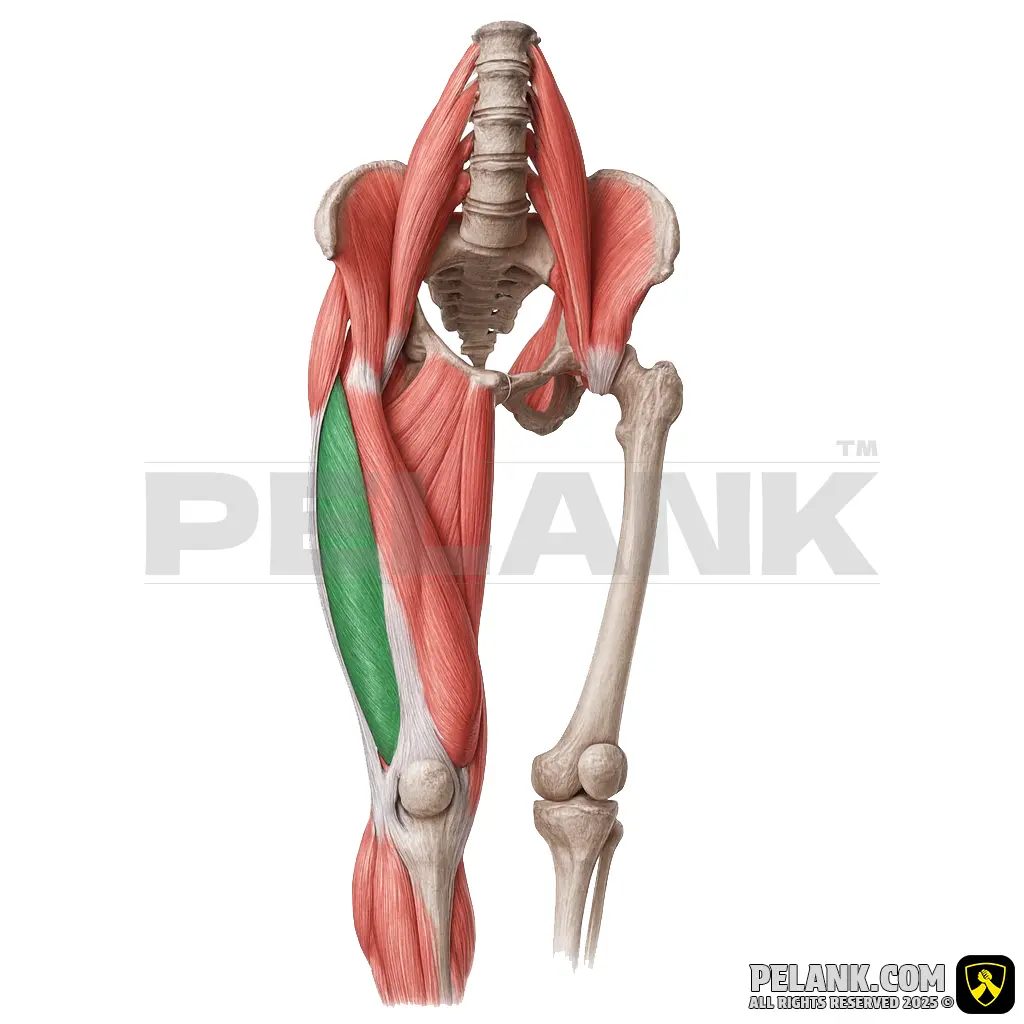
🔷 Full explanation
Click on the title to study the sections.
✅ Persian Name: Vastus Lateralis | Pahn Khareji Ran
✅ Latin Name: Vastus Lateralis
✅ Common Name: Outer Quadriceps Muscle
✅ Location:
🟡 This muscle runs along the outer side of the thigh, extending from the femur (thigh bone) down to the kneecap.
🟡 It is part of the quadriceps group and plays an important role in knee movement and stability.
🟡 A large, powerful muscle that provides most of the strength for the quadriceps.
✅ 🦾 Origin
✔ Outer part of the femur (Greater Trochanter of Femur)
✔ Rough line on the femur bone (Linea Aspera – Lateral Lip)
✔ Gluteal tuberosity (a bony prominence on the femur)
✅ 🦿 Insertion
✔ Attaches to the kneecap (patella) via the quadriceps tendon
✔ Connects to the tibia (shinbone) through the patellar ligament
✅ 📌 Function
🔹 The vastus lateralis is the largest muscle of the quadriceps group and plays a major role in knee extension movements as well as stabilizing the kneecap.
✅ Main Functions:
✔ Knee Extension – involved in activities like walking, running, and squatting.
✔ Knee Stability – helps prevent kneecap displacement and reduces stress on the knee joint.
✔ Leg Strength – enhances performance in power and speed-related movements.
✅ 💪🏻 Muscle Fiber Types
✔ Fast-twitch fibers (Type II): Make up the majority of this muscle’s fibers and are essential for strength and speed.
✔ Slow-twitch fibers (Type I): Contribute to endurance and stability during activities like standing and running.
✅ 🏋🏻♂️ Role in Movement and Sports Performance
✔ Plays a key role in sprinting, jumping, soccer, weightlifting, and bodybuilding.
✔ One of the strongest muscles in the lower body, actively involved in power movements like squats, lunges, and leg presses.
✅ 🧗🏻♂️ Muscle Strength and Endurance
✔ High strength in this muscle improves knee endurance and helps prevent injuries to the knee and thigh.
✔ Weakness in this muscle can lead to imbalanced knee extension and cause kneecap pain.
🧠 Innervation
✔ Femoral nerve (L2, L3, L4), which controls the function of this muscle.
🩸 Blood Supply
✔ Deep femoral artery (Profunda femoris artery)
✔ Descending genicular artery
✅ 🤼♂️ Role in Sports and Physical Activities
✔ Bodybuilding: One of the primary muscles engaged in exercises like squats, lunges, and leg presses.
✔ Running and Jumping: Crucial for acceleration, vertical jumps, and quick, explosive movements.
✔ Soccer and Basketball: Important for power moves such as shooting and sudden leaps.
✅ 🏌🏻♂️ Relationship with Other Muscles and Joints
✔ Works in coordination with the vastus medialis, rectus femoris, and hamstrings to ensure knee stability and movement.
✔ Strengthening this muscle helps prevent patellofemoral pain syndrome and knee imbalances.
✅ 💉 Vulnerability and Common Issues
✔ Prone to muscle strains during high-intensity sports.
✔ Weakness in this muscle can cause imbalances in knee extension and increase pressure on the kneecap.
✅ 🏋🏻♂️ Key Exercises to Strengthen the Vastus Lateralis Muscle
1️⃣ Close-Stance Squats – target the vastus lateralis more intensely
2️⃣ Lateral Lunges – emphasize the outer thigh muscles
3️⃣ Narrow-Stance Leg Press – boost vastus lateralis strength
4️⃣ Incline Sprints – enhance speed and power of this muscle
5️⃣ Weighted Step-Ups – improve quadriceps strength and balance
✅ 🧘🏻♀️ Stretching and Recovery Movements
✔ Quadriceps Stretch – increases flexibility of the thigh muscles
✔ Cobra Stretch – helps relieve muscle tension in the thigh area
✅ Interesting Fact
✔ The vastus lateralis is the largest muscle of the quadriceps group and plays a major role in powerful and fast leg movements.
✅ Practical Tip
✔ To boost your running and jumping power, include lateral lunges and close-stance squats in your workout routine.
🔴 Name and Location: The outer front thigh muscle that extends from the femur (thigh bone) down to the kneecap.
🟠 Anatomy: A part of the quadriceps group responsible for stabilizing and powering the knee.
🟡 Function: Knee extension, maintaining knee stability, and enhancing leg strength.
🟢 Physiology: Composed mainly of fast-twitch fibers that provide strength and speed.
🔵 Innervation: Stimulated by the femoral nerve (L2, L3, L4).
🟣 Importance: Plays a key role in running, jumping, squatting, and other power movements.
🟤 Exercises: Close-stance squats, lateral lunges, leg press, incline sprints, weighted step-ups.
⚫ Interesting Facts: The largest quadriceps muscle, crucial for running and explosive movements!
Vastus Intermedius Muscle
✅ The vastus intermedius is one of the four muscles of the quadriceps group, located beneath the rectus femoris and between the vastus lateralis and vastus medialis. It is classified as a deep muscle, and its primary function is assisting in knee extension.
Strengthening this muscle boosts leg power, enhances knee stability, and improves overall performance in athletic movements.

🔷 Full explanation
Click on the title to study the sections.
✅ Persian Name: Vastus Intermedius | Pahn Miani Ran
✅ Latin Name: Vastus Intermedius
✅ Common Name: Deep Quadriceps Muscle
✅ Location:
🟡 Located at the front of the thigh, beneath the rectus femoris muscle.
🟡 Positioned between the vastus lateralis and vastus medialis muscles.
🟡 Its primary function is knee extension and maintaining stability of the knee joint.
✅ 🦾 Origin
✔ Anterior and lateral surfaces of the femur
✔ Linea aspera (rough line on the femur)
✅ 🦿 Insertion
✔ Patella (kneecap) via the quadriceps tendon
✔ Continues through the patellar ligament to attach to the tibia (shinbone)
✅ 📌 Function
🔹 The vastus intermedius is a deep quadriceps muscle that plays a crucial role in straightening the knee and supporting leg endurance.
✅ Main Functions:
✔ Knee Extension – assists in straightening the knee during standing, walking, and running.
✔ Knee Stability – enhances knee control during powerful and fast movements.
✔ Leg Endurance – helps prevent muscle weakness and knee joint issues.
✅ 💪🏻 Muscle Fiber Types
✔ A mix of slow-twitch (Type I) and fast-twitch (Type II) fibers.
✔ Slow-twitch fibers support stability and endurance for sustained movements.
✔ Fast-twitch fibers enable powerful and quick actions like running and jumping.
✅ 🏋🏻♂️ Role in Movement and Sports Performance
✔ Plays an important role in activities like running, weightlifting, soccer, and bodybuilding.
✔ Crucial for strengthening the knee and legs during squats and endurance exercises.
✅ 🧗🏻♂️ Muscle Strength and Endurance
✔ Strengthening this muscle improves knee balance and helps prevent joint injuries.
✔ Weakness can increase strain on other quadriceps muscles and the kneecap joint.
🧠 Innervation
✔ Femoral nerve (L2, L3, L4), which controls and stimulates this muscle.
🩸 Blood Supply
✔ Deep femoral artery (Profunda femoris artery)
✔ Descending genicular artery
✅ 🤼♂️ Role in Sports and Physical Activities
✔ Bodybuilding: Essential muscle engaged in exercises like squats, lunges, and leg presses.
✔ Running and Jumping: Active in movements such as sprints and vertical jumps.
✔ Endurance Sports: Highly involved in activities like cycling and mountain climbing.
✅ 🏌🏻♂️ Connection with Other Muscles and Joints
✔ Works in coordination with the vastus lateralis, vastus medialis, and rectus femoris to stabilize the knee.
✔ Helps prevent muscle imbalances and reduces stress on the kneecap.
✅ 💉 Vulnerability and Common Issues
✔ Susceptible to muscle weakness due to inactivity or lack of resistance training.
✔ Weakness can lead to increased strain on other quadriceps muscles and knee instability.
✅ 🏋🏻♂️ Key Exercises to Strengthen the Vastus Intermedius Muscle
1️⃣ Regular Squats – a fundamental exercise to strengthen this muscle
2️⃣ Static Lunges – improve knee balance and endurance
3️⃣ Leg Press – directly targets the quadriceps muscles
4️⃣ Weighted Step-Ups – boost leg strength and stability
5️⃣ Isometric Quadriceps Holds – help enhance knee muscle endurance
✅ 🧘🏻♀️ Stretching and Recovery Movements
✔ Quadriceps Stretch – increases thigh muscle flexibility
✔ Dynamic Knee Stretch – enhances knee joint mobility and function
✅ Interesting Fact
✔ The vastus intermedius lies completely beneath the rectus femoris and isn’t directly visible, yet it plays a crucial role in knee strength and endurance.
✅ Practical Tip
✔ If you have weak knees, include isometric exercises like wall sits in your workout to effectively strengthen the vastus intermedius.
🔴 Name and Location: A deep muscle at the front of the thigh, located beneath the rectus femoris.
🟠 Anatomy: A part of the quadriceps group responsible for knee extension and stabilizing the knee joint.
🟡 Function: Assists in knee extension, supports knee endurance, and enhances leg balance.
🟢 Physiology: Contains both slow-twitch and fast-twitch muscle fibers, providing a balance of strength and endurance.
🔵 Innervation: Stimulated by the femoral nerve (L2, L3, L4).
🟣 Importance: Plays a key role in running, squatting, lunging, and maintaining knee stability.
🟤 Exercises: Squats, lunges, leg press, step-ups, and isometric exercises.
⚫ Interesting Facts: This muscle isn’t visible from the outside but is one of the strongest stabilizers of the knee!
2. Medial Thigh Muscles / Adductor Group
Adductor Longus Muscle
✅ The adductor longus is one of the adductor muscles of the thigh, located on the inner side of the thigh. It is responsible for bringing the thigh toward the midline of the body and also assists in flexion and rotation of the hip joint.
Strengthening this muscle improves balance, pelvic stability, and athletic performance in lateral and quick movements.

🔷 Full explanation
Click on the title to study the sections.
✅ Persian Name: Adductor Longus | Nazdik-Konandeh Boland Ran
✅ Latin Name: Adductor Longus
✅ Common Name: Inner Thigh Muscle
✅ Location:
🟡 Located on the inner thigh, positioned between the adductor brevis and gracilis muscles.
🟡 Originates from the pubic bone of the pelvis and attaches to the femur (thigh bone).
🟡 Responsible for pulling the thigh inward (adduction) and assisting hip and thigh movements.
✅ 🦾 Origin
✔ Anterior part of the pubic bone (Pubis – Inferior Ramus)
✅ 🦿 Insertion
✔ Middle third of the linea aspera on the femur (rough line on the thigh bone)
✅ 📌 Function
🔹 The adductor longus belongs to the group of inner thigh (adductor) muscles and plays a key role in several important hip movements.
✅ Main Functions:
✔ Hip Adduction – pulling the thigh toward the body’s midline.
✔ Hip Flexion – assisting in movements like lifting the knee.
✔ Hip Internal Rotation – helping rotate the thigh inward.
✅ 💪🏻 Muscle Fiber Types
✔ A combination of slow-twitch (Type I) and fast-twitch (Type II) fibers.
✔ Slow-twitch fibers: responsible for muscle endurance and stability during daily activities.
✔ Fast-twitch fibers: contribute to powerful and explosive movements like running and quick direction changes.
✅ 🏋🏻♂️ Role in Movement and Sports Performance
✔ Plays an important role in running, quick direction changes, and lateral movements common in sports like soccer and basketball.
✔ Helps stabilize the pelvis and hip joint during walking, standing, and turning.
✅ 🧗🏻♂️ Muscle Strength and Endurance
✔ Strengthening this muscle improves control of lateral movements and reduces the risk of hip and groin injuries.
✔ Weakness in this muscle can lead to groin strains and thigh imbalances.
🧠 Innervation
✔ Obturator nerve (L2, L3, L4), which controls this muscle.
🩸 Blood Supply
✔ Deep femoral artery (Profunda Femoris Artery)
✔ Obturator artery
✅ 🤼♂️ Role in Sports and Physical Activities
✔ Bodybuilding: Plays a key role in exercises like squats, lunges, and lateral movements.
✔ Running and Direction Changes: Important in sports such as soccer, basketball, and tennis.
✔ Flexibility Sports: Helps improve thigh flexibility in activities like yoga and Pilates.
✅ 🏌🏻♂️ Connection with Other Muscles and Joints
✔ Works together with the adductor magnus, adductor brevis, and gracilis muscles to adduct the thigh and stabilize the pelvis.
✔ Helps reduce strain on the hamstrings and hip joint.
✅ 💉 Vulnerability and Common Issues
✔ Prone to strains and tears in sports that require rapid direction changes.
✔ Weakness in this muscle can lead to groin pain and pelvic instability.
✅ 🏋🏻♂️ Key Exercises to Strengthen the Adductor Longus Muscle
1️⃣ Cable Hip Adduction – increases strength of the thigh adductors
2️⃣ Sumo Squat – targets the inner thigh muscles
3️⃣ Lateral Lunges – strengthens the adductors and improves control of side-to-side movements
4️⃣ Medicine Ball Squeeze Glute Bridge – focuses on adductor strength
5️⃣ Isometric Adduction Holds – builds muscular endurance in the adductors
✅ 🧘🏻♀️ Stretching and Recovery Movements
✔ Butterfly Stretch – increases flexibility of the inner thigh muscles.
✔ Standing Adductor Stretch – relieves muscle tension in the groin area.
✅ Interesting Fact
✔ The adductor longus is the first muscle in the adductor group to activate during walking, playing a vital role in maintaining balance while standing and moving.
✅ Practical Tip
✔ To prevent groin injuries, make sure to include both stretching and strengthening exercises for this muscle in your workout routine.
🔴 Name and Location: The inner thigh muscle that extends from the pubic bone of the pelvis to the femur (thigh bone).
🟠 Anatomy: A member of the adductor muscle group responsible for pulling the thigh inward and assisting hip movements.
🟡 Function: Thigh adduction, pelvic stabilization, and assisting with hip flexion and internal rotation.
🟢 Physiology: A mix of slow-twitch and fast-twitch muscle fibers, offering both endurance and strength.
🔵 Innervation: Supplied by the obturator nerve (L2, L3, L4).
🟣 Importance: Plays a key role in running, changing direction, squatting, and endurance sports.
🟤 Exercises: Cable hip adductions, sumo squats, lateral lunges, and isometric exercises.
⚫ Interesting Facts: This muscle is the first to activate during walking!
Adductor Brevis Muscle
✅ The adductor brevis is a small but important muscle in the adductor group of the thigh, located on the inner side of the thigh. Positioned between the adductor longus and the adductor magnus, its function is to bring the thigh toward the midline of the body and assist in internal rotation and flexion of the hip joint.
Strengthening this muscle enhances pelvic stability, increases thigh strength, and reduces the risk of injury during lateral and explosive movements in sports.
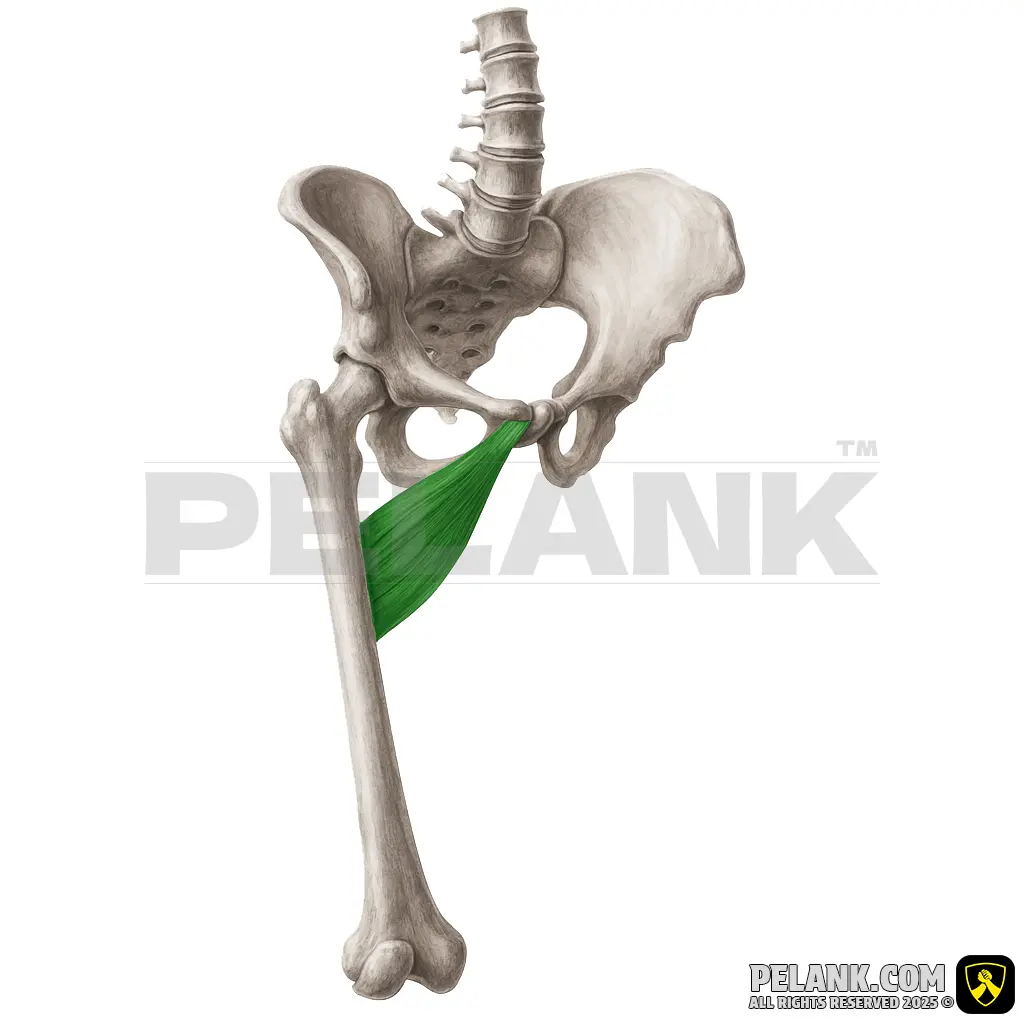
🔷 Full explanation
Click on the title to study the sections.
✅ Persian Name: Adductor Brevis | Nazdik-Konandeh Kootah Ran
✅ Latin Name: Adductor Brevis
✅ Common Name: Short Inner Thigh Muscle
✅ Location:
🟡 Located on the inner thigh between the adductor longus and adductor magnus muscles.
🟡 Originates from the pubic bone of the pelvis and attaches to the femur.
🟡 Responsible for pulling the thigh inward (adduction) and assisting with hip flexion and rotation.
✅ 🦾 Origin
✔ Anterior body of the pubic bone (Inferior ramus of the pubis)
✅ 🦿 Insertion
✔ Proximal third of the linea aspera on the femur (upper portion of the rough line on the thigh bone)
✅ 📌 Function
🔹 The adductor brevis is one of the smallest muscles in the adductor group and plays a fundamental role in hip joint movements.
✅ Main Functions:
✔ Hip Adduction – moving the thigh inward toward the body’s midline.
✔ Hip Flexion – assists in lifting the thigh during walking and running.
✔ Hip Internal Rotation – helps rotate the pelvis and thigh inward.
✅ 💪🏻 Muscle Fiber Types
✔ A combination of slow-twitch (Type I) and fast-twitch (Type II) fibers.
✔ Slow-twitch fibers: support endurance during steady activities like standing and walking.
✔ Fast-twitch fibers: play a major role in sudden, powerful movements like running and quick direction changes.
✅ 🏋🏻♂️ Role in Movement and Sports Performance
✔ Important for running, sudden turns, and lateral movements common in sports like soccer and basketball.
✔ Stabilizes the hip joint during walking and running.
✅ 🧗🏻♂️ Muscle Strength and Endurance
✔ Strengthening this muscle improves pelvic and thigh stability and reduces the risk of groin injuries.
✔ Weakness can impair pelvic balance and increase the chance of groin strains.
🧠 Innervation
✔ Obturator nerve (L2, L3, L4), which innervates this muscle.
🩸 Blood Supply
✔ Deep femoral artery (Profunda Femoris Artery)
✔ Obturator artery
✅ 🤼♂️ Role in Sports and Physical Activities
✔ Bodybuilding: Plays a key role in exercises like squats, lunges, and lateral thigh workouts.
✔ Running and Direction Changes: Important in sports such as soccer, basketball, and martial arts.
✔ Balance Movements: Essential for stabilizing the thigh and pelvis during yoga and Pilates.
✅ 🏌🏻♂️ Connection with Other Muscles and Joints
✔ Works together with the adductor magnus, adductor longus, and gracilis muscles to stabilize the pelvis and adduct the thigh.
✔ Helps maintain pelvic alignment and reduces strain on the hamstrings and hip joint.
✅ 💉 Vulnerability and Common Issues
✔ Prone to strains and tears in sports involving sudden direction changes.
✔ Weakness in this muscle can reduce adduction strength and cause groin pain.
✅ 🏋🏻♂️ Key Exercises to Strengthen the Adductor Brevis Muscle
1️⃣ Cable Hip Adduction – strengthens the thigh adductors
2️⃣ Sumo Squat – focuses on the inner thigh muscles
3️⃣ Lateral Lunges – builds adductor strength and improves lateral movement control
4️⃣ Weighted Step-Ups – enhances hip joint control
5️⃣ Isometric Adduction Holds – improves muscular endurance in the adductors
✅ 🧘🏻♀️ Stretching and Recovery Movements
✔ Butterfly Stretch – increases flexibility of the inner thigh muscles.
✔ Standing Adductor Stretch – relieves muscle tension in the groin area.
✅ Interesting Fact
✔ The adductor brevis is highly active during short-range, powerful movements and is one of the key muscles involved in quick direction changes in athletes.
✅ Practical Tip
✔ To prevent groin injuries and improve pelvic control, include a combination of strengthening and stretching exercises in your routine.
🔴 Name and Location: The inner thigh muscle situated between the adductor longus and adductor magnus.
🟠 Anatomy: A member of the adductor muscle group responsible for thigh adduction and pelvic stabilization.
🟡 Function: Thigh adduction, assisting hip flexion, and internal rotation of the hip joint.
🟢 Physiology: A mix of slow-twitch and fast-twitch muscle fibers, offering both endurance and strength.
🔵 Innervation: Supplied by the obturator nerve (L2, L3, L4).
🟣 Importance: Plays a key role in running, direction changes, squatting, and balance-focused sports.
🟤 Exercises: Cable hip adductions, sumo squats, lateral lunges, and step-ups.
⚫ Interesting Facts: A small yet crucial muscle for controlling and balancing the pelvis and thigh!
Adductor Magnus Muscle
✅ The adductor magnus is the largest and strongest muscle of the thigh’s adductor group, located on the inner side of the thigh. It plays a key role in thigh adduction, flexion, and extension, and is composed of two parts: the adductor part and the hamstring part.
Strengthening this muscle increases leg power, improves pelvic balance, enhances athletic performance, and reduces the risk of thigh and groin injuries.
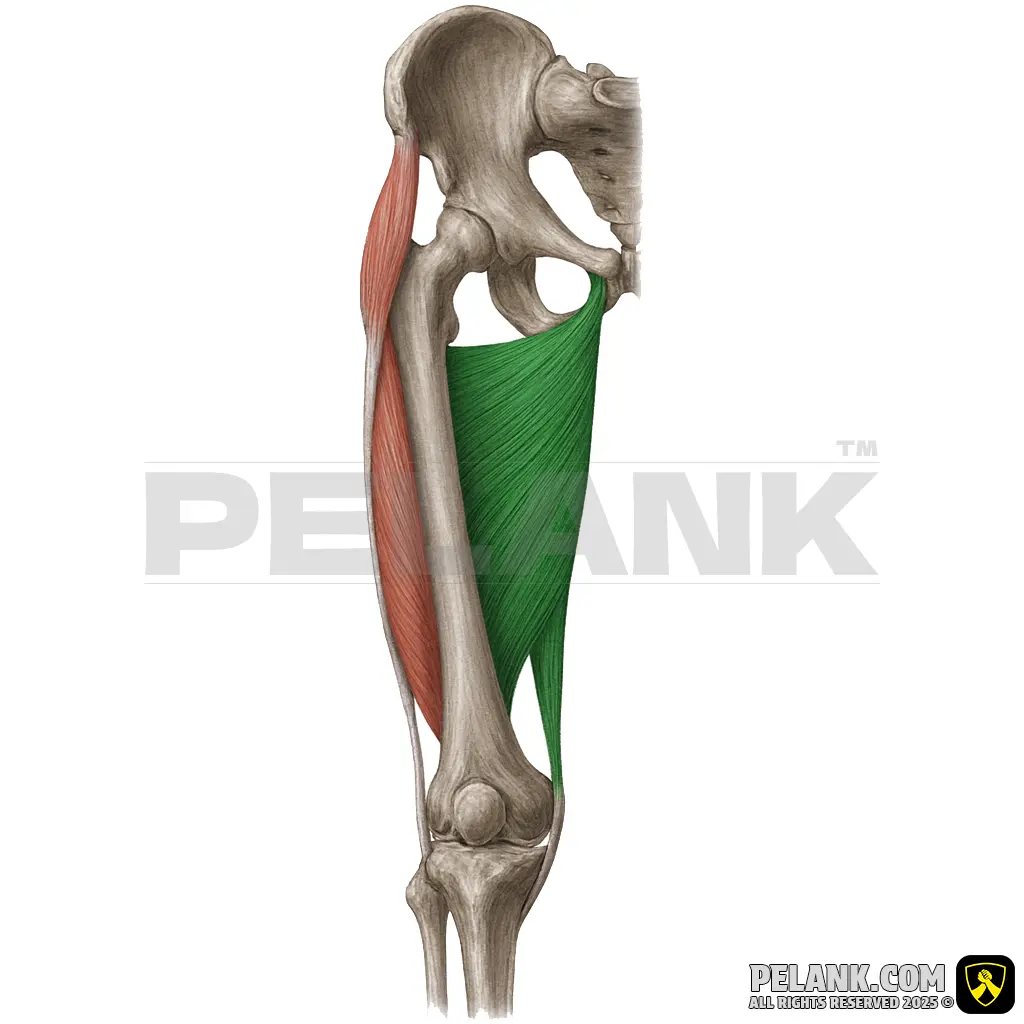
🔷 Full explanation
Click on the title to study the sections.
✅ Persian Name: Adductor Magnus | Nazdik-Konandeh Bozorg Ran
✅ Latin Name: Adductor Magnus
✅ Common Name: Largest Inner Thigh Muscle
✅ Location:
🟡 Located on the inner thigh, beneath the adductor longus and brevis muscles.
🟡 Originates from the pubic bone and ischium of the pelvis and attaches to the femur.
🟡 Comprised of two main parts with different functions:
- 🔹 Adductor Part – responsible for thigh adduction and assisting hip flexion.
- 🔹 Hamstring Part – responsible for hip extension, moving the thigh backward.
✅ 🦾 Origin
✔ Adductor part: Inferior ramus of the pubis
✔ Hamstring part: Ischial tuberosity (posterior part of the pelvis)
✅ 🦿 Insertion
✔ Adductor part: Linea aspera on the femur (rough line on the thigh bone)
✔ Hamstring part: Adductor tubercle on the femur (a bony prominence near the knee)
✅ 📌 Function
🔹 The adductor magnus consists of two main parts, each with distinct functions:
✅ Main Functions:
✔ Hip Adduction – moving the thigh inward toward the body’s midline.
✔ Hip Flexion – performed by the adductor part, aiding movements like lifting the thigh.
✔ Hip Extension – performed by the hamstring part, moving the thigh backward.
✅ 💪🏻 Muscle Fiber Types
✔ A combination of ✔ A combination of slow-twitch fibers (Type I) and fast-twitch fibers (Type II). ✔ The adductor part contains fast-twitch fibers suited for powerful and quick movements.
✔ The hamstring part consists of slow-twitch fibers that provide stability and endurance for sustained activities.
✅ 🏋🏻♂️ Role in Movement and Sports Performance
✔ Plays a key role in running, sudden turns, and powerful movements.
✔ An important muscle in squats, lunges, and lateral exercises to enhance thigh control.
✅ 🧗🏻♂️ Muscle Strength and Endurance
✔ Strengthening this muscle improves pelvic control, leg power, and reduces injury risk in speed-based sports.
✔ Weakness can lead to decreased pelvic stability and a higher risk of hip joint injuries.
🧠 Innervation
✔ Adductor part: Obturator nerve (L2, L3, L4)
✔ Hamstring part: Tibial nerve (L4, L5, S1)
🩸 Blood Supply
✔ Deep femoral artery (Profunda Femoris Artery)
✔ Obturator artery
✅ 🤼♂️ Role in Sports and Physical Activities
✔ Bodybuilding: Plays a significant role in exercises like squats, lunges, and leg presses.
✔ Running and Direction Changes: Active in sports such as soccer, basketball, and martial arts.
✔ Endurance Training: Helps maintain stability during cycling, swimming, and mountain climbing.
✅ 🏌🏻♂️ Connection with Other Muscles and Joints
✔ Works alongside the adductor longus, adductor brevis, and hamstrings to stabilize the pelvis and thigh.
✔ Helps reduce stress on the hip joint and spine.
✅ 💉 Vulnerability and Common Issues
✔ Prone to strains and tears in sports requiring sudden changes of direction.
✔ Weakness in this muscle can lead to hip joint instability and groin injuries.
✅ 🏋🏻♂️ Key Exercises to Strengthen the Adductor Magnus Muscle
1️⃣ Sumo Squat – targets the inner thigh muscles
2️⃣ Cable Hip Adduction – increases strength of the thigh adductors
3️⃣ Lateral Lunges – strengthens the adductors and improves pelvic control
4️⃣ Romanian Deadlift – builds strength in the hamstring part of the muscle
5️⃣ Isometric Adduction Holds – enhances muscular endurance in the adductors
✅ 🧘🏻♀️ Stretching and Recovery Movements
✔ Butterfly Stretch – increases flexibility of the inner thigh muscles.
✔ Standing Adductor Stretch – relieves muscle tension in the adductor area.
✅ Interesting Fact
✔ The adductor magnus is one of the strongest thigh muscles, playing a dual role in both thigh adduction and hip extension.
✅ Practical Tip
✔ If you have trouble with running or changing direction, strengthening this muscle through squats and lateral lunges can boost your thigh strength and improve your balance.
🔴 Name and Location:
The inner thigh muscle located beneath the adductor longus and brevis muscles.
🟠 Anatomy:
It has two parts — an adductor portion that pulls the thigh inward, and a hamstring portion that helps move the thigh outward.
🟡 Function:
Bringing the thigh inward (adduction), and assisting with both bending (flexion) and extending (external rotation) of the thigh.
🟢 Physiology:
A mix of slow-twitch and fast-twitch muscle fibers, providing both endurance and strength.
🔵 Innervation:
Supplied by the obturator nerve and the sciatic nerve.
🟣 Importance:
Plays a key role in running, squats, lunges, and strength training exercises.
🟤 Exercises:
Sumo squats, lateral lunges, Romanian deadlifts, and isometric exercises.
⚫ Interesting Facts: The strongest muscle responsible for thigh adduction!
Gracilis Muscle
✅ The gracilis muscle is one of the thigh adductors and the longest muscle on the inner side of the thigh. It is the most superficial muscle in the adductor group, extending from the pelvis to the inner surface of the lower leg. In addition to adducting the thigh, the gracilis also assists in knee flexion and internal rotation of the leg.
Strengthening this muscle helps improve the stability of the pelvis and knee, enhances balance, and reduces the risk of groin injuries.

🔷 Full explanation
Click on the title to study the sections.
✅ Persian Name: Gracilis | Noari Dakheli Ran
✅ Latin Name: Gracilis
✅ Common Name: Inner Thigh Muscle
✅ Location:
🟡 This muscle runs as a long, narrow strap along the inner thigh.
🟡 It originates from the pubic bone of the pelvis and attaches to the tibia (shinbone) of the lower leg.
🟡 Its functions include pulling the thigh inward (adduction), assisting knee flexion, and rotating the lower leg inward.
✅ 🦾 Origin
✔ Inferior ramus of the pubis bone
✅ 🦿 Insertion
✔ Medial surface of the tibia at the pes anserinus region
✅ 📌 Function and Classification
🔹 The gracilis is the only muscle in the adductor group that crosses the knee joint. Besides adducting the thigh, it also plays a role in bending (flexing) the knee.
✅ Primary Functions:
✔ Hip Adduction – moving the thigh inward toward the body.
✔ Knee Flexion – bending the knee by decreasing its angle.
✔ Internal Rotation of the Tibia – important for movements like changing direction while running.
✅ 💪🏻 Muscle Fiber Types
✔ A combination of slow-twitch (Type I) and fast-twitch (Type II) fibers.
✔ Slow-twitch fibers: provide stability and control during prolonged activities like walking.
✔ Fast-twitch fibers: support powerful and rapid movements such as running and jumping.
✅ 🏋🏻♂️ Role in Movement and Sports Performance
✔ Essential for running, maintaining balance, and stabilizing the knee and pelvis.
✔ Plays a key role in lateral movements common in sports like soccer, basketball, and skating.
✅ 🧗🏻♂️ Muscle Strength and Endurance
✔ Strengthening this muscle improves knee stability and enhances control during side-to-side leg movements.
✔ Weakness in this muscle can lead to knee instability and a higher risk of groin injuries.
🧠 Innervation
✔ Obturator nerve (L2, L3, L4), which innervates this muscle.
🩸 Blood Supply
✔ Obturator artery
✔ Deep femoral artery (Profunda femoris artery)
✅ 🤼♂️ Role in Sports and Physical Activities
✔ Bodybuilding: Plays a crucial role in exercises like squats, lunges, and thigh balance drills.
✔ Martial Arts: Active during kicking movements in sports such as karate and taekwondo.
✔ Soccer and Basketball: Important for rotational movements and quick changes of direction.
✅ 🏌🏻♂️ Interaction with Other Muscles and Joints
✔ Works together with the adductor longus, brevis, magnus, and hamstrings to control the thigh and knee.
✔ Helps stabilize the pelvis and reduce stress on the knee joint.
✅ 💉 Vulnerabilities and Common Issues
✔ Prone to strains and tears in sports that involve sudden changes of direction.
✔ Weakness in this muscle can lead to groin pain and knee instability.
✅ 🏋🏻♂️ Key Exercises to Strengthen the Gracilis Muscle
1️⃣ Sumo Squat – Focuses on strengthening the inner thigh muscles.
2️⃣ Cable Hip Adduction – Builds strength specifically in the gracilis muscle.
3️⃣ Lateral Lunges – Enhances balance in the pelvis and thighs.
4️⃣ Weighted Step-Ups – Improves control of the hip and knee joints.
5️⃣ Isometric Adduction Holds – Boosts muscular endurance.
✅ 🧘🏻♀️ Stretching and Recovery Movements
✔ Butterfly Stretch – increases flexibility of the inner thigh muscles.
✔ Standing Adductor Stretch – relieves muscle tension in the groin area.
✅ Interesting Fact
✔ The gracilis is the only adductor muscle that crosses the knee joint and also assists in bending the knee!
✅ Practical Tip
✔ If you struggle with changing direction or side-to-side movements, incorporating stretching and strengthening exercises for this muscle can help improve control of your pelvis and knee.
🔴 Name and Location:
An inner thigh muscle that extends from the pubic bone of the pelvis down to the tibia (shinbone) of the lower leg.
🟠 Anatomy:
Part of the adductor muscle group, responsible for pulling the thigh inward and assisting with knee flexion.
🟡 Function:
Adducting the thigh, assisting knee flexion, and internally rotating the lower leg.
🟢 Physiology: A mix of slow-twitch and fast-twitch muscle fibers, offering both endurance and strength.
🔵 Innervation: Supplied by the obturator nerve (L2, L3, L4).
🟣 Importance:
Plays a key role in running, changing direction, squats, and martial arts.
🟤 Exercises:
Sumo squats, lateral lunges, step-ups, and isometric exercises.
⚫ Interesting Facts: The only adductor muscle involved in knee flexion!
Pectineus Muscle
✅ The pectineus muscle is one of the adductor muscles of the thigh, located on the inner front side of the thigh. Compared to the other adductors, it is smaller in size but highly important, as it not only adducts the thigh toward the midline of the body but also assists in hip flexion and internal rotation.
Strengthening this muscle improves pelvic stability, enhances movement balance, increases thigh strength, and reduces the risk of groin injuries.

🔷 Full explanation
Click on the title to study the sections.
✅ Persian Name: Pektineh | Asgele Shane’i Ran
✅ Latin Name: Pectineus
✅ Common Name: Inner Groin Muscle
✅ Location:
🟡 This muscle is located on the inner front part of the thigh, close to the hip joint.
🟡 It sits at the top of the adductor muscles, positioned between the adductor longus and the iliopsoas muscles.
🟡 Its functions include thigh adduction, hip flexion, and internal rotation.
✅ 🦾 Origin
✔ Superior ramus of the pubic bone
✅ 🦿 Insertion
✔ Medial part of the linea aspera and pectineal line of the femur
✅ 📌 Function and Classification
🔹 The pectineus is a superficial, spindle-shaped muscle that plays a role in basic movements of the hip joint.
✅ Primary Functions:
✔ Hip Adduction – moving the thigh inward toward the body.
✔ Hip Flexion – lifting the thigh during walking and running.
✔ Hip Internal Rotation – stabilizing and controlling thigh movements during rotation.
✅ 💪🏻 Muscle Fiber Types
✔ A combination of ✔ A combination of slow-twitch fibers (Type I) and fast-twitch fibers (Type II). ✔ Slow-twitch fibers are active in maintaining endurance and body balance during standing and walking.
✔ Fast-twitch fibers are effective in powerful and explosive movements like running and sudden changes of direction.
✅ 🏋🏻♂️ Role in Movement and Sports Performance
✔ Plays a key role in running, quick changes of direction, and controlling hip joint movements.
✔ Stabilizes the pelvis and thigh during walking, running, jumping, and turning.
✅ 🧗🏻♂️ Muscle Strength and Endurance
✔ Strengthening this muscle improves pelvic and thigh stability and reduces stress on the hip joint.
✔ Weakness in this muscle may increase the risk of groin injuries and decrease balance in leg movements.
🧠 Innervation
✔ Femoral nerve (L2, L3, L4)
✔ Obturator nerve (L2, L3, L4) — present in some individuals
🩸 Blood Supply
✔ Femoral artery
✔ Obturator artery
✅ 🤼♂️ Role in Sports and Physical Activities
✔ Bodybuilding: Active in exercises like squats, lunges, and leg movements.
✔ Agility Sports: Plays an important role in soccer, basketball, track and field, and tennis.
✔ Endurance Training: Helps maintain balance in cycling, swimming, and yoga.
✅ 🏌🏻♂️ Interaction with Other Muscles and Joints
✔ Works together with the adductor longus, adductor brevis, gracilis, and iliopsoas muscles to stabilize the pelvis and thigh.
✔ Helps reduce stress on the hip joint and prevent groin injuries.
✅ 💉 Vulnerabilities and Common Issues
✔ Prone to strains and tears in sports that involve sudden changes of direction.
✔ Weakness in this muscle may cause groin pain and impair pelvic movements.
✅ 🏋🏻♂️ Key Exercises to Strengthen the Pectineus Muscle
1️⃣ Sumo Squat – Focuses on strengthening the inner thigh muscles.
2️⃣ Cable Hip Adduction – Builds strength in the pectineus muscle.
3️⃣ Lateral Lunges – Enhances balance in the pelvis and thigh.
4️⃣ Weighted Step-Ups – Improves control of the hip joint.
5️⃣ Isometric Adduction Holds – Increases muscular endurance.
✅ 🧘🏻♀️ Stretching and Recovery Movements
✔ Butterfly Stretch – increases flexibility of the inner thigh muscles.
✔ Standing Adductor Stretch – relieves muscle tension in the adductor area.
✅ Interesting Fact
✔ The pectineus is one of the few thigh muscles innervated by both the femoral nerve and, in some cases, the obturator nerve.
✅ Practical Tip
✔ To improve your leg performance in running and agility, include strength and stretching exercises for this muscle in your training routine.
🔴 Name and Location:
A muscle located on the front inner upper thigh, positioned at the top of the adductor group.
🟠 Anatomy:
Part of the adductor muscle group, responsible for thigh adduction, hip flexion, and internal rotation.
🟡 Function:
Adducts the thigh, assists in hip flexion, and enables internal rotation of the thigh.
🟢 Physiology: A mix of slow-twitch and fast-twitch muscle fibers, offering both endurance and strength.
🔵 Innervation:
Supplied by the femoral nerve and, in some individuals, also by the obturator nerve.
🟣 Importance:
Plays a key role in running, changing direction, squats, and agility sports.
🟤 Exercises:
Sumo squats, lateral lunges, step-ups, and isometric exercises.
⚫ Interesting Facts: A small but vital muscle for pelvic and thigh stability and function!
3. Posterior Thigh Muscles - Hamstring Group
Hamstring Muscles
✅ The hamstrings are a group of three major muscles located in the posterior thigh: the biceps femoris, semitendinosus, and semimembranosus. These muscles originate from the pelvis and extend down to the bones of the lower leg, playing a key functional role in knee flexion and hip extension.
These muscles also play a vital role in pelvic stability and in controlling movements involved in running, jumping, and changing direction during sports. Injuries in this area are common, especially in speed-based activities. Regular strengthening and stretching of the hamstring group help reduce injury risk, increase speed, and improve overall lower limb performance.
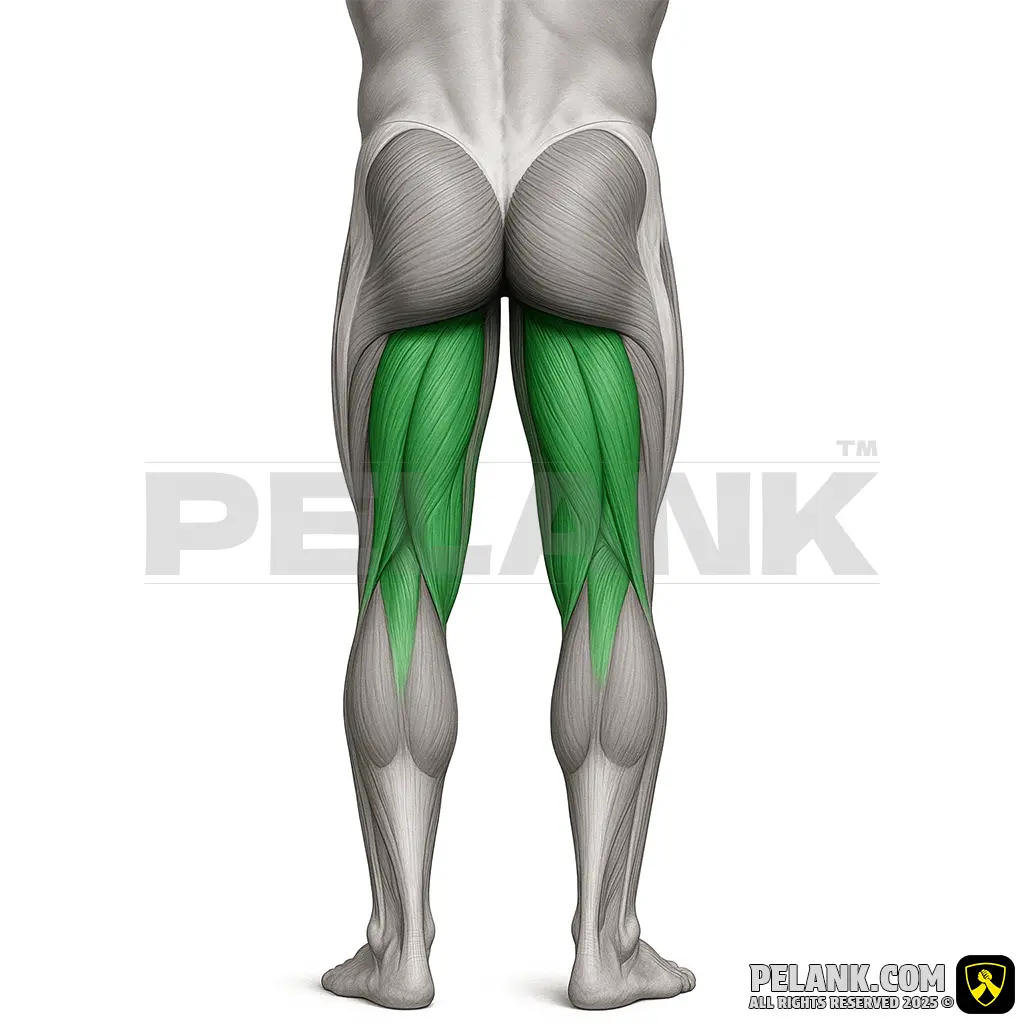
🔷 Full explanation
Click on the title to study the sections.
✅ Persian name: Hamstring Muscles | Hamstrings
✅ Latin name: Hamstring Muscles
✅ Common name: Posterior Thigh Muscles
✅ Location:
🟡 Situated in the posterior part of the thigh, between the pelvis and the lower leg.
🟡 Composed of three main muscles:
Biceps Femoris Muscle: located in the posterolateral part of the thigh.
Semitendinosus Muscle: located in the middle of the back of the thigh.
Semimembranosus muscle: located deep in the inner part of the thigh
🟡 All of these muscles originate from the pelvic region (ischial tuberosity) and attach to the bones of the lower leg (tibia or fibula).
🟡 Main functions of these muscles:
▪️ Flexion of the knee joint
▪️ Extension of the hip joint
▪️ Stabilization of the pelvis and control of movements in activities such as walking, running, jumping, and sudden stopping
🦾 1. Biceps Femoris Muscle
🔹 Long Head
✅ Origin:
✔ Ischial tuberosity
✅ Insertion:
✔ Head of the fibula
✅ Function:
✔ Knee flexion
✔ Hip extension
✔ Pelvic stabilization during walking and running
✅ Innervation:
✔ Tibial nerve Tibial Nerve (L5, S1, S2)
🔹 Short Head
✅ Origin:
✔ Linea aspera of the femur
✅ Insertion:
✔ Head of the fibula
✅ Function:
✔ Involved only in knee flexion
✔ Does not play a role in hip extension
✅ Innervation:
✔ Common peroneal nerve Common Peroneal Nerve (L5, S1, S2)
🦾 2. Semitendinosus Muscle
✅ Origin:
✔ Ischial tuberosity
✅ Insertion:
✔ Proximal medial surface of the tibia (Pes Anserinus)
✅ Function:
✔ Knee flexion
✔ Hip extension
✔ Internal rotation of the lower leg when the knee is bent
✔ Pelvic stabilization during movement
✅ Innervation:
✔ Tibial nerve Tibial Nerve (L5, S1, S2)
🦾 3. Semimembranosus Muscle
✅ Origin:
✔ Ischial tuberosity
✅ Insertion:
✔ Posterior part of the medial condyle of the tibia
✅ Function:
✔ Knee flexion
✔ Hip extension
✔ Internal rotation of the lower leg when the knee is bent
✔ Stabilization of the hip and knee joints
✅ Innervation:
✔ Tibial nerve Tibial Nerve (L5, S1, S2)
✅ 💪🏻 Muscle Fiber Types
✔ The hamstring muscles consist of a combination of Type I (slow-twitch) and Type II (fast-twitch) fibers.
✔ Type I fibers are utilized in endurance activities such as long-distance running and sustained walking.
✔ Type II fibers are activated during powerful, explosive movements such as sprinting, quick directional changes, and throwing.
✅ 🏋🏻♂️ Role in Motor and Athletic Performance
✔ They play a central role in movements such as knee flexion, hip extension, jumping, squatting, lunging, deadlifting, sprinting, and running.
✔ By preventing knee hyperextension during running and jumping, the hamstrings contribute to the dynamic stability of the hip and knee joints.
✔ These muscles are highly active in decelerating movements and sudden changes of direction, especially in sports such as soccer, basketball, and track and field.
✅ 🧗🏻♂️ Muscle Strength and Endurance
✔ Regular strengthening of the hamstrings leads to:
🔹 Reduced risk of hamstring tears, especially during explosive movements
🔹 Prevention of anterior cruciate ligament (ACL) injuries
🔹 Improved muscular balance between the front and back of the thigh
🔹 Enhanced performance in strength training, sprinting, and acrobatic movements
🧠 Innervation
✔ Biceps Femoris Muscle:
▪️ Long Head: Tibial nerve (L5, S1, S2)
▪️ Short Head: Common peroneal nerve (L5, S1, S2)
✔ Semitendinosus Muscle:
▪️ Tibial nerve (L5, S1, S2)
✔ Semimembranosus Muscle:
▪️ Tibial nerve (L5, S1, S2)
🩸 Blood Supply
✔ Deep femoral artery (profunda femoris)
✔ Perforating branches of the deep femoral artery
✔ Popliteal artery – especially in the posterior knee region, supporting the hamstrings in the distal area
✅ 🤼♂️ Role in Sports and Physical Activities
✔ Bodybuilding: The hamstrings are highly active in strength exercises such as squats, deadlifts, and lunges, particularly during the hip extension phase and in controlling the return movement.
✔ Running and jumping: During the swing phase of running, the hamstrings are responsible for knee flexion and shock absorption upon landing. They also contribute to generating the initial force for sprints, vertical jumps, and directional changes.
✔ Team sports such as soccer and basketball: They play an important role in explosive movements, acceleration, sudden deceleration, and knee stability.
✅ 🏌🏻♂️ Connection with Other Muscles and Joints
✔ The hamstrings, together with the semitendinosus and semimembranosus, help stabilize and control movements of the knee and hip, especially during compound exercises or weightlifting.
✔ They reduce excessive stress on the knee joint and create a strength balance with the quadriceps muscles.
✔ During forward trunk bending, the interaction between the hamstrings and the spinal erectors is essential for maintaining balance.
✅ 💉 Vulnerability and Potential Issues
✔ The hamstrings are among the most commonly injured muscles in professional athletes, particularly during high-speed movements and sudden changes of direction.
✔ Common injuries include:
▫️ Strain
▫️ Partial or complete tear
✔ Weakness or tightness of the hamstrings can lead to:
▫️ Reduced control of knee movements
▫️ Increased risk of ACL injury
▫️ Hip joint instability
✔ Regular strengthening and stretching exercises can play a significant role in injury prevention.
✅ 🏋🏻♂️ Key Exercises to Strengthen the Biceps Femoris Muscle
1️⃣ Romanian Deadlift
🔹 Primarily emphasizes the long head of the biceps femoris
🔹 Increases controlled stretching during the lowering phase
🔹 Strengthens power and control in the hamstrings and hips
2️⃣ Single-Leg Squat
🔹 Isolated activation in the lower limb
🔹 Enhances neuromuscular balance and joint control
🔹 Applies effective load on the hamstrings and assisting muscles
3️⃣ Reverse Lunges
🔹 Engage both heads of the biceps femoris
🔹 Improve dynamic function of the hip and knee joints
🔹 Suitable for injury prevention and rehabilitation
4️⃣ Swiss Ball Hamstring Curls
🔹 Focus on both concentric and eccentric phases of the muscle
🔹 Improve muscular endurance and core control
🔹 Can be performed at home or in minimally equipped environments
5️⃣ Resistance Band Glute Bridge
🔹 Simultaneous activation of the gluteal muscles and hamstrings
🔹 Effective for strengthening the posterior chain
🔹 Enhances stability in the hip region
✅ 🧘🏻♀️ Stretching and Recovery Movements
✔ Standing Hamstring Stretch
▪️ Reduces tension in the posterior thigh
▪️ Improves flexibility and decreases muscle stiffness
✔ Cobra Stretch
▪️ Although primarily designed for the spine, it also aids hamstring function by increasing stretch in the posterior chain.
▪️ A suitable addition for recovery after strength training sessions.
✅ 🧠 Interesting Fact
✔ The short head of the biceps femoris, unlike the long head and the other hamstring muscles, does not originate from the pelvis but rather from the linea aspera of the femur.
🔹 For this reason, from an anatomical perspective, some sources do not classify it as part of the true hamstring group.
🔹 This muscle only affects the knee joint and does not play a role in hip joint movements.
✅ 🛡️ Practical Tip
✔ The hamstrings are among the most commonly vulnerable muscles in athletes, especially during high-speed movements or sudden changes of direction.
🔹 To reduce the risk of hamstring strains or tears:
▪️ Include eccentric strengthening exercises (such as the Nordic Hamstring) in your program.
▪️ Perform dynamic and static stretching exercises regularly before and after training.
▪️ Pay special attention to maintaining strength balance between the quadriceps and hamstrings.
🔴 Name and Location:
A group of muscles in the posterior thigh consisting of three muscles:
▫️ Biceps femoris
▫️ Semitendinosus
▫️ Semimembranosus
These muscles originate from the pelvis and attach to the bones of the lower leg (tibia and fibula).
🟠 Anatomy:
All originate from the ischial tuberosity (sitting bone of the pelvis), except for the short head of the biceps femoris, and they function in knee flexion and hip extension.
The biceps femoris has two distinct heads (long and short) with different innervations.
🟡 Function:
✔ Knee flexion
✔ Hip extension
✔ Assist in stabilizing the pelvis and knee during movement
✔ Internal rotation of the leg by the semimembranosus and semitendinosus
✔ External rotation of the leg by the long head of the biceps femoris
🟢 Physiology:
✔ A combination of slow-twitch (Type I) and fast-twitch (Type II) fibers
✔ Slow-twitch fibers support long-term endurance
✔ Fast-twitch fibers enable explosive movements and jumps
🔵 Innervation:
✔ Biceps femoris:
▫️ Long head: Tibial nerve (L5–S2)
▫️ Short head: Common peroneal nerve (L5–S2)
✔ Semitendinosus and Semimembranosus:
▫️ Tibial nerve (L5–S2)
🟣 Functional Importance:
✔ Play a key role in sports such as running, jumping, squatting, lunging, deadlifting, soccer, and basketball
✔ Contribute to pelvic stabilization and knee protection during dynamic movements
✔ The hamstrings are especially active in decelerating movements and quick directional changes
🟤 Recommended Exercises:
1️⃣ Romanian Deadlift
2️⃣ Reverse Lunge
3️⃣ Resistance Band Glute Bridge
4️⃣ Standing Hamstring Stretch
5️⃣ Swiss Ball exercises for strengthening control and stability
⚫ Interesting Fact:
The short head of the biceps femoris, unlike the other hamstring muscles, does not originate from the pelvis and only acts on the knee; therefore, some sources do not consider it a “true” member of the hamstring group.
Biceps Femoris Muscle
✅ The biceps femoris is one of the three main hamstring muscles, located in the posterior thigh. It has two distinct heads (long and short) that join together at the knee and play important roles in knee flexion and hip stabilization.
Strengthening this muscle increases leg power, enhances running endurance, reduces the risk of hamstring injuries, and improves stability of the knee and hip joints.
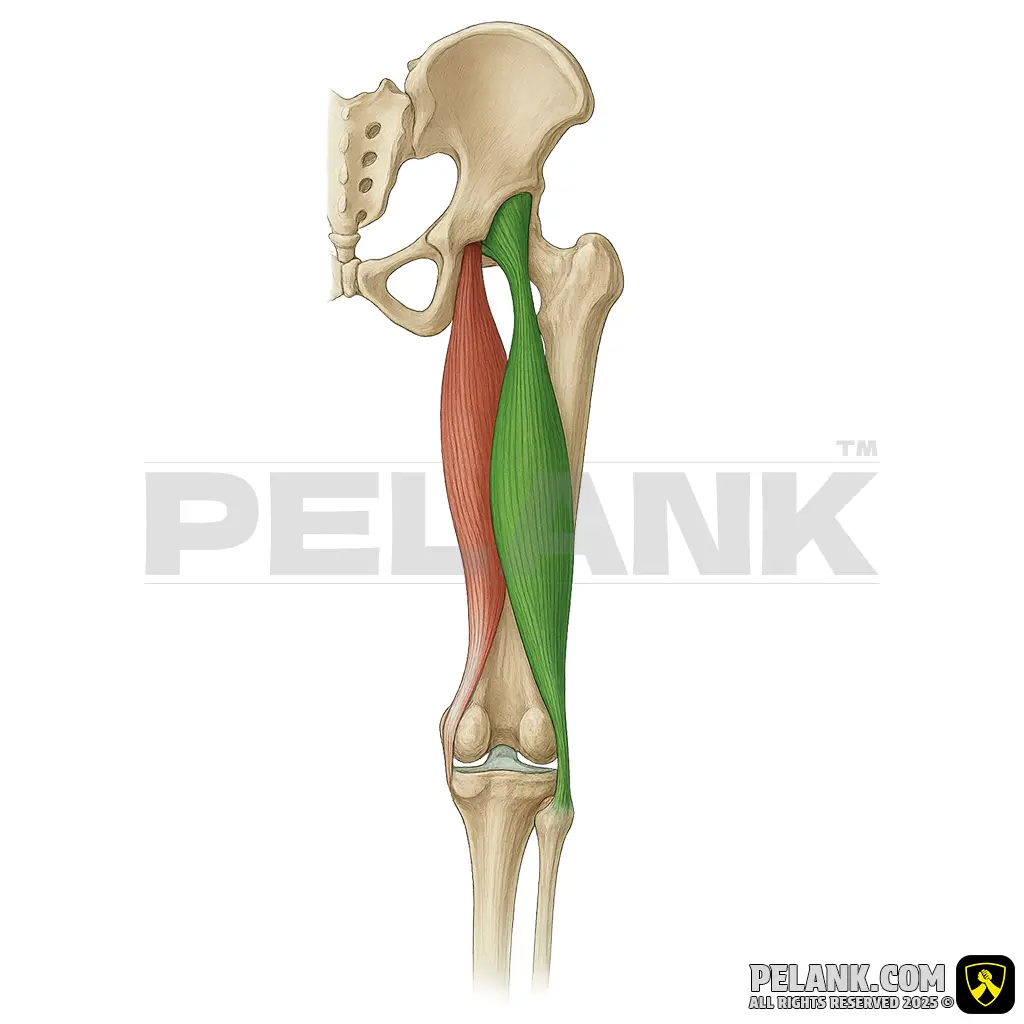
🔷 Full explanation
Click on the title to study the sections.
✅ Persian Name: Azole-ye Do Sar-e Rani | Do Sar Ran
✅ Latin Name: Biceps Femoris
✅ Common Name: Outer Hamstring Muscle
✅ Location:
🟡 Positioned at the posterolateral side of the thigh, part of the hamstring group.
🟡 Consists of two heads (long and short) that attach to the fibula bone in the lower leg.
🟡 Primarily responsible for knee flexion and pelvic stabilization during walking and running.
🦾 Long Head
✅ Origin
✔ Ischial tuberosity in the pelvis
✅ Insertion
✔ Head of the fibula bone
✅ Functions
✔ Bending the knee (knee flexion)
✔ Extending the hip joint (hip extension)
✔ Stabilizing the pelvis during walking and running
✅ Innervation
✔ Tibial nerve (L5, S1, S2)
🦾 Short head
✅ Origin
✔ Linea aspera of the femur (rough ridge on the thigh bone)
✅ Insertion
✔ Head of the fibula bone
✅ Functions
✔ Involved only in bending the knee (knee flexion)
✔ Unlike the long head, it does not contribute to hip extension
✅ Innervation
✔ Common peroneal nerve (L5, S1, S2)
🔹 The long head originates from the pelvis, while the short head starts on the femur.
🔹 The long head contributes to hip extension, whereas the short head only bends the knee.
🔹 The long head is innervated by the tibial nerve, while the short head receives innervation from the common peroneal nerve.
✅ 💪🏻 Muscle Fiber Types
✔ A combination of ✔ A combination of slow-twitch fibers (Type I) and fast-twitch fibers (Type II).
✔ Slow-twitch fibers for endurance during long-distance running
✔ Fast-twitch fibers for quick movements and jumps
✅ 🏋🏻♂️ Role in Movement and Sports Performance
✔ Active during sprinting, vertical jumps, squats, and strength training exercises.
✔ Plays a key role in stabilizing the pelvis and preventing knee strain.
✅ 🧗🏻♂️ Muscle Strength and Endurance
✔ Strengthening this muscle helps reduce the risk of hamstring tears and ACL injuries in the knee.
🧠 Innervation
✔ Long Head: Tibial nerve (L5, S1, S2)
✔ Short Head: Common peroneal nerve (L5, S1, S2)
🩸 Blood Supply
✔ Deep femoral artery (Profunda femoris artery)
✔ Perforating branches of the deep femoral artery
✔ Popliteal artery
✅ 🤼♂️ Role in Sports and Physical Activities
✔ Bodybuilding: Engaged during squats, deadlifts, and lunges.
✔ Running and jumping: Plays a key role in changing direction and boosting running speed.
✔ Soccer and basketball: Important for explosive movements, quick directional changes, and knee endurance.
✅ 🏌🏻♂️ Interaction with Other Muscles and Joints
✔ Works together with the semitendinosus and semimembranosus muscles to stabilize the knee.
✔ Helps reduce stress on the knee and hip joints.
✅ 💉 Vulnerability and Potential Issues
✔ Prone to strains and tears during explosive and high-speed movements.
✔ Weakness in this muscle can lead to knee instability and a higher risk of ACL injuries.
✅ 🏋🏻♂️ Key Exercises to Strengthen the Biceps Femoris Muscle
1️⃣ Romanian Deadlift – focuses on the long head of the hamstring
2️⃣ Single-Leg Squat – improves balance and hamstring strength
3️⃣ Reverse Lunges – activates both heads of the hamstring
4️⃣ Swiss Ball Hamstring Curls – enhances muscle endurance
5️⃣ Resistance Band Glute Bridge – engages the hamstrings and glutes
✅ 🧘🏻♀️ Stretching and Recovery Movements
✔ Standing Hamstring Stretch – helps relieve muscle tension
✔ Cobra Stretch – improves hamstring flexibility
✅ Interesting Fact
✔ The short head of the biceps femoris isn’t technically part of the true hamstrings group because, unlike the other two heads, it doesn’t originate from the pelvis.
✅ Practical Tip
✔ To prevent hamstring strains, make sure to regularly include both strengthening and stretching exercises in your routine.
🔴 Name and Location: A muscle at the back of the thigh with two heads (long and short) that attaches to the fibula bone.
🟠 Anatomy: Part of the hamstring group responsible for bending the knee and stabilizing the pelvis.
🟡 Function:
Long head: knee flexion and hip extension
Short head: knee flexion only
🟢 Physiology: a mix of slow- and fast-twitch fibers for both endurance and muscle power
🔵 Innervation:
Long head: Tibial nerve (L5, S1, S2)
Short head: Common peroneal nerve (L5, S1, S2)
🟣 Importance: Plays a key role in running, jumping, squats, and rapid direction changes.
🟤 Exercises: Romanian deadlifts, reverse lunges, hamstring stretches, glute bridges.
⚫ Interesting fact: The short head is not considered a true hamstring!
Semitendinosus Muscle
✅ The semitendinosus is one of the three main hamstring muscles, located on the inner posterior side of the thigh. It is a long, narrow muscle positioned close to the semimembranosus.
The primary role of this muscle is to bend the knee, extend the hip, and stabilize the pelvis during dynamic lower-body movements.
Strengthening this muscle boosts leg power, enhances running endurance, lowers the risk of hamstring injuries, and improves knee balance and stability.

🔷 Full explanation
Click on the title to study the sections.
✅ Persian Name: Semitendinosus | Nimeh-Vatri
✅ Latin Name: Semitendinosus
✅ Common Name: Inner Hamstring Muscle
✅ Location:
🟡 Located on the inner back of the thigh as part of the hamstring group.
🟡 Positioned between the semimembranosus muscle (medially) and the biceps femoris (laterally).
🟡 Primarily responsible for knee flexion, hip extension, and pelvic stabilization during lower-body movements.
✅ 🦾 Origin
✔ Ischial tuberosity in the pelvis
✅ 🦿 Insertion
✔ Upper part of the medial surface of the tibia (Pes Anserinus)
✅ 📌 Function and Classification
🔹 The semitendinosus is one of the hamstring muscles, playing a key role in stabilizing movements of the pelvis, knee, and thigh.
✅ Primary Functions:
✔ Knee flexion – decreasing the angle of the knee during movement
✔ Hip extension – helping move the thigh backward
✔ Internal rotation of the tibia – assisting twisting motions of the lower leg
✔ Stabilizing the knee and pelvis – preventing unbalanced lower-body movements
✅ 💪🏻 Muscle Fiber Types
✔ A combination of ✔ A combination of slow-twitch fibers (Type I) and fast-twitch fibers (Type II). ✔ Slow-twitch fibers for endurance and knee stability during walking and standing.
✔ Fast-twitch fibers for powerful, quick movements like running and jumping.
✅ 🏋🏻♂️ Role in Movement and Sports Performance
✔ Crucial for running, rapid direction changes, and controlling pelvis and knee movements.
✔ Stabilizes the pelvis and thigh during walking, running, jumping, and twisting.
✅ 🧗🏻♂️ Muscle Strength and Endurance
✔ Strengthening this muscle improves pelvic and thigh stability and reduces the risk of hamstring tears.
✔ Weakness in this muscle can lead to knee instability and hamstring strains.
🧠 Innervation
✔ Tibial nerve (L5, S1, S2)
🩸 Blood Supply
✔ Deep femoral artery (Profunda femoris artery)
✔ Perforating branches of the deep femoral artery
✔ Popliteal artery
✅ 🤼♂️ Role in Sports and Physical Activities
✔ Bodybuilding: Important in exercises like squats, deadlifts, and lunges.
✔ Running and Direction Changes: Plays a key role in sports such as soccer, basketball, and track and field.
✔ Balance and Endurance Training: Highly effective in cycling, hiking, and functional workouts.
✅ 🏌🏻♂️ Interaction with Other Muscles and Joints
✔ Works alongside the biceps femoris and semimembranosus to stabilize the knee and pelvis.
✔ Helps reduce stress on the knee joint and prevents ACL injuries.
✅ 💉 Vulnerability and Potential Issues
✔ Prone to strains and tears in high-intensity sports.
✔ Weakness in this muscle may lead to injuries in the knee and hip.
✅ 🏋🏻♂️ Key Exercises to Strengthen the Semitendinosus Muscle
1️⃣ Romanian Deadlift – strengthens the hamstrings and improves flexibility
2️⃣ Single-Leg Squat – enhances balance and hamstring strength
3️⃣ Reverse Lunges – activates the hamstrings and strengthens the knee joint
4️⃣ Swiss Ball Hamstring Curls – boosts muscle endurance
5️⃣ Resistance Band Glute Bridge – engages the hamstrings and gluteal muscles
✅ 🧘🏻♀️ Stretching and Recovery Movements
✔ Standing Hamstring Stretch – increases flexibility
✔ Cobra Stretch – reduces muscle tension and aids recovery
✅ Interesting Fact
✔ The semitendinosus is one of the three muscles that make up the Pes Anserinus, an important structure for knee stabilization.
✅ Practical Tip
✔ To improve your running and agility, be sure to include strengthening and stretching exercises for this muscle in your routine.
🔴 Name and Location: Inner muscle at the back of the thigh, part of the hamstring group.
🟠 Anatomy: Originates from the pelvis and attaches to the tibia at the Pes Anserinus area.
🟡 Function: Knee flexion, hip extension, internal rotation of the lower leg, and pelvic stabilization.
🟢 Physiology: A mix of slow-twitch and fast-twitch muscle fibers, offering both endurance and strength.
🔵 Innervation: Tibial nerve (L5, S1, S2).
🟣 Importance: Plays a key role in running, squats, lunges, and endurance training.
🟤 Exercises: Romanian deadlifts, reverse lunges, glute bridges, and hamstring stretches.
⚫ Interesting Facts: It plays an important role in knee stabilization through the Pes Anserinus!
Semimembranosus Muscle
✅ The semimembranosus is one of the three hamstring muscles, located on the inner posterior side of the thigh. It is broader and deeper than the semitendinosus and plays a key role in stabilizing the knee and hip.
The main functions of this muscle are bending the knee, extending the hip, internally rotating the lower leg, and stabilizing the knee during various lower-body movements.
Strengthening this muscle improves leg power, reduces the risk of hamstring injuries, enhances knee balance, and boosts overall athletic performance.

🔷 Full explanation
Click on the title to study the sections.
✅ Persian Name: Nimeh-Ghashaee
✅ Latin Name: Semimembranosus
✅ Common Name: Inner Hamstring Muscle
✅ Location:
🟡 Located on the inner back of the thigh, part of the hamstring group.
🟡 Positioned deeper and adjacent to the semitendinosus muscle.
🟡 Primarily responsible for knee flexion, hip extension, and knee joint stabilization.
✅ 🦾 Origin
✔ Ischial tuberosity in the pelvis
✅ 🦿 Insertion
✔ Posterior medial condyle of the tibia (inner back part of the tibial condyle)
✅ 📌 Function and Classification
🔹 The semimembranosus is one of the hamstring muscles, playing a key role in stabilizing movements of the pelvis, knee, and thigh.
✅ Primary Functions:
✔ Knee flexion – decreasing the angle of the knee during movement
✔ Hip extension – helping move the thigh backward
✔ Internal rotation of the tibia – stabilizing twisting movements of the lower leg
✔ Stabilizing the knee and pelvis – preventing unbalanced lower-body movements
✅ 💪🏻 Muscle Fiber Types
✔ A combination of ✔ A combination of slow-twitch fibers (Type I) and fast-twitch fibers (Type II). ✔ Slow-twitch fibers contribute to endurance and control during prolonged movements.
✔ Fast-twitch fibers are effective in powerful, quick actions like running and jumping.
✅ 🏋🏻♂️ Role in Movement and Sports Performance
✔ Essential for running, quick changes of direction, and knee joint stabilization.
✔ Stabilizes the pelvis and thigh during walking, running, jumping, and twisting movements.
✅ 🧗🏻♂️ Muscle Strength and Endurance
✔ Strengthening this muscle reduces the risk of hamstring tears and improves control over knee and pelvis movements.
✔ Weakness in this muscle can lead to knee instability and increased stress on the knee joint.
🧠 Innervation
✔ Tibial nerve (L5, S1, S2)
🩸 Blood Supply
✔ Deep femoral artery (Profunda femoris artery)
✔ Perforating branches of the deep femoral artery
✔ Popliteal artery
✅ 🤼♂️ Role in Sports and Physical Activities
✔ Bodybuilding: Important in exercises like squats, deadlifts, and lunges.
✔ Running and Direction Changes: Plays a key role in sports such as soccer, basketball, and track and field.
✔ Balance and Endurance Training: Highly effective in cycling, hiking, and functional workouts.
✅ 🏌🏻♂️ Interaction with Other Muscles and Joints
✔ Works in coordination with the biceps femoris and semitendinosus muscles to stabilize the knee and pelvis.
✔ Helps reduce stress on the knee joint and prevent ACL injuries.
✅ 💉 Vulnerability and Potential Issues
✔ Prone to strains and tears in high-intensity sports.
✔ Weakness in this muscle may lead to injuries in the knee and hip.
✅ 🏋🏻♂️ Key Exercises to Strengthen the Semimembranosus Muscle
1️⃣ Romanian Deadlift – strengthens the hamstrings and improves flexibility
2️⃣ Single-Leg Squat – enhances balance and hamstring strength
3️⃣ Reverse Lunges – activates the hamstrings and strengthens the knee joint
4️⃣ Swiss Ball Hamstring Curls – boosts muscle endurance
5️⃣ Resistance Band Glute Bridge – engages the hamstrings and gluteal muscles
✅ 🧘🏻♀️ Stretching and Recovery Movements
✔ Standing Hamstring Stretch – increases flexibility
✔ Cobra Stretch – reduces muscle tension and aids recovery
✅ Interesting Fact
✔ The semimembranosus is a strong, deep hamstring muscle directly involved in knee stabilization, and injuries to it can significantly impact movement performance.
✅ Practical Tip
✔ To prevent hamstring tears, be sure to include both strengthening and stretching exercises in your training routine.
🔴 Name and Location: Inner muscle at the back of the thigh, part of the hamstring group.
🟠 Anatomy: Originates from the pelvis and attaches to the medial condyle of the tibia.
🟡 Function: Knee flexion, hip extension, internal rotation of the lower leg, and pelvic stabilization.
🟢 Physiology: A mix of slow-twitch and fast-twitch muscle fibers, offering both endurance and strength.
🔵 Innervation: Tibial nerve (L5, S1, S2).
🟣 Importance: Plays a key role in running, squats, lunges, and endurance training.
🟤 Exercises: Romanian deadlifts, reverse lunges, glute bridges, and hamstring stretches.
⚫ Interesting Facts: One of the primary stabilizers of the knee!
Interesting and Practical Points
The strongest muscle in the body is here!
🔹 The vastus lateralis (outer thigh muscle) is the strongest muscle in the body and even surpasses the heart muscle in withstanding external forces! 🏋️♂️🔥
The muscle with the longest name!
🔹 The sartorius muscle is not only the longest muscle in the body, but its name comes from the Latin word Sartor, meaning "tailor," because its movement resembles the sitting posture of tailors on the ground. 🧵
Real or fake hamstring?
🔹 The short head of the biceps femoris, contrary to common belief, is not considered a true hamstring! Unlike the other hamstring muscles, it does not originate from the pelvis. 🤔❌
A multifunctional muscle!
🔹 The adductor magnus is not only responsible for thigh adduction, but it also has two parts, one of which functions like the hamstrings in hip extension movements! 🔄💪
A small but vital muscle!
🔹 The pectineus muscle is the only one innervated by both the femoral nerve and the obturator nerve! That’s why it plays an important role in powerful and balancing movements. ⚡🦵
Why are hamstring strains so common?
🔹 The hamstrings are weaker and less flexible than the quadriceps, which is why they are more prone to tears and injuries in sports that involve sprinting, jumping, or sudden changes of direction. 🏃💥
A two-faced muscle!
🔹 The adductor longus can act as a thigh adductor in some movements and as a hip flexor in others! 🏋️🔄
Unequal contribution of the quadriceps!
🔹 Among the quadriceps muscles, the vastus medialis plays the biggest role in slow and controlled knee movements, while the vastus lateralis generates the greatest power in fast and explosive actions. ⚡💪
Q-angle, the cause of knee pain!
🔹 The Q-angle (the angle formed between the femur and the tibia) is greater in women due to their wider pelvis, which makes them more prone than men to knee problems such as patellofemoral pain syndrome. 🚺🦵
A muscle with delayed activation!
🔹 The oblique portion of the vastus medialis (vastus medialis oblique – VMO) shows delayed activation in people with knee pain, which can lead to patellar instability. ⏳🏃♂️
The role of thigh muscles in blood circulation!
🔹 When contracting, the quadriceps and hamstrings act like a natural pump that helps return blood from the legs to the heart. That’s why prolonged inactivity can cause blood pooling in the legs and lead to venous problems. ❤️🩸
Another dual-function muscle!
🔹 The gracilis is the only muscle of the thigh adductor group that, in addition to adducting the thigh, also plays a role in knee flexion. 🦵🔄
Unusual resistance of the semimembranosus!
🔹 The semimembranosus muscle, due to its thick and membranous tendons, is more resistant than the other hamstring muscles and is less likely to tear. 💪🔗
Why do some people have knee pain?
🔹 If the strength ratio of the hamstrings to the quadriceps is less than 60%, the risk of anterior cruciate ligament (ACL) tear increases significantly! ⚠️🚑
Which muscle is the strongest in squats?
🔹 Contrary to popular belief, during heavy squats, the vastus lateralis bears the greatest load—not the rectus femoris! 🏋️♂️🔝
Did you know the knee won’t work without the sartorius?
🔹 The sartorius muscle is one of the muscles involved in the Pes Anserinus mechanism, and if it is weak, knee stability will be disrupted. ⚖️🚶♂️
A key muscle in quick direction changes!
🔹 The adductor brevis is one of the most important muscles in sports like football and basketball, as it is highly active during rapid changes of body direction. ⚽🏀
Why are the quadriceps more prone to injury than the hamstrings?
🔹 The quadriceps are subjected to greater stress than the hamstrings during eccentric movements, which is why they are more susceptible to injury during running and sudden stops. 🏃💥
A simple test for hamstring weakness!
🔹 If you notice shaking or inability to maintain balance while performing the single-leg bridge exercise, it indicates weakness in your hamstring muscles. 🏋️❗
Active hamstrings even during sleep!
🔹 The hamstrings remain slightly active even when you are sitting or lying down! These muscles maintain a baseline tension (tonic activation), which helps keep the knee slightly flexed at rest. 🛏️🦵
Conclusion
The thigh muscles are divided into three groups: anterior, medial, and posterior. Each group plays a unique role in movement, stability, and balance.
🔹 The front thigh muscles—including the quadriceps and sartorius—are responsible for straightening the knee and flexing the hip. They play key roles in movements like squatting and running.
🔹 The inner thigh muscles, known as the adductors, pull the leg toward the body’s midline and help stabilize the pelvis. They’re especially important for controlling side-to-side movements.
🔹 The muscles at the back of the thigh—the hamstrings—play a vital role in bending the knee, extending the hip, and stabilizing the pelvis. They are essential for running, jumping, and explosive movements.
✅ Strengthening and improving the flexibility of these muscles is essential to prevent injuries, enhance athletic performance, and maintain overall movement balance.
🎯 Understanding how these muscles work will help you design more effective workouts and reduce your risk of muscle injuries!
Sharing

Mohsen Taheri
Further reading
Pelank Life | Body Health Assessment
The Best Body Health Calculators Using Scientific Methods
Developed by Pelank Life ©
Resources
✅ Anatomy and Medical Books
✅ Research Resources and Standardized Terminology Databases
✅ Visual Resources and Professional Anatomy Atlases
✅ Educational Resources – Official Textual and Visual References
