


Introduction
Introduction
The human body is a complex and coordinated structure in which each muscle plays a vital role in movement, breathing, and structural integrity. The pectoral muscles are among the most important muscle groups in the body. They not only contribute to upper body movements and shoulder stability but also play a role in respiration, protect vital organs, and assist in both pushing and pulling actions.
These muscles include superficial muscles such as the pectoralis major and minor, deep muscles like the intercostals, and the diaphragm, which is the body’s primary respiratory muscle. Each of these muscles has its own unique structure, function, and significance. Understanding them is essential not only for athletes, coaches, and physiotherapists but also for anyone who values their physical health.
In this review, we have conducted a detailed analysis of the chest muscles using the renowned reference “Gray’s Anatomy,” one of the most authoritative anatomy books in the world. This analysis covers the names, structures, functions, innervation, strengthening exercises, and common injuries of the thoracic muscles. Gaining this knowledge provides a deeper understanding of the body’s movement mechanisms and can be used to enhance athletic performance, increase strength, and prevent injuries.

1. Superficial muscles of the chest
Superficial Thoracic Muscles
Pectoralis major muscle
Pectoralis major Muscle
The pectoralis major, or large chest muscle, is one of the most important muscles of the thoracic region, located on the anterior part of the chest. This muscle is responsible for various shoulder movements such as adduction, rotation, and flexion of the arm. It plays a key role in pushing movements such as the bench press and push-ups. Strengthening this muscle improves upper-body strength, enhances chest aesthetics, and increases stability in strength training exercises.
🖼️ Image Gallery
Click on the images to enlarge them.


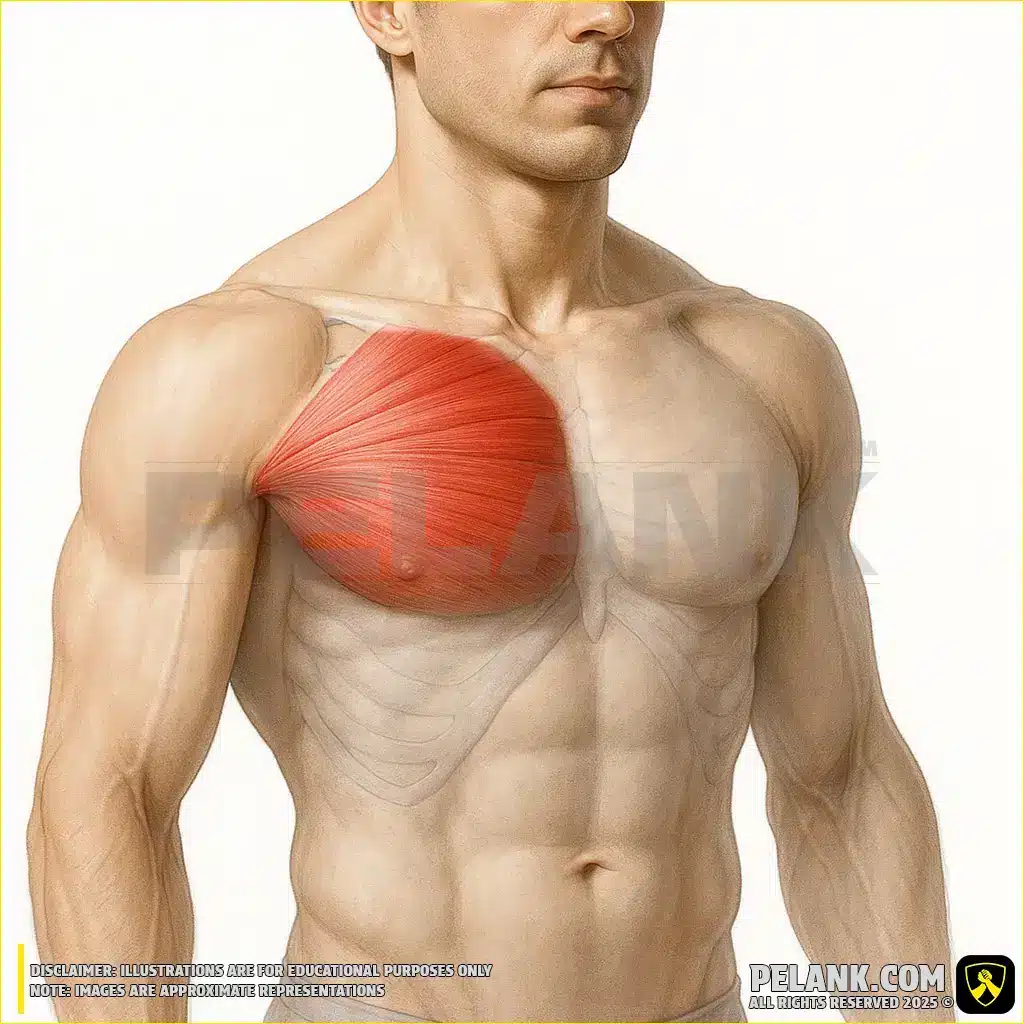
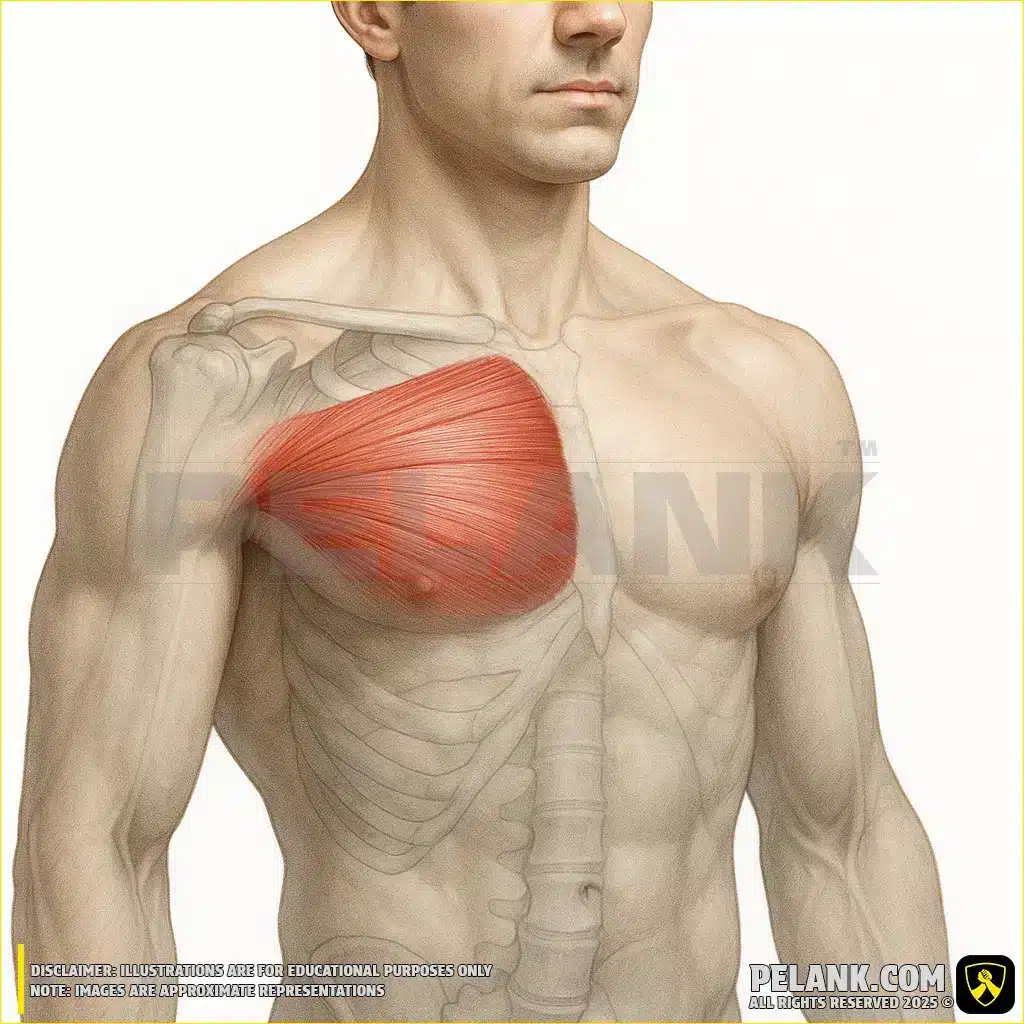



🔷 Full Description
Click on the title to read the sections.
✅ Persian Name: Sinei Bozorg
✅ Latin Name: Pectoralis Major
✅ Common Name: Chest Muscle | Pecs
✅ Location
🟡 Positioned at the front of the chest, lying over the pectoralis minor muscle.
🟡 Originates from the clavicle, sternum, and ribs, and attaches to the humerus.
🟡 Plays a key role in pushing movements such as the bench press and push-ups.
✅ 🦾 Origin
✔ Medial part of the clavicle
✔ Sternum
✔ Ribs 1 to 6
✅ 🦿 Insertion
✔ Bicipital groove of the humerus
✅ 📌 Classification and Function
The pectoralis major muscle consists of two main parts:
1️⃣ Clavicular Head
✔ Responsible for raising the arm and moving it forward
✔ Active in movements such as the incline bench press
2️⃣ Sternocostal Head
✔ Responsible for adducting the arm inward and downward
✔ Active in movements such as the flat bench press and push-ups
✅ Main Functions:
✔ Flexion of the arm at the shoulder joint
✔ Adduction of the arm toward the body
✔ Internal rotation of the arm
✔ Assisting in pushing movements such as the bench press and push-ups
✅ 💪🏻 Muscle Fiber Type
✔ A combination of fast-twitch fibers for generating explosive power
✔ A small amount of slow-twitch fibers for maintaining muscular endurance
✅ 🏋🏻♂️ Role in Movement and Athletic Performance
✔ Primary muscle involved in bench press, parallel bar dips, push-ups, and cable flys
✔ Enhances upper body strength in bodybuilding, CrossFit, and boxing
✅ 🧗🏻♂️ Muscle Strength and Endurance
✔ A large and powerful muscle responsible for explosive upper body movements
✔ Strengthening it improves performance in all pushing exercises and helps prevent shoulder injuries
🧠 Innervation
✔ Medial & Lateral Pectoral Nerves
🩸 Blood Supply
✔ Lateral Thoracic Artery
✔ Internal Thoracic Artery
✅ 🤼♂️ Role in Sports and Physical Activities
✔ Bodybuilding: Bench press, parallel bar dips, cable crossovers
✔ Boxing & MMA: Delivering powerful punches and maintaining a defensive guard
✔ Pushing sports: Push-ups, dips, upper-body strength exercises
✅ 🏌🏻♂️ Interaction with Other Muscles and Joints
✔ Works in coordination with the anterior deltoid, triceps brachii, and pectoralis minor during pushing movements
✔ Strengthening it helps reduce stress on the shoulder joint and prevents injuries
✅ 💉 Vulnerability and Potential Issues
✔ Weakness in the muscle can lead to reduced upper body strength and poor posture
✔ Overstretching may result in tendon inflammation or partial tears
✅ 🏋🏻♂️ Main Exercises to Strengthen the Pectoralis Major
1️⃣ Barbell Bench Press
The best exercise for increasing chest strength and size
2️⃣ Incline Bench Press
Strengthens the clavicular head of the chest muscle
3️⃣ Parallel Bar Dips
Develop the size and strength of the pectoralis major muscle
4️⃣ Cable Crossover
Focuses on adducting and contracting the muscle
5️⃣ Dumbbell Fly
Stretches and strengthens the chest muscles
✅ 🧘🏻♀️ Stretching and Recovery Movements
✔ Chest stretch on the wall | Improves chest flexibility
✔ Standing chest stretch | Increases the range of motion of the shoulder and chest
✅ Fun Fact
✔ The pectoralis major is one of the strongest upper body muscles and plays a vital role in all strength-based sports.
✅ Practical Tip
✔ To build a well-developed and symmetrical chest, combine pushing exercises with stretching movements and focus on all areas of the muscle.
🔴 Name & Location
A large, superficial muscle at the front of the chest
🟠 Anatomy
Consists of two heads (clavicular and sternocostal) with different functions
🟡 Function
Adduction, internal rotation of the arm, and assistance in pushing movements
🟢 Physiology
A combination of fast- and slow-twitch fibers for power and endurance
🔵 Innervation
Medial and lateral pectoral nerves
🟣 Importance
Key in bodybuilding, boxing, swimming, and pushing movements
🟤 Exercises
Bench press, dips, cable crossovers, dumbbell flys
⚫ Fun Facts
The most important muscle for building upper-body strength and chest
Sections of the Pectoralis Major Muscle
Parts of the Pectoralis Major Muscle
Upper Chest | Clavicular Part
Upper Chest Muscles (Clavicular Head)
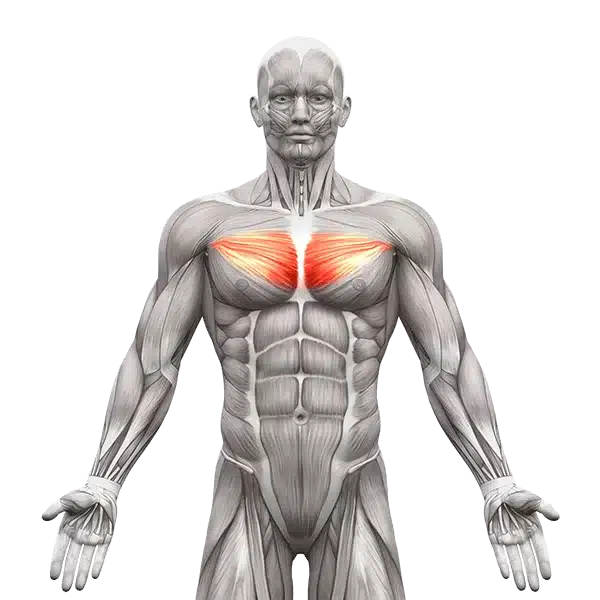
✅ The clavicular portion of the pectoralis major is located in the upper chest and originates from the medial surface of the clavicle. This part extends downward and inward, attaching to the humerus.
🔹 Function:
- Its main role is to lift the arm upward and forward from a lower angle.
- It also assists in adducting the arm toward the midline of the body.
- It also contributes to the internal rotation of the arm.
💪 Effective Exercises:
- Incline Bench Press with Barbell or Dumbbells
- Incline Dumbbell Fly
- Incline bench press with Smith machine
⚡ Special Feature: This section typically has less muscle mass compared to other parts of the chest in most individuals, and it often requires targeted exercises for proper development.

Middle Chest | Sternocostal Part
Middle Chest Muscles (Sternocostal Head)
✅ This portion is the largest and most voluminous part of the pectoralis major, originating from the anterior surface of the sternum and the cartilages of ribs 1 to 6. The fibers of this part attach horizontally to the humerus.
🔹 Function:
- Adduction of the arm toward the body | such as when bringing the arms forward from the sides.
- Generating power in pushing movements such as the bench press.
- Assisting in internal rotation of the arm and stabilization of the shoulder.
💪 Effective Exercises:
- Flat Bench Press with Barbell or Dumbbells
- Flat Dumbbell Fly
- Push-Up
⚡ Special Feature: This section shows the most muscle growth in bodybuilding routines, as it bears the greatest load during most compound movements like the bench press.
Lower Chest | Abdominal Part
Lower Chest Muscles (Abdominal Head)
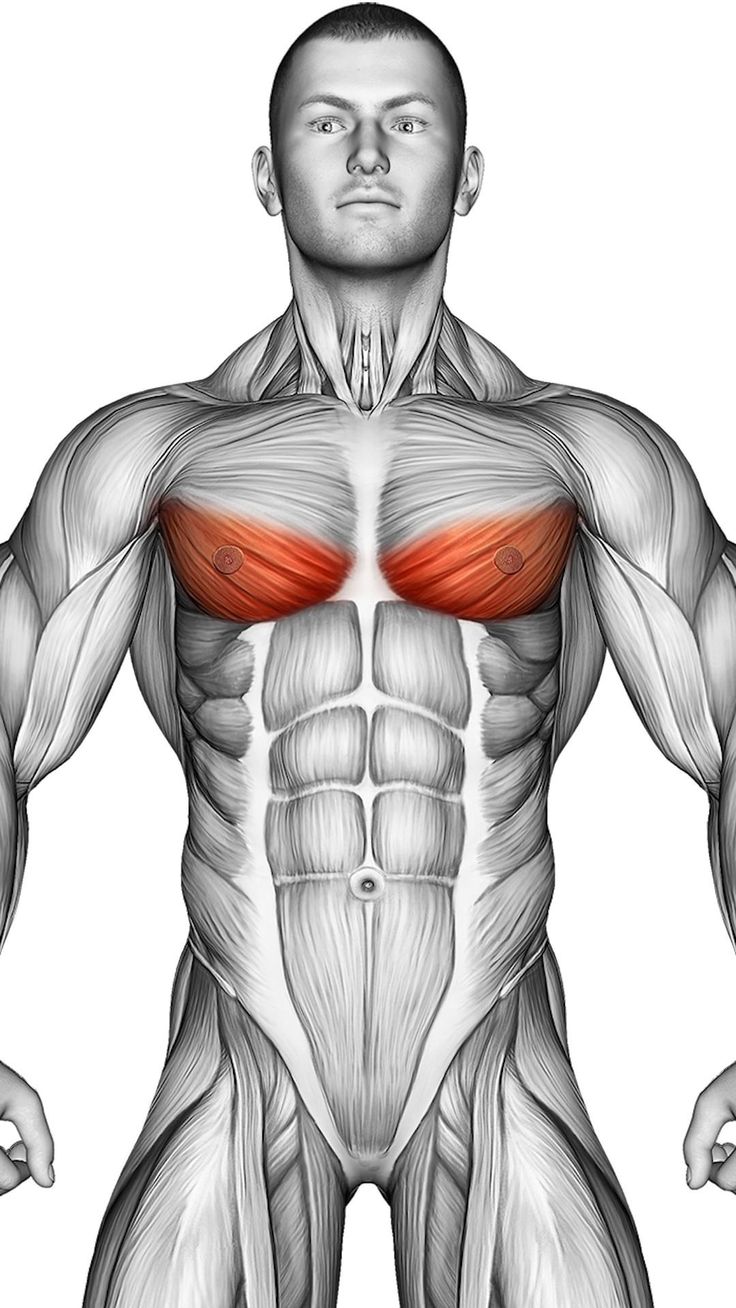
✅ This portion originates from the anterior sheath of the rectus abdominis muscle or the lower part of the sternum and the cartilages of the lower ribs (ribs 6 to 7). Its fibers extend upward and outward, attaching to the humerus.
🔹 Function:
- Lowering the arm | such as when bringing the arm down from overhead.
- Adducting the arm toward the midline of the body, especially in movements where the arm is drawn downward and inward.
- Plays a key role in pressing and decline movements.
💪 Effective Exercises:
- Decline Bench Press with Barbell or Dumbbells
- Parallel Bar Dips
- Low-to-High Cable Crossover
⚡ Special Feature: This section often shows less development in individuals who don’t train the chest comprehensively, which can result in a flat or unfinished appearance in the lower chest area.
Pectoralis Minor Muscle
Pectoralis Minor Muscle
✅ The pectoralis minor is a small but important muscle located beneath the pectoralis major. It plays a role in the movement and stabilization of the scapula, assisting in upper-body motions such as pulling and rotating the shoulder. Its key function is depressing the shoulder and stabilizing the scapula during sports activities and daily movements. Weakness in this muscle can lead to movement disorders in the shoulder and chest.
🖼️ Image Gallery
Click on the images to enlarge them.


🔷 Full Description
Click on the title to read the sections.
✅ Persian Name: Sinei Kochak
✅ Latin Name: Pectoralis Minor
✅ Common Name: Minor Pec
✅ Location
🟡 A deep muscle located beneath the pectoralis major.
🟡 Originates from the upper ribs and attaches to the scapula.
🟡 Plays an important role in the movement and stabilization of the scapula.
✅ 🦾 Origin
✔ Ribs 3 to 5
✅ 🦿 Insertion
✔ Coracoid process of the scapula
✅ 📌 Function
✔ Depresses and stabilizes the scapula
✔ Assists in respiratory movements by elevating the ribs
✔ Participates in shoulder protraction and rotation movements
✅ 💪🏻 Muscle Fiber Type
✔ A mix of slow-twitch fibers (Type I) for maintaining muscular endurance
✔ Fast-twitch fibers (Type II) for quick and sudden shoulder movements
✅ 🏋🏻♂️ Role in Movement and Athletic Performance
✔ Crucial for scapular stabilization during bench press and push-ups
✔ Plays a key role in sports that involve throwing motions (basketball, boxing, shot put)
✅ 🧗🏻♂️ Muscle Strength and Endurance
✔ A small but important muscle for shoulder stabilization and injury prevention
✔ Weakness in this muscle can lead to scapular and shoulder movement imbalances
🧠 Innervation
✔ Medial Pectoral Nerve
🩸 Blood Supply
✔ Lateral Thoracic Artery
✔ Internal Thoracic Artery
✅ 🤼♂️ Role in Sports and Physical Activities
✔ Bodybuilding: Stabilizing the scapula during bench presses and push-ups
✔ Boxing and throwing sports: Assisting in throwing and striking movements
✔ Gymnastics and CrossFit: Preventing shoulder injuries
✅ 🏌🏻♂️ Relation to Other Muscles and Joints
✔ Works together with the pectoralis major, deltoid, and trapezius muscles in upper-body movements
✔ Strengthening it improves shoulder stability and reduces strain on the trapezius and neck
Content
✅ 💉 Vulnerability and Potential Issues
✔ Weakness in this muscle can lead to pain and instability in the shoulder
✔ Spasms or tightness can cause thoracic outlet syndrome
✅ 🏋🏻♂️ Main Exercises to Strengthen the Pectoralis Minor
1️⃣ Parallel Bar Dips
Strengthens and stabilizes the muscle during pushing movements
2️⃣ Push-Up
Activation of the Pectoralis Minor Synergist Muscles
3️⃣ Dumbbell Bench Press
Stabilization and strengthening of the muscle
4️⃣ Rowing Exercise
Strengthens the connection between the scapula and back muscles
5️⃣ Scapular Stretch
Prevents muscle tightness
✅ 🧘🏻♀️ Stretching and Recovery Movements
✔ Chest wall stretch
Improves flexibility and enhances shoulder movement
✔ Seated scapular stretch
Improves range of motion
✅ Fun Fact
✔ The pectoralis minor assists in breathing and becomes more active during increased oxygen demand, such as in aerobic exercises.
✅ Practical Tip
✔ Strengthening this muscle alongside the pectoralis major enhances upper body stability and performance while helping to prevent shoulder injuries.
🔴 Name & Location
A deep muscle located beneath the pectoralis major
🟠 Anatomy
Attaches from ribs 3 to 5 to the coracoid process of the scapula
🟡 Function
Stabilizes and moves the scapula, assists in breathing
🟢 Physiology
A combination of slow- and fast-twitch fibers
🔵 Innervation
Medial pectoral nerve
🟣 Importance
Key in shoulder stabilization and pushing movements
🟤 Exercises
Dips, push-ups, bench press, rowing
⚫ Fun Facts
An important muscle in throwing and striking movements
Subclavius Muscle
Subclavius Muscle
The subclavius is a small, spindle-shaped muscle located beneath the clavicle, helping to stabilize and move this bone. It plays an important role in protecting the vital vessels and nerves beneath the clavicle and in reducing stress on the shoulder joint. Weakness or tightness of this muscle can cause restricted shoulder movement and pain in the clavicular region.
🖼️ Image Gallery
Click on the images to enlarge them.


🔷 Full Description
Click on the title to read the sections.
✅ Persian Name: Zir Targhovei
✅ Latin Name: Subclavius
✅ Common Name: Clavicle Stabilizer Muscle
✅ Location
🟡 Located beneath the clavicle
🟡 Extends between the first rib and the clavicle
🟡 Responsible for clavicle stability and assisting shoulder movements
✅ 🦾 Origin
✔ Superior surface of the first rib and its cartilage
✅ 🦿 Insertion
✔ Inferior surface of the clavicle
✅ 📌 Function
✔ Stabilizes the clavicle to prevent excessive movement
✔ Depresses the clavicle during overhead motions
✔ Protects the subclavian nerves and vessels from pressure
✅ 💪🏻 Muscle Fiber Type
✔ Predominantly composed of slow-twitch fibers (Type I) for long-term stability and endurance
✔ Contains a mix of fast-twitch fibers (Type II) for quick reactions in shoulder stabilization
✅ 🏋🏻♂️ Role in Movement and Athletic Performance
✔ Stabilizes the clavicle during shoulder and arm movements
✔ Helps prevent injuries to the clavicle and shoulder joint
✔ Provides support in sports such as boxing, gymnastics, and discus throwing
✅ 🧗🏻♂️ Muscle Strength and Endurance
✔ A small but essential muscle for shoulder and neck stability
✔ Weakness can cause excessive strain on other shoulder and neck muscles
🧠 Innervation
✔ Subclavian Nerve
(Branch of the Brachial Plexus)
🩸 Blood Supply
✔ Suprascapular Artery
✔ Clavicular Branch of the Thoracoacromial Artery
✅ 🤼♂️ Role in Sports and Physical Activities
✔ Bodybuilding: Assists in shoulder stability during bench presses, push-ups, and overhead movements
✔ Boxing & Martial Arts: Protects the clavicle during punching
✔ Gymnastics & Throwing Sports: Contributes to stability and reduces stress on the shoulder joint
✅ 🏌🏻♂️ Interaction with Other Muscles and Joints
✔ Works in coordination with the deltoid, pectoralis major, and trapezius muscles to maintain shoulder stability
✔ Poor function of this muscle can lead to asymmetrical shoulder movement and clavicle pain
✅ 💉 Vulnerability and Potential Issues
✔ Muscle weakness can lead to clavicle instability and shoulder problems
✔ Tightness or spasms in this muscle may cause pain and limited upper body mobility
✅ 🏋🏻♂️ Main Exercises to Strengthen the Subclavius
1️⃣ Dumbbell Shrugs
Activates the muscle while stabilizing the clavicle
2️⃣ Dumbbell Shoulder Press
Strengthens the muscle during overhead movements
3️⃣ Low Cable Pull
Resistance training for clavicle stability
4️⃣ Push-Ups
Helps strengthen the muscle during upper-body pressing
5️⃣ Shoulder Control Movements with Resistance Bands
Improves balance and endurance of the muscle
✅ 🧘🏻♀️ Stretching and Recovery Movements
✔ Neck and Shoulder Stretch
Releases tension in the subclavius
✔ Wall Stretching Movements
Increases flexibility of the muscle and prevents stiffness
✅ Fun Fact
✔ The subclavius is one of the first muscles to have evolved in humans and plays a fundamental role in stabilizing the clavicle during daily activities.
✅ Practical Tip
✔ Strengthening this muscle improves upper body exercise performance and reduces the risk of shoulder joint injuries.
🔴 Name & Location
A small muscle located beneath the clavicle
🟠 Anatomy
Connects from the first rib to the inferior surface of the clavicle
🟡 Function
Stabilizes the clavicle and assists in shoulder movements
🟢 Physiology
A combination of slow- and fast-twitch fibers
🔵 Innervation
Subclavian nerve
🟣 Importance
Key for stabilizing the clavicle, upper-body movements, and preventing shoulder injuries
🟤 Exercises
Shrugs, shoulder press, low cable pull, push-ups
⚫ Fun Facts
One of the key muscles in protecting the subclavian nerves and vessels
Serratus Anterior Muscle
Serratus Anterior Muscle
The serratus anterior is one of the most important muscles for stabilizing and moving the scapula. It is named for its serrated shape, as it attaches to the ribs. The serratus anterior plays a key role in maintaining the balance and stability of the scapula and is highly active in forward-pushing movements such as throwing, punching, and push-ups. Strengthening this muscle improves shoulder range of motion, increases endurance in athletic movements, and helps prevent shoulder pain and instability.
🖼️ Image Gallery
Click on the images to enlarge them.


🔷 Full Description
Click on the title to read the sections.
✅ Persian Name: Dandanei Ghodami
✅ Latin Name: Serratus Anterior
✅ Common Name: Boxer’s Muscle
✅ Location
🟡 Positioned on the lateral side of the chest over the upper ribs
🟡 Originates from the upper ribs and attaches to the medial border of the scapula
🟡 Its main role is stabilizing the scapula and moving it forward (protraction)
✅ 🦾 Origin
✔ Ribs 1 to 8 or 9
✅ 🦿 Insertion
✔ Medial border of the scapula
✅ 📌 Function
✔ Protraction of the scapula | Assists in movements such as punching and throwing
✔ Stabilizes the scapula on the rib cage | Prevents instability and displacement of the scapula
✔ Upward rotation of the scapula | During overhead arm elevation
✔ Assists in pushing movements such as push-ups and bench presses
✅ 💪🏻 Muscle Fiber Type
✔ A combination of slow-twitch fibers (Type I) for endurance and fast-twitch fibers (Type II) for quick movements
✅ 🏋🏻♂️ Role in Movement and Athletic Performance
✔ Active in all throwing and punching movements, such as in boxing
✔ Primary scapular stabilizer during exercises like push-ups and bench press
✔ Assists scapular rotation when lifting objects overhead (e.g., weightlifting and discus throwing)
✅ 🧗🏻♂️ Muscle Strength and Endurance
✔ A key muscle for shoulder stability and prevention of joint injuries
✔ Weakness leads to scapular winging, which limits upper-body movements
🧠 Innervation
✔ Long Thoracic Nerve
🩸 Blood Supply
✔ Thoracodorsal Artery
✔ Posterior Intercostal Arteries
✅ 🤼♂️ Role in Sports and Physical Activities
✔ Boxing & MMA: Responsible for strong and fast punching movements
✔ Weightlifting: Assists in proper scapular rotation during heavy lifts
✔ Bodybuilding & Fitness: Active in pushing exercises such as push-ups, dips, and bench presses
✅ 🏌🏻♂️ Interaction with Other Muscles and Joints
✔ Works in coordination with the trapezius, deltoid, and pectoralis major muscles for proper shoulder stabilization and movement
✔ Poor scapular stabilization due to weakness in this muscle can lead to shoulder pain and decreased athletic performance
✅ 💉 Vulnerability and Potential Issues
✔ Weakness in this muscle can lead to scapular winging, which reduces shoulder range of motion
✔ Spasms or weakness may cause interscapular pain and decreased shoulder stability
✅ 🏋🏻♂️ Main Exercises to Strengthen the Serratus Anterior
1️⃣ Push-Ups with Scapular Focus
Direct activation and strengthening of the muscle
2️⃣ Resistance Punches
Simulates punching movements to increase stability
3️⃣ Arm Raises with Resistance Bands
Helps strengthen and stabilize the scapula
4️⃣ Resistance Band Push-Ups
Adds extra load to enhance muscular endurance
5️⃣ Scapular Control Movements with Resistance Bands
Improves muscle stability
✅ 🧘🏻♀️ Stretching and Recovery Movements
✔ Chest and Scapular Stretch
Improves flexibility and prevents muscle tightness
✔ Scapular Mobility Drills
Enhances shoulder joint control and stability
✅ Fun Fact
✔ The serratus anterior is highly developed in boxers and throwing athletes, which is why it is often called the “boxer’s muscle.”
✅ Practical Tip
✔ If you feel pain or instability in the shoulder when raising your arm, this muscle is likely weak. Strengthening and mobility exercises can help improve its function.
🔴 Name & Location
A superficial muscle located on the ribs, attached to the scapula
🟠 Anatomy
Connects from ribs 1 to 8 to the medial border of the scapula
🟡 Function
Stabilizes and moves the scapula, assists in throwing and pushing
🟢 Physiology
A combination of slow- and fast-twitch fibers
🔵 Innervation
Long thoracic nerve
🟣 Importance
Key in boxing, bodybuilding, and overhead movements
🟤 Exercises
Push-ups, resistance punches, scapular control with bands
⚫ Fun Facts
A vital muscle for throwing and combat athletes
2. Deep muscles of the chest
Deep chest muscles
External intercostal muscles
External Intercostals Muscle
The external intercostal muscles are a group of thin, flat muscles located between adjacent ribs. They play a crucial role in the process of inhalation. When these muscles contract, they elevate the ribs and increase the volume of the thoracic cavity, facilitating the entry of air into the lungs
These muscles also play an important role in stabilizing the chest structure and assisting upper body movements, especially in sports that require deep breathing and thoracic stability.
🖼️ Image Gallery
Click on the images to enlarge them.


🔷 Full Description
Click on the title to read the sections.
✅ Persian Name: Beyne Dandei Khareji
✅ Latin Name: External Intercostals
✅ Common Name: Intercostal Breathing Muscles
✅ Location
🟡 Situated between ribs 1 to 11, extending from the back of the spine to the costal cartilages at the anterior chest
🟡 Located in the outer layer of the intercostal muscles, lying over the internal intercostals
🟡 Run obliquely downward and forward from the upper ribs to the lower ribs
✅ 🦾 Origin
✔ Inferior border of the superior ribs
✅ 🦿 Insertion
✔ Superior border of the inferior ribs
✅ 📌 Function
✔ Assists in inhalation by elevating the ribs and increasing the volume of the chest cavity
✔ Stabilizes the thoracic cage during weight-bearing, upper-body movements, and sports activities
✔ Contributes to overall strength of the rib cage and protection of the lungs and heart
✅ 💪🏻 Muscle Fiber Type
✔ Primarily slow-twitch fibers (Type I) for endurance and sustained respiratory stability
✔ A mix of fast-twitch fibers (Type II) for sudden movements and increased oxygen demand during exercise
✅ 🏋🏻♂️ Role in Motor and Athletic Functions
✔ Key muscles in endurance sports such as running, swimming, and climbing
✔ Assist in deep inhalation during weightlifting and strength training
✔ Important for performing core exercises such as planks and crunches
✅ 🧗🏻♂️ Muscle Strength and Endurance
✔ Since these muscles are continuously engaged in the breathing process, they possess high endurance.
✔ Weakness in these muscles can lead to reduced respiratory capacity and early fatigue during aerobic activities.
🧠 Innervation
✔ Intercostal Nerves T1–T11
Originating from the thoracic spinal nerves
🩸 Blood Supply
✔ Anterior & Posterior Intercostal Arteries
✔ Internal Thoracic Artery
✅ 🤼♂️ Role in Sports and Physical Activities
✔ Endurance sports (running, swimming, cycling): Strengthening these muscles helps increase lung capacity and improve respiratory performance
✔ Strength sports (weightlifting, CrossFit): Helps maintain thoracic cage stability and enhances core and lower back endurance
✔ Combat sports (boxing, wrestling): Provides greater oxygen supply and helps prevent early fatigue
✅ 🏌🏻♂️ Relationship with Other Muscles and Joints
✔ Interacts with the diaphragm, abdominal muscles, and lumbar muscles to create proper breathing patterns and maintain upper body stability.
✔ Strengthening these muscles helps improve diaphragm function and optimize oxygen delivery throughout the body.
✅ 💉 Vulnerability and Potential Issues
✔ Weakness in these muscles may cause chest tightness and reduced ability to breathe deeply during exercise
✔ In severe cases, spasms or strains of the intercostal muscles can lead to intense pain while breathing
✅ 🏋🏻♂️ Main Exercises to Strengthen the External Intercostal Muscles
1️⃣ Diaphragmatic Breathing Exercises
Enhances the strength and flexibility of the respiratory muscles
2️⃣ Controlled Breathing with Weights
Simulates conditions of intense physical activity
3️⃣ Chest Stretching Movements
Improves rib cage range of motion
4️⃣ Resistance Planks
Strengthens the core and intercostal muscles
5️⃣ Aerobic Interval Training
Increases respiratory capacity and muscular endurance
✅ 🧘🏻♀️ Stretching and Recovery Movements
✔ Lateral Rib Cage Stretch
Helps expand the ribs and improve flexibility
✔ Yoga Breathing Exercises
Optimizes the function of the intercostal muscles
✅ Interesting Fact
✔ External intercostal muscles are significantly stronger in people living at high altitudes, as their bodies rely on these muscles to optimize oxygen intake.
✅ Practical Tip
✔ Improving breathing technique and strengthening these muscles increases lung capacity and enhances athletic performance across all sports.
🔴 Name & Location
Between ribs 1 to 11, on the outer surface of the chest
🟠 Anatomy
Connects from the inferior border of the upper ribs to the superior border of the lower ribs
🟡 Function
Assists in breathing, elevates the ribs, increases lung capacity
🟢 Physiology
A combination of slow- and fast-twitch fibers for endurance and strength
🔵 Innervation
Intercostal nerves (T1–T11)
🟣 Importance
Key in endurance, strength, and combat sports
🟤 Exercises
Diaphragmatic breathing, planks, interval training, chest stretches
⚫ Fun Facts
They become stronger at high altitudes and help improve respiratory performance
Internal Intercostal Muscles
Internal Intercostal Muscles
The internal intercostal muscles are a group of thin, flat muscles located beneath the external intercostal muscles and play a crucial role in active exhalation. During deep exhalation, these muscles pull the ribs downward, helping to decrease the volume of the chest cavity
They also play a key role in maintaining chest stability, protecting internal organs, and assisting upper body movements—especially in sports that require breath control and core strength.
🖼️ Image Gallery
Click on the images to enlarge them.


🔷 Full Description
Click on the title to read the sections.
✅ Persian Name: Azolat Bein Dandei Dakheli
✅ Latin Name: Internal Intercostals
✅ Common Name: Expiratory Intercostal Muscles
✅ Location
🟡 Situated between ribs 1 to 11, extending along the inner surface of the chest
🟡 Located beneath the external intercostal muscles and act in the opposite direction
🟡 Muscle fibers run obliquely upward and backward from the lower ribs to the upper ribs
✅ 🦾 Origin
✔ Superior border of the inferior ribs
✅ 🦿 Insertion
✔ Inferior border of the superior ribs
✅ 📌 Function
✔ Assists in exhalation by depressing the ribs and reducing the volume of the chest cavity
✔ Stabilizes the thoracic cage in strength and endurance exercises
✔ Helps maintain balance in intrathoracic pressure
✅ 💪🏻 Muscle Fiber Type
✔ Primarily slow-twitch fibers (Type I) for respiratory endurance and sustained stability
✔ A combination of fast-twitch fibers (Type II) to support forceful exhalation during intense exercise
✅ 🏋🏻♂️ Role in Movement and Athletic Performance
✔ Facilitates forceful exhalation in sports like running, swimming, and interval training
✔ Primary stabilizer of the chest during weightlifting and explosive movements
✔ Crucial for breath control and increasing lung capacity in bodybuilding and endurance training
✅ 🧗🏻♂️ Muscle Strength and Endurance
✔ These muscles are constantly engaged in the breathing process, so they possess high endurance.
✔ Weakness in these muscles can reduce exhalation efficiency and decrease oxygen delivery during exercise.
🧠 Innervation
✔ Intercostal Nerves T1–T11
Originating from the thoracic spinal nerves
🩸 Blood Supply
Anterior & Posterior Intercostal Arteries
Internal Thoracic Artery
✅ 🤼♂️ Role in Sports and Physical Activities
✔ Endurance sports (running, swimming, cycling): Helps improve exhalation and prevents early fatigue
✔ Strength sports (weightlifting, CrossFit): Stabilizes the thoracic cage during heavy loads
✔ Combat sports (boxing, wrestling): Enhances respiratory endurance and improves diaphragm control
✅ 🏌🏻♂️ Relationship with Other Muscles and Joints
✔ Interacts with the diaphragm, abdominal muscles, and external intercostals to balance breathing patterns
✔ Strengthening these muscles aids in improving respiratory function and optimizing lung capacity
✅ 💉 Vulnerability and Potential Issues
✔ Weakness in these muscles can reduce exhalation strength and increase fatigue during intense exercise.
✔ Spasms or strains of the internal intercostal muscles may cause pain during exhalation or chest tightness.
✅ 🏋🏻♂️ Main Exercises to Strengthen the Internal Intercostal Muscles
1️⃣ Resistance Breathing Exercises
Increase expiratory strength
2️⃣ Controlled Breathing with Weights
Improve respiratory endurance
3️⃣ Chest Stretching Movements
Enhance chest flexibility
4️⃣ HIIT Workouts
Increase lung capacity
5️⃣ Planks with Focus on Breathing
Stabilize the intercostal and core muscles
✅ 🧘🏻♀️ Stretching and Recovery Movements
✔ Lateral Rib Cage Stretch
Improves rib range of motion
✔ Yoga Breathing for Exhalation
Optimizes the function of the intercostal muscles
✅ Interesting Fact
✔ Internal intercostal muscles are significantly stronger in professionals like divers and endurance runners, as they require deeper and more controlled exhalation.
✅ Practical Tip
✔ Improving exhalation technique and strengthening these muscles reduces fatigue and enhances athletic performance.
🔴 Name & Location
Between ribs 1 to 11, on the inner surface of the chest
🟠 Anatomy
Connects from the superior border of the lower ribs to the inferior border of the upper ribs
🟡 Function
Assists in exhalation, depresses the ribs, stabilizes the thoracic cage
🟢 Physiology
A combination of slow- and fast-twitch fibers for endurance and strength
🔵 Innervation
Intercostal nerves (T1–T11)
🟣 Importance
Key in endurance, strength, and combat sports
🟤 Exercises
Resistance breathing, planks, HIIT workouts, chest stretches
⚫ Fun Facts
They are stronger in divers and endurance athletes
Innermost Intercostal Muscles
Innermost Intercostal Muscles
The innermost intercostal muscles are the deepest layer of the intercostal muscles, located on the inner surface of the thoracic wall. They play an active role in exhalation, working together with the internal intercostal muscles to depress the ribs and reduce the volume of the thoracic cavity.
Due to their deep position, these muscles receive less attention than the external and internal intercostals, but they are crucial for maintaining chest wall stability and enhancing respiratory function.
🖼️ Image Gallery
Click on the images to enlarge them.


🔷 Full Description
Click on the title to read the sections.
✅ Persian Name: Beyne Dandei DakheliTarin
✅ Latin Name: Innermost Intercostals
✅ Common Name: Deepest Intercostal Muscles
✅ Location
🟡 Situated deeper than the internal intercostal muscles, closer to the pleura
🟡 Extend segmentally between the ribs, attaching from the inner surface of the upper ribs to the inner surface of the lower ribs
🟡 Fibers run vertically, in a direction similar to the internal intercostal muscles
✅ 🦾 Origin
✔ Inner surface of the upper ribs
✅ 🦿 Insertion
✔ Inner surface of the lower ribs
✅ 📌 Function
✔ Assists in exhalation by depressing the ribs and reducing the volume of the thoracic cavity
✔ Stabilizes the thoracic wall during breathing and upper-body movements
✔ Supports the internal intercostal muscles in controlling intrathoracic pressure
✅ 💪🏻 Muscle Fiber Type
✔ A mix of slow-twitch fibers (Type I) for endurance during continuous breathing
✔ Some fast-twitch fibers (Type II) to assist with forceful exhalation and lung pressure control
✅ 🏋🏻♂️ Role in Movement and Athletic Performance
✔ Active in controlling the breathing process during endurance sports such as running, swimming, and cycling
✔ Stabilize the chest during weightlifting and CrossFit workouts
✔ Enhance deep exhalation ability in yoga, meditation, and breathing exercises
✅ 🧗🏻♂️ Muscle Strength and Endurance
✔ A small but influential muscle in the active exhalation process.
✔ Weakness in these muscles can reduce respiratory efficiency and cause early fatigue in endurance sports.
🧠 Innervation
✔ Intercostal Nerves T1–T11
Originating from the thoracic spinal nerves
🩸Blood Supply
Anterior & Posterior Intercostal Arteries
Internal Thoracic Artery
✅ 🤼♂️ Role in Sports and Physical Activities
✔ Endurance sports (running, swimming, climbing): Improves control of the exhalation process and optimizes breathing
✔ Strength sports (weightlifting, CrossFit): Stabilizes the thoracic cage during explosive movements
✔ Combat sports (boxing, wrestling): Helps enhance respiratory endurance and supports proper breathing techniques
✅ 🏌🏻♂️ Relationship with Other Muscles and Joints
✔ Works in coordination with the diaphragm, internal intercostal muscles, and abdominal muscles to regulate intrathoracic pressure
✔ Enhances chest stability during strength and aerobic exercises
✅ 💉 Vulnerability and Potential Issues
✔ Weakness in these muscles can reduce exhalation capacity and increase fatigue during physical activities.
✔ Tightness or spasms in these muscles may cause chest pain during deep breathing.
✅ 🏋🏻♂️ Main Exercises to Strengthen the Innermost Intercostal Muscles
1️⃣ Resistance Breathing Exercises
Improves expiratory function
2️⃣ Breathing Control in Yoga Exercises
Strengthens respiratory muscle function
3️⃣ HIIT Workouts
Increase lung capacity
Enhance respiratory muscle strength
4️⃣ Planks with Focus on Breathing
Stabilizes the intercostal and core muscles
5️⃣ Controlled Breathing during Strength Training
Optimizes breathing in weightlifting
✅ 🧘🏻♀️ Stretching and Recovery Movements
✔ Lateral Rib Cage Stretch
Improves rib mobility
✔ Diaphragmatic Stretching Exercises
Enhances flexibility of the respiratory muscles
✅ Interesting Fact
✔ The innermost intercostal muscles become stronger and more flexible in individuals who practice breathing exercises, leading to increased respiratory capacity.
✅ Practical Tip
✔ Better control of exhalation and strengthening these muscles reduce fatigue and enhance athletic endurance.
🔴 Name & Location
The deepest intercostal layer in the thoracic cage
🟠 Anatomy
Attaches from the inner surface of the upper ribs to the inner surface of the lower ribs
🟡 Function
Assists in exhalation, depresses the ribs, stabilizes the thoracic cage
🟢 Physiology
A combination of slow- and fast-twitch fibers for endurance and strength
🔵 Innervation
Intercostal nerves (T1–T11)
🟣 Importance
Key in controlling breathing during endurance and strength sports
🟤 Exercises
Resistance breathing, yoga, HIIT workouts, planks with breathing control
⚫ Fun Facts
Breathing exercises help increase their strength and flexibility
Transversus Thoracis Muscle
Transversus Thoracis Muscle
The transversus thoracis is a thin, deep muscle located on the inner wall of the thoracic cage, attached to the sternum. It plays an active role in the process of exhalation by reducing the volume of the thoracic cavity and depressing the ribs, thereby aiding in expelling air from the lungs.
In addition to its role in respiration, this muscle helps strengthen the chest wall, stabilize the ribs, and support overall respiratory function during intense physical activities.
🖼️ Image Gallery
Click on the images to enlarge them.


🔷 Full Description
Click on the title to read the sections.
✅ Persian Name: Arzi Ghafase Sine
✅ Latin Name: Transversus Thoracis
✅ Common Name: Sternum Stabilizer Muscle
✅ Location
🟡 On the inner surface of the thoracic cage, attaching from the posterior side of the sternum to the upper ribs
🟡 Forms part of the inner wall of the thoracic cage and helps stabilize its structure
🟡 Contributes to reducing thoracic cavity volume and aids in expelling air during exhalation
✅ 🦾 Origin
✔ Inner surface of the sternum
✔ Costal cartilages of ribs 3 to 6
✅ 🦿 Insertion
✔ Inner border of ribs 2 to 6
✅ 📌 Function
✔ Assists in exhalation by depressing the ribs and reducing thoracic cavity volume
✔ Provides stability to the thoracic cage during breathing and upper-body movements
✔ Helps maintain the position and integrity of the sternum and ribs
✅ 💪🏻 Muscle Fiber Type
✔ A mix of slow-twitch fibers (Type I) for endurance and maintaining respiratory structure
✔ Some fast-twitch fibers (Type II) to assist with rapid exhalation and chest pressure control
✅ 🏋🏻♂️ Role in Movement and Athletic Performance
✔ Plays a role in improving active exhalation during endurance sports such as running, swimming, and cycling
✔ Assists in decreasing chest volume and enhancing air expulsion from the lungs during intense physical activities
✔ Acts as a structural stabilizer in strength training exercises that require chest control, such as weightlifting and CrossFit
✅ 🧗🏻♂️ Muscle Strength and Endurance
✔ A small but important muscle involved in breathing and stabilizing the sternum structure.
✔ Weakness in this muscle can reduce exhalation control and increase strain on other respiratory muscles.
🧠 Innervation
Intercostal Nerves (T2–T6)
Originating from the thoracic spinal nerves
🩸Blood Supply
Anterior Intercostal Arteries
Internal Thoracic Artery
✅ 🤼♂️ Role in Sports and Physical Activities
✔ Endurance sports (running, swimming, climbing): Helps improve exhalation and enhance respiratory efficiency
✔ Strength sports (weightlifting, CrossFit): Stabilizes the thoracic cage during heavy training
✔ Combat sports (boxing, wrestling): Contributes to increased respiratory endurance and better breathing control during fights
✅ 🏌🏻♂️ Relationship with Other Muscles and Joints
✔ Interacts with the diaphragm, internal intercostal muscles, and abdominal muscles to regulate intrathoracic pressure
✔ Strengthening these muscles helps improve sternum stability and enhance chest wall strength
✅ 💉 Vulnerability and Potential Issues
✔ Weakness in these muscles can reduce exhalation ability and decrease lung capacity.
✔ Muscle tightness or spasms may cause chest pain and a feeling of restricted deep breathing.
✅ 🏋🏻♂️ Main Exercises to Strengthen the Transversus Thoracis Muscle
1️⃣ Resistance Breathing Exercises
Improves expiratory function
2️⃣ Breathing Control in Yoga Practices
Strengthens respiratory muscle performance
3️⃣ HIIT Workouts
Enhances expiratory power
Improves respiratory muscle function
4️⃣ Controlled Breathing during Strength Training
Increases breathing control during weightlifting
5️⃣ Stretching Movements to Improve Chest Flexibility
Enhances range of motion and reduces muscular tension
✅ 🧘🏻♀️ Stretching and Recovery Exercises
✔ Side Chest Stretch – increases chest flexibility
✔ Diaphragmatic Stretching Exercises – improves exhalation function
✅ Interesting Fact
✔ The transversus thoracis muscle plays an important role in decreasing chest volume and aiding exhalation, yet it is often overlooked in training programs.
✅ Practical Tip
✔ Regular breathing exercises and strengthening this muscle improve respiratory efficiency and enhance lung performance in athletes.
🔴 Name & Location
A deep muscle on the inner surface of the thoracic cage, attached to the sternum
🟠 Anatomy
Connects from the inner surface of the sternum to ribs 2 to 6
🟡 Function
Assists in exhalation, stabilizes the thoracic cage, reduces lung volume
🟢 Physiology
A combination of slow- and fast-twitch fibers for exhalation and stability
🔵 Innervation
Intercostal nerves (T2–T6)
🟣 Importance
Key in breathing, stabilization of the thoracic wall, and endurance sports
🟤 Exercises
Resistance breathing, yoga, HIIT workouts, breathing control
⚫ Fun Facts
Plays a crucial role in active exhalation and stabilization of the sternum
Subcostal Muscles
Subcostal Muscles
The subcostal muscles are a group of small, deep muscles of the thoracic cage, located on the posterior wall of the thorax and running along the ribs. They resemble the internal intercostal muscles but are usually found in the posterior part of the thoracic cage (behind the ribs). Their role is to assist in exhalation and reducing thoracic cavity volume, stabilize the ribs, and support chest movements during breathing.
🖼️ Image Gallery
Click on the images to enlarge them.


🔷 Full Description
Click on the title to read the sections.
✅ Persian Name: Zir Dandei
✅ Latin Name: Subcostal Muscles
✅ Common Name: Posterior Thoracic Muscles
✅ Location
🟡 Located on the posterior wall of the thoracic cage, between the ribs and near the pleura
🟡 Usually found in the lower thoracic region (ribs 10 to 12), but may also be present in the upper parts
🟡 Function as accessory muscles to help control rib movements during breathing
✅ 🦾 Origin
✔ Inner surface of the upper ribs
✅ 🦿 Insertion
✔ Inner surface of the lower ribs
✅ 📌 Function
✔ Assists in exhalation by depressing the ribs and reducing thoracic cavity volume
✔ Stabilizes the thoracic cage and prevents excessive rib movements
✔ Helps coordinate the function of the diaphragm and other respiratory muscles
✅ 💪🏻 Muscle Fiber Type
✔ Slow-twitch fibers (Type I) for maintaining endurance during continuous breathing
✔ Some fast-twitch fibers (Type II) to assist active exhalation during intense exercise
✅ 🏋🏻♂️ Role in Movement and Athletic Performance
✔ Stabilizes the chest during strength sports (weightlifting, CrossFit)
✔ Assists deep exhalation in endurance sports (running, swimming, cycling)
✔ Provides structural stability of the chest in sports requiring core stability
✅ 🧗🏻♂️ Muscle Strength and Endurance
✔ A small but influential muscle in chest stability and the breathing process
✔ Weakness in these muscles can lead to reduced exhalation control and rib instability during intense movements
🧠 Innervation
✔ Intercostal Nerves (T6–T12)
Originating from the thoracic spinal nerves
🩸 Blood Supply
✔ Anterior & Posterior Intercostal Arteries
✔ Internal Thoracic Artery
✅ 🤼♂️ Role in Sports and Physical Activities
✔ Endurance sports (running, swimming, climbing): Provides better control of exhalation and optimizes breathing
✔ Strength sports (weightlifting, CrossFit): Stabilizes the thoracic cage during heavy movements
✔ Combat sports (boxing, wrestling): Enhances respiratory endurance and improves breathing techniques
✅ 🏌🏻♂️ Relationship with Other Muscles and Joints
✔ Works with the internal intercostal muscles and transversus thoracis muscle to coordinate exhalation
✔ Helps stabilize the lower ribs during intense and athletic activities
✅ 💉 Vulnerability and Potential Issues
✔ Weakness in these muscles can cause poor coordination in breathing and reduced exhalation performance.
✔ Tightness or spasms may lead to pain in the lower chest area and limit deep exhalation.
✅ 🏋🏻♂️ Main Exercises to Strengthen the Subcostal Muscles
1️⃣ Resistance Breathing Exercises
Improves expiratory function
2️⃣ Breathing Control in Yoga Exercises
Strengthens respiratory muscle function
3️⃣ HIIT Workouts
Enhances expiratory power
Improves respiratory muscle performance
4️⃣ Chest Stretching Movements for Flexibility
Improves rib cage mobility and reduces muscular tension
5️⃣ Controlled Exhalation during Strength Training
Optimizes breathing during heavy exercises
✅ 🧘🏻♀️ Stretching and Recovery Movements
✔ Lateral Rib Cage Stretch
Increases chest flexibility
✔ Diaphragmatic Stretching Exercises
✅ Interesting Fact
✔ The subcostal muscles exhibit anatomical variation, with some individuals having more developed muscles while others have less pronounced ones.
✅ Practical Tip
✔ Regular breathing exercises and strengthening this muscle improve respiratory efficiency and enhance lung performance in athletes.
🔴 Name & Location
Small, deep muscles located in the posterior part of the thoracic cage, between the ribs
🟠 Anatomy
Attaches from the inner surface of the upper ribs to the inner surface of the lower ribs
🟡 Function
Assists in exhalation, stabilizes the thoracic cage, reduces lung volume
🟢 Physiology
A combination of slow- and fast-twitch fibers for exhalation and stability
🔵 Innervation
Intercostal nerves (T6–T12)
🟣 Importance
Key in breathing, stabilization of the thoracic wall, and endurance sports
🟤 Exercises
Resistance breathing, yoga, HIIT workouts, breathing control
⚫ Fun Facts
They may be more developed in some individuals
Diaphragm Muscle
Diaphragm Muscle
The diaphragm is a thin, dome-shaped muscle that separates the thoracic cavity from the abdominal cavity and is the primary muscle involved in the process of inhalation.
During inhalation, the diaphragm contracts and moves downward, increasing the volume of the chest cavity and allowing air to enter the lungs. During exhalation, the diaphragm relaxes and returns to its original position, aiding in the expulsion of air from the lungs. The diaphragm’s vital roles extend beyond breathing, including supporting the abdominal organs and assisting the circulatory and lymphatic systems.
🖼️ Image Gallery
Click on the images to enlarge them.


🔷 Full Description
Click on the title to read the sections.
✅ Persian Name: DiaFragm
✅ Latin Name: Diaphragm
✅ Common Name: Primary Respiratory Muscle
✅ Location
🟡 Located at the base of the thoracic cavity and above the abdomen, separating the thoracic and abdominal cavities
🟡 Contracts and moves downward during inhalation, relaxes and moves upward during exhalation
🟡 Connected to several vital organs including the lungs, heart, stomach, liver, and spleen
✅ 🦾 Origin
✔ Lower ribs
✔ Lumbar vertebrae
✔ Xiphoid process of the sternum
✅ 🦿 Insertion
✔ Central tendon of the diaphragm
A fibrous sheet located in the middle of the diaphragm that allows it to contract and change shape
✅ 📌 Function
✔ Primary function of the diaphragm is respiration:
✔ Inhalation: Contracts and moves downward, increasing thoracic cavity volume and allowing air to enter the lungs
✔ Exhalation: Relaxes and moves upward, decreasing thoracic cavity volume and expelling air from the lungs
✔ Assists in intra-abdominal pressure for digestive movements, vomiting, hiccups, and childbirth
✔ Plays a role in pumping blood and lymph from the abdomen to the thoracic cavity during breathing
✅ 💪🏻 Muscle Fiber Type
✔ Composed mostly of slow-twitch fibers (Type I) to sustain lifelong continuous activity
✔ Contains fast-twitch fibers (Type II) to assist with rapid breathing during intense exercise or stress
✅ 🏋🏻♂️ Role in Movement and Athletic Performance
✔ Strengthening the diaphragm in endurance sports (running, swimming, cycling) enhances respiratory system efficiency.
✔ In strength training (weightlifting, CrossFit), it stabilizes the chest and improves breath control during heavy lifts.
✔ In combat sports (boxing, wrestling), strengthening it improves respiratory endurance and helps prevent fatigue.
✅ 🧗🏻♂️ Muscle Strength and Endurance
✔ One of the most resilient muscles in the body, functioning continuously throughout life without rest.
✔ Weakness in this muscle leads to respiratory issues, reduced athletic endurance, and impaired digestive function.
🧠 Innervation
✔ Phrenic Nerve (C3–C5)
Originating from the cervical spinal cord, responsible for controlling diaphragm movements
🩸 Blood Supply
✔ Inferior Phrenic Artery
✔ Intercostal Arteries
✔ Internal Thoracic Artery
✅ 🤼♂️ Role in Sports and Physical Activities
✔ Endurance sports: Improves respiratory efficiency and increases oxygen uptake
✔ Strength training: Enhances breathing control and endurance during intense workouts
✔ Yoga and meditation: Helps relax the body and regulate the nervous system through deep breathing
✅ 🏌🏻♂️ Relationship with Other Muscles and Joints
✔ Works together with the abdominal and intercostal muscles to regulate intra-abdominal and intrathoracic pressure
✔ Stabilizes the spine during heavy lifting and sudden movements
✅ 💉 Vulnerability and Potential Issues
✔ Dysfunction of the diaphragm may lead to conditions such as diaphragmatic paralysis and respiratory disorders
✔ Weakness or spasms of the diaphragm may cause chronic hiccups and sleep-related breathing problems
✅ 🏋🏻♂️ Main Exercises to Strengthen the Diaphragm
1️⃣ Diaphragmatic Breathing Exercises
Increase diaphragm strength
2️⃣ Resistance Breathing Exercises
Improve lung capacity
3️⃣ Yoga Breathing Practices
Regulate diaphragm function
4️⃣ HIIT Workouts
Enhance diaphragm strength
Improve its performance during intense physical activities
5️⃣ Chest Stretching Exercises to Increase Diaphragm Flexibility
Content
✅ 🧘🏻♀️ Stretching and Recovery Movements
✔ Lateral Rib Cage Stretch
Enhances diaphragm flexibility
✔ Meditation and Deep Breathing Exercises
Helps muscle recovery and improves its function
✅ Interesting Fact
✔ The diaphragm is the only muscle in the body that works continuously throughout a person’s entire life, and survival is impossible without it.
✅ Practical Tip
✔ Individuals with a stronger diaphragm receive more oxygen and have greater endurance in intense sports.
🔴 Name & Location
A dome-shaped muscle that separates the thoracic cavity from the abdomen
🟠 Anatomy
Connects from the lower ribs, lumbar vertebrae, and sternum to the central tendon
🟡 Function
The primary respiratory muscle, assists in exhalation, and stabilizes intra-abdominal pressure
🟢 Physiology
Mainly composed of slow-twitch fibers for high endurance
🔵 Innervation
Phrenic nerve (C3–C5)
🟣 Importance
Essential for life, exercise, and regulation of abdominal pressure
🟤 Exercises
Diaphragmatic breathing, yoga exercises, HIIT, chest stretches
⚫ Fun Facts
The only muscle that works continuously throughout life
Interesting and Practical Facts
1️⃣ The pectoralis major muscle can generate up to 250 kilograms of force!
✔ In the strongest people in the world, this muscle can lift bench press weights up to 250 kilograms. However, without strength training, it may not even be able to handle 20 kilograms!
2️⃣ A tear in the pectoralis major muscle is one of the most painful sports injuries.
✔ When this muscle tears, it is often accompanied by a "pop" sound or muscle rupture, causing severe bruising, loss of strength, and even muscle deformity. This type of tear commonly occurs in bodybuilders who lift heavy weights during the bench press.
3️⃣ Women also have strong pectoralis major muscles, but they are hidden beneath a layer of fat tissue!
✔ The pectoralis major muscle is the same in both women and men, but in women it is less visible due to fat tissue and mammary glands. Therefore, chest exercises in women enhance the shape and natural lift of the breasts, rather than reducing their size!
4️⃣ The pectoralis major muscle contributes to 35% of daily movements!
✔ From opening doors, putting on clothes, swimming, and throwing a ball to combat movements, this muscle plays a role in most daily activities! So strengthening it isn’t just for aesthetics—it’s highly functional too.
5️⃣ Paralysis of the pectoralis minor muscle can cause impaired shoulder blade (scapular) movement.
✔ The pectoralis minor is a small muscle located beneath the pectoralis major. If this muscle is injured or weak, it can cause movement problems in the shoulder blade and shoulder, which may even affect overall body balance!
6️⃣ Up to 80% of the final shape of the chest muscles is determined by genetics!
✔ Even with the best training program, the shape and attachment of your chest muscle fibers depend largely on your genetics. That’s why some people have wider chests while others have rounder ones.
7️⃣ The pectoralis major muscle affects respiratory function.
✔ During deep breathing, especially in activities like running and swimming, the pectoral muscles help elevate the chest and increase lung capacity. So, if you have breathing difficulties, strengthening your chest muscles might help!
8️⃣ Increasing chest muscle strength also improves pulling power!
✔ Contrary to popular belief that chest muscles only play a role in pressing movements, they also assist the back muscles during pulling actions. That’s why people with strong chests often perform better in pull-ups!
9️⃣ Developing the upper part of the chest is more challenging than the middle and lower sections.
✔ The reason is that the clavicular head contains fewer muscle fibers and they are less frequently engaged. Therefore, to develop this area, you need to perform targeted exercises like incline bench presses.
🔟 Neglecting chest muscle training can lead to poor posture and a rounded, hunched back!
✔ If your back muscles are stronger than your chest muscles, your body tends to pull backward. Conversely, if your chest muscles are stronger than your back muscles, your body leans forward. This muscular imbalance can lead to neck, back, and shoulder pain.
Conclusion
Understanding the chest muscles and their functions not only enhances your grasp of upper body movements and breathing but also improves athletic performance, helps prevent injuries, and boosts overall quality of life.
An examination of these muscles based on Gray’s Anatomy reveals that each muscle plays a specific role in the respiratory system, chest stabilization, and strength movements. From superficial muscles like the pectoralis major to deep muscles such as the diaphragm and intercostals, they all work together in harmony to provide stability, movement, and respiration.
Understanding these structures and performing appropriate exercises is key to improving athletic performance and overall physical health.
Sharing

Mohsen Taheri
Further Reading
Further reading
Pelank Life | Body Health Assessment
The Best Body Health Calculators Using Scientific Methods
Developed by Pelank Life ©
References
Resources
✅ Anatomy and Medical Books
✅ Research Resources and Standardized Terminology Databases
✅ Visual Resources and Professional Anatomy Atlases
✅ Educational Resources – Official Textual and Visual References