


What Is TRX Training? Complete Guide with 13 Exercise GIFs

What Is TRX and Why Has It Become So Popular?
✅ Introduction
🟢 TRX, or Suspension Training, is a bodyweight training method performed using specialized straps. TRX has become popular because it simultaneously improves strength, balance, stability, and core muscles, with intensity easily adjusted just by changing body angle.
✔️ Short definition
TRX means training with suspension straps that force you to control and stabilize your body during movement; as a result, stabilizer muscles are activated in addition to the primary muscles.
✅ Why is it used everywhere from professional gyms to home workouts?
🎯 Adjustable for all levels: by stepping forward or backward, the exercise becomes harder or easier.
🧳 Compact and portable: it can be set up at home, in the park, or in the gym.
🧠 High core engagement: since the workout is performed on straps, the body must constantly maintain balance.
⏱️ Full-body and time-efficient: with just a few movements, you can train the entire body.
✅ Who is it suitable for?
🌱 Beginners (with controlled intensity and learning proper form)
💪 Intermediate and advanced trainees (to increase intensity through angle and tempo)
🔥 Those aiming for fat loss and overall fitness (especially in circuit-style workouts)
🧘♂️ Individuals looking for corrective/control-focused training (by choosing appropriate exercises and precise execution)
🧳 People with limited equipment who want a portable training system
What Does TRX Stand For and Its History
✅ What does TRX stand for?
🟢 TRX stands for Total Resistance eXercise. “Total” means that with one simple system (suspension straps), you can train almost the entire body and adjust workout intensity by changing body angle and controlling movement.
✅ Who created TRX?
🟢 TRX was designed by Randy Hetrick, a former U.S. Navy SEAL. The core idea behind TRX came from the need for a lightweight, portable, and effective training tool that could be used in tough conditions without access to gym equipment.

✅ Why was it originally created for the military?
🟢 TRX was initially designed for military environments because:
🎒 It was portable and compact, making it easy to carry during missions.
🏕️ It could be used without a gym (attached to trees, bars, structures, or various anchor points).
💥 It focused on functional strength, endurance, and core stability—all essential for field performance.
🔄 It allowed for varied, full-body training even when time and space were limited.
How Does TRX Work?
Training Mechanism
✅ Bodyweight training
🟢 In TRX, the primary source of resistance is the individual’s own body weight. Instead of weights or machines, the body works against gravity, and muscles are activated simultaneously to control movement, produce force, and stabilize the body. This makes TRX workouts more natural and closer to real-life movement patterns.
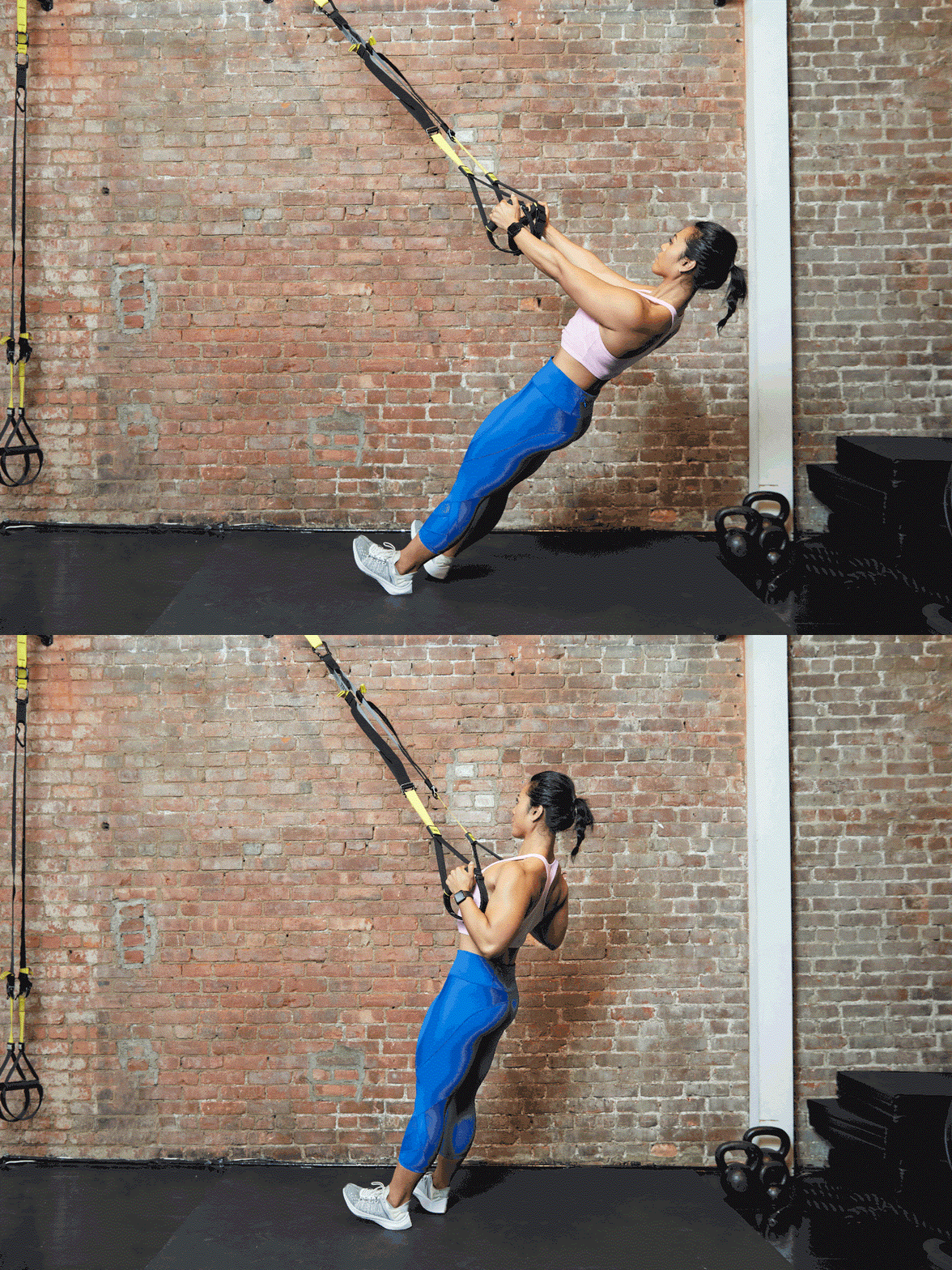
🔥 The role of body angle in workout intensity
🟢 Workout intensity in TRX is directly related to the body’s angle relative to the ground and the anchor point of the straps:
The more upright the body → less resistance
The more the body leans back or becomes horizontal → greater resistance
For this reason, without changing weights or equipment, intensity can be adjusted from beginner to very advanced simply by changing body angle.
🔥 Fixed resistance vs. suspension resistance
🟢 In traditional weight training, resistance is usually fixed and predictable.
In TRX, resistance is dynamic and variable, changing based on body angle, movement speed, and the level of control.
This suspension-based resistance forces muscles not only to move the load, but also to constantly work to maintain balance and joint control.
🔥 Why is instability important?
🟢 Controlled instability in TRX leads to:
💥 Stabilizer muscles (especially the core) are highly activated
🧩 Neuromuscular coordination improves
🦵 Joints are placed under more precise control
🏃 More functional and realistic movement patterns are simulated
For this reason, TRX is not just a simple strength workout, but a smart training system for control, balance, and full-body performance.
Muscles Involved in TRX Training
🟢 One of the most important reasons TRX stands out from many training methods is the simultaneous engagement of both prime movers and stabilizer muscles. Unlike isolated exercises, in TRX there is almost no movement that activates only a single muscle.
💪 Primary muscles
Prime Movers
🟢 Primary muscles are the muscles responsible for producing movement force in each exercise. Depending on the type of movement, these muscles may include:
🦵 Lower body:
Quadriceps, hamstrings, glutes, calves
🏋️♂️ Upper body:
Chest muscles, back muscles (lats, rhomboids, trapezius), shoulders, biceps, and triceps
🔄 Push–pull movements:
Depending on whether the movement follows a push or pull pattern, different muscle groups are activated as the primary movers.
In TRX, these muscles are not only responsible for moving the body, but are also forced to work more precisely to control the path of movement.

🧱 Stabilizer muscles
Core & Stabilizers
🟢 This is where TRX truly shines 👇
Because of the suspension nature of the straps, the body is constantly placed in a state of controlled instability. This leads to strong activation of stabilizer muscles, including:
🟢 Core:
Rectus abdominis, internal and external obliques, transverse abdominis
🟢 Spine:
Erector spinae
🟢 Shoulder girdle and shoulders:
Rotator cuff, serratus anterior, scapular stabilizers
🟢 Pelvis and lower-body joints:
Gluteus medius, deep hip muscles
These muscles often remain underactive or inactive in machine-based training, but in TRX they are almost always engaged.
🔥 Why is TRX excellent for the core?
🟢 TRX can be considered one of the best tools for strengthening the core because:
🧠 The core doesn’t just “contract” — it performs dynamic stabilization
🔄 The core must simultaneously prevent excessive sway, unwanted rotation, and bending of the body
🏃♂️ Core function is trained in a way that closely mimics real-life and sport-specific movements
⚖️ Strength, balance, and neuromuscular control develop simultaneously
For this reason, even in simple TRX movements, the abdominal and core muscles are activated more than in traditional weight training.
📊 Professional table of involved muscles + TRX exercise examples
🏋️♂️ TRX exercise | 💪 Primary muscles | 🧱 Stabilizer muscles | 🎯 Training goal |
|---|---|---|---|
TRX Squat | Quadriceps, glutes | Core, erector spinae | Lower-body strength, movement pattern training |
TRX Lunge | Glutes, hamstrings, quadriceps | Core, gluteus medius, pelvic stability | Balance, corrective training, functional strength |
TRX Chest Press | Pectoralis major, triceps | Core, scapular stabilizers | Upper-body strength, shoulder stability |
TRX Row | Lats, rhomboids, trapezius | Core, rotator cuff | Improved posture, pulling strength |
TRX Plank | Rectus abdominis, transverse abdominis | Shoulders, pelvis, spine | Core stability, injury prevention |
TRX Mountain Climber | Hip flexors, abdominals | Core, shoulders | Fat loss, cardio–strength |
TRX Hamstring Curl | Hamstrings, glutes | Core, pelvis | Posterior chain strengthening |
TRX Pike | Abdominals, hip flexors | Shoulders, scapula, deep core | Core strength, advanced control |
TRX Y / T Raise | Rear deltoid, trapezius | Rotator cuff, core | Corrective training, shoulder health |
Benefits of TRX Training
Scientific and practical
🟢 TRX training is not just a fitness trend; it is built on principles of biomechanics, neuromuscular control, and functional movement patterns. That’s why its benefits go beyond simply increasing strength or burning calories.
⚡ Increased functional strength
Functional Strength
🟢 In TRX, movements are performed as multi-joint, multi-muscle exercises. This means the body learns how to produce and transfer force in a coordinated way—just like real-life and sports movements.
Conclusion:
🔄 Better force transfer between limbs
🏃 Improved athletic performance
🧠 Reinforcement of natural movement patterns (Push, Pull, Squat, Lunge, Rotate)
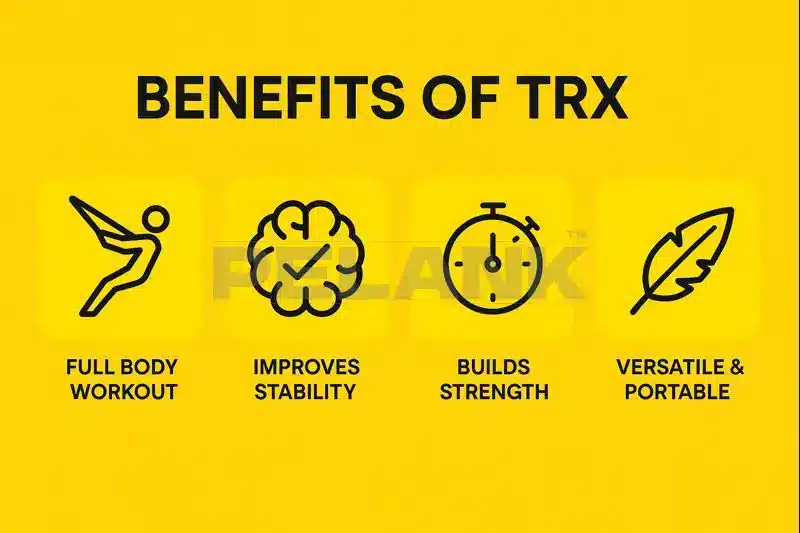
🧱 Core muscle strengthening
Core Activation
🟢 Due to the inherent instability of suspension straps, the core muscles are active in almost all TRX movements—even when the main focus is on the upper or lower body.
This type of activation:
🧠 Is more reflexive and functional rather than isolated contraction
🔥 Targets the deep abdominal muscles (Transversus Abdominis)
⚖️ Improves pelvic and spinal stability
🔥 Improved balance and neuromuscular coordination
🟢 Training under controlled instability forces the nervous system to respond faster and more precisely to changes.
This process leads to:
🧩 Better coordination between the brain and muscles
🦵 Increased joint control
🏃 Improved static and dynamic balance
🛡️ Reduced risk of falls and injuries
🦴 Reduced joint stress
🟢 Unlike free weights or machines that create direct compressive load, TRX intensity is regulated through body angle and movement control.
Joint-related benefits of TRX include:
🟢 Reduced stress on the knees, shoulders, and spine
🟢 The ability to train safely with a controlled range of motion
🟢 Suitable for individuals with a history of pain or movement limitations (with proper exercise selection)
🧘♂️ Suitable for recovery and corrective training
🟢 TRX is a highly effective tool for movement re-education and corrective training because:
🎯 Intensity is easily adjustable
🧠 The focus is on control, not just strength
🧩 Weak and inactive muscles are better identified and activated
For this reason, TRX is widely used in recovery programs, basic physiotherapy, and corrective training (under professional supervision).
What Is TRX Suitable For?
🟢 The true power of TRX lies in its goal-oriented flexibility. By adjusting angle, tempo, movement patterns, and rest, this training system can shift from light corrective exercise to an intense functional challenge. That’s why TRX is not just “a tool,” but a smart training framework.
🔥 Fat loss
Fat Loss & Metabolic Conditioning
🟢 TRX is effective for fat loss because:
🔄 Its movements are multi-joint and full-body
🔥 Simultaneous engagement of large muscle groups increases energy expenditure
⏱️ It can easily be performed in circuit-style or HIIT workouts
From a physiological perspective, TRX can:
Increase calorie expenditure during exercise
Enhance the afterburn effect (EPOC)
Create high metabolic intensity without excessive joint stress
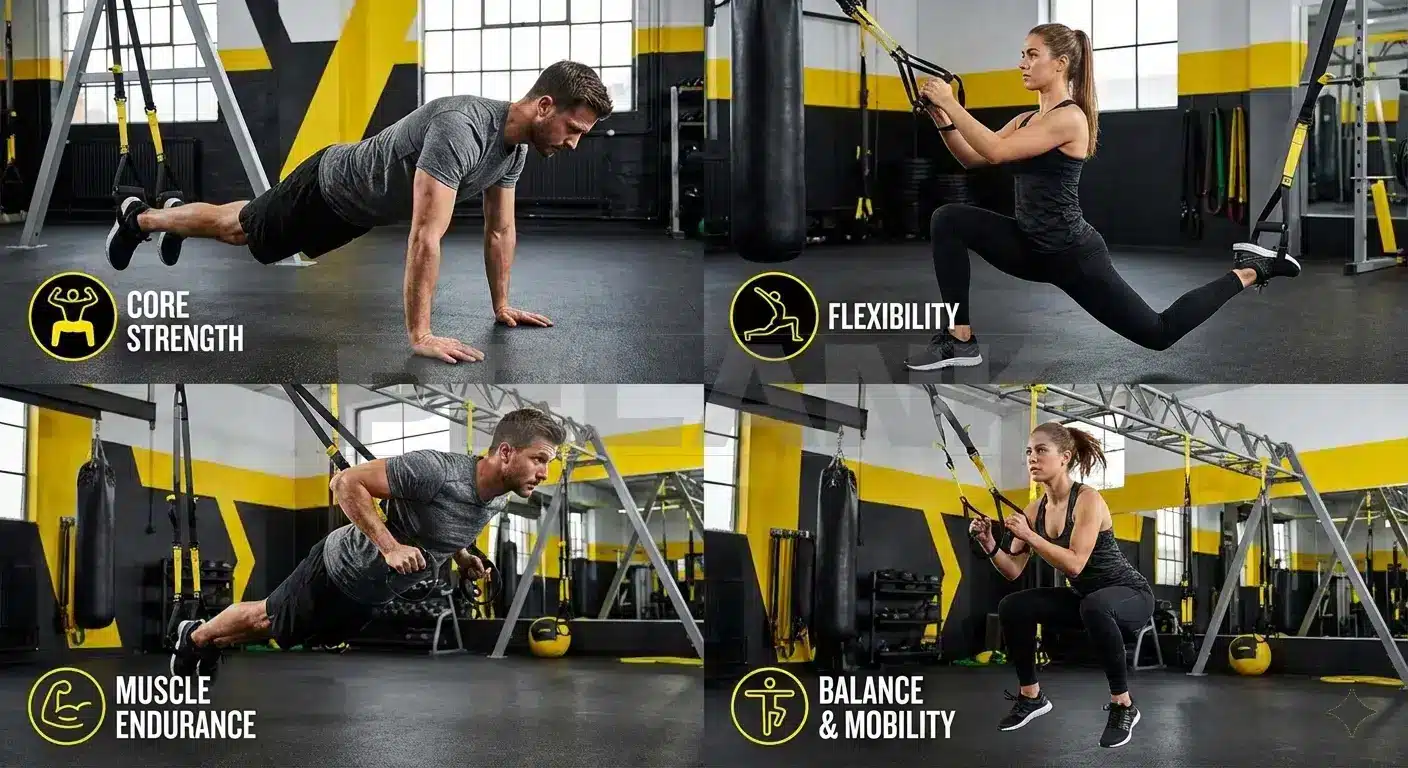
💪 Increased strength
Strength-Endurance
🟢 Although TRX does not use external weights:
📐 Increasing body angle raises the effective load
🧠 Controlling tempo and using pauses (isometric holds) increases mechanical tension
🔄 The body is forced to produce and resist force at the same time
Conclusion:
Increased relative strength (strength-to-bodyweight ratio)
Strength development with control
Improved muscular endurance alongside joint stability
🧘♂️ Corrective training
Corrective & Movement Quality
🟢 TRX is one of the best tools for focusing on movement quality because:
🎯 Range of motion is guided naturally and safely
⚖️ The body receives immediate feedback from imbalances or weaknesses
🧠 The focus shifts from “lifting weight” to “controlling movement”
Corrective applications of TRX include:
Correcting faulty movement patterns
Activating weak muscles (such as the gluteus medius or scapular stabilizers)
Improving posture control and movement coordination
🏃 Increased athletic performance
Athletic Performance
🟢 TRX aligns directly with the principles of functional training:
🔄 Force transfer between the upper and lower body
⚡ Strength training under controlled instability
🧠 Improved neuromuscular responses
For athletes, TRX can:
Improve speed, agility, and body control
Reduce injury risk
Serve as a complement to heavy strength training—not a replacement
🧑⚕️ Rehabilitation and physiotherapy (basic level)
🟢 At a basic level and under professional supervision, TRX is highly valuable in rehabilitation because:
🟢 Training intensity is fully adjustable
🟢 Axial load on the joints is reduced
🟢 Progressive training from simple to complex movements is possible
TRX in this field is mainly used for:
Movement pattern re-education
Strengthening the supportive muscles around the joints
Gradual return to functional training
Used as support (not direct injury treatment).
🧠 As a result:
TRX is not an “all-in-one” system, but a goal-driven system. If you know:
✔️ What your goal is
✔️ Which body angle you choose
✔️ What tempo and rest you apply
You can use TRX in completely different ways for fat loss, strength, corrective training, athletic performance, and basic rehabilitation.
Comparing TRX With Other Training Methods
🟢 To choose a training method wisely, we need to understand what each system develops and what its limitations are. TRX is neither a direct competitor to all methods nor a complete replacement for them; in many cases, it serves as a smart complement.
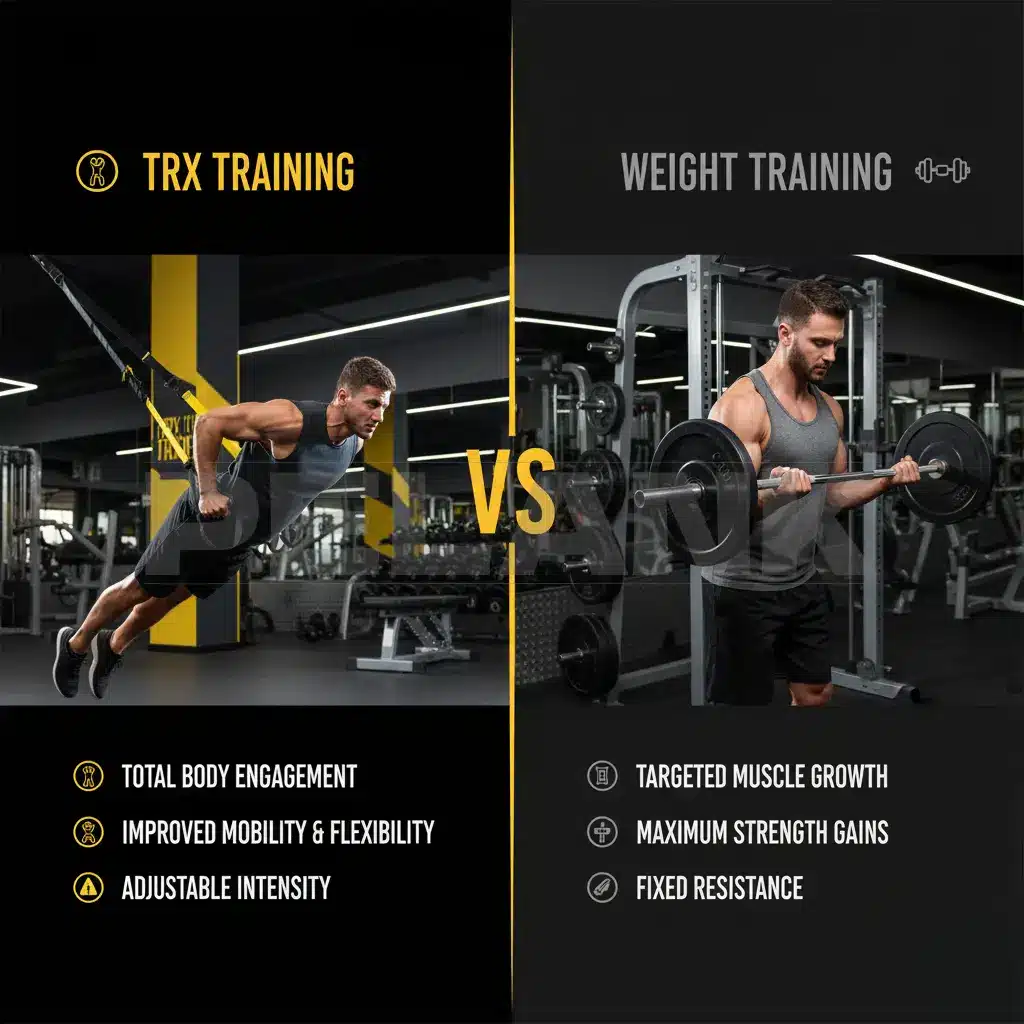
🏋️♂️ TRX vs. weight training
🟢 Conceptual analysis:
Traditional bodybuilding focuses on increasing external load and mechanical tension, while TRX emphasizes body control against one’s own weight and instability.
TRX → relative strength, stability, movement control
Weights → absolute strength, targeted hypertrophy
Professional conclusion:
TRX is excellent for improving control, injury prevention, and movement performance, but on its own it is not sufficient for maximizing muscle mass and absolute strength.
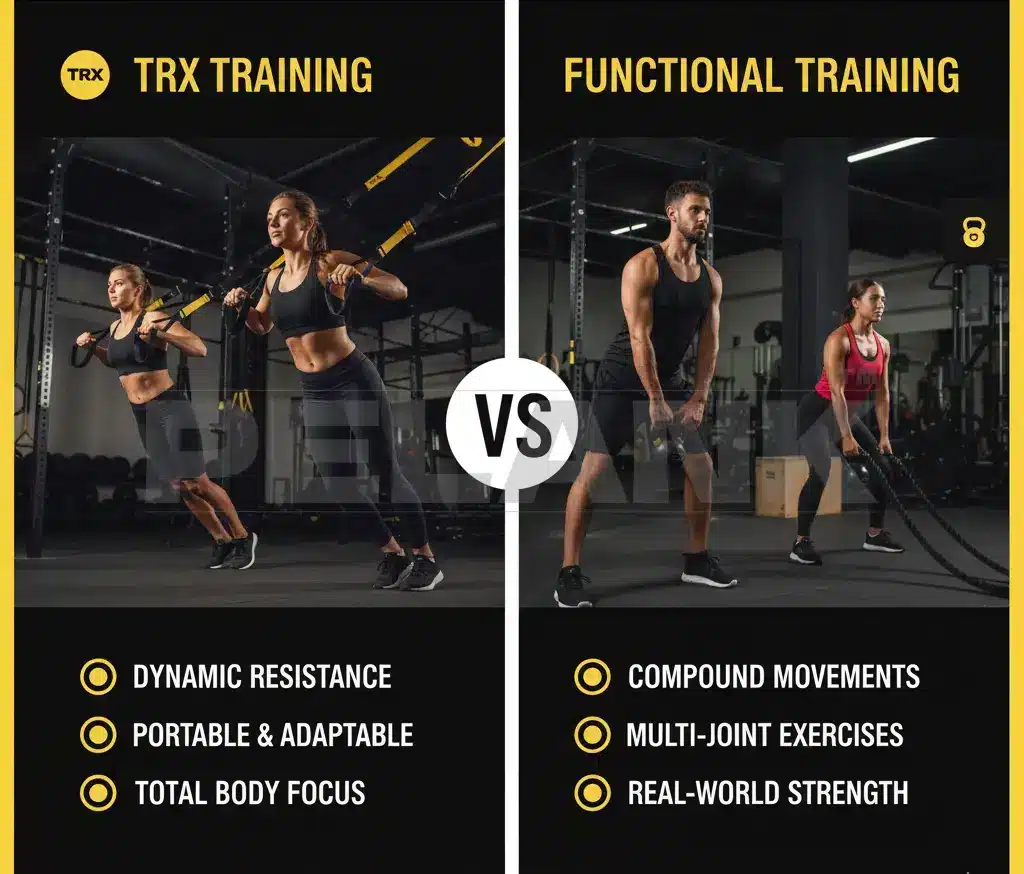
🔄 TRX vs Functional Training
🟢 Conceptual analysis:
TRX is actually one of the tools of functional training, not a separate system.
Functional training → a conceptual framework
TRX → a precise execution tool within this framework
Professional conclusion:
TRX makes functional training more structured, measurable, and progressive.
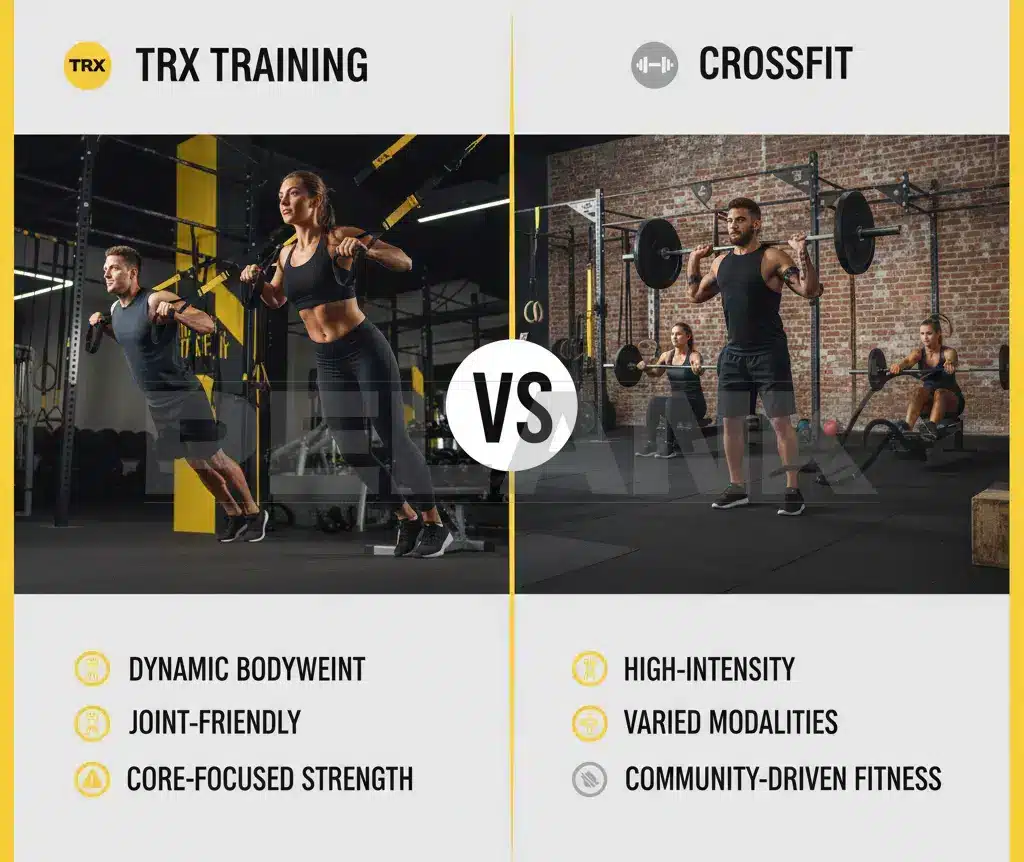
⚡ TRX vs CrossFit
🟢 Conceptual analysis:
CrossFit focuses on high intensity, wide variety, and a blend of strength and conditioning. TRX places greater emphasis on control, movement quality, and joint stability.
TRX → control, stability, movement correction
CrossFit → power, endurance, competitiveness
Professional conclusion:
TRX is excellent for preparing the body, correcting weaknesses, and active recovery; CrossFit is better for increasing overall work capacity.
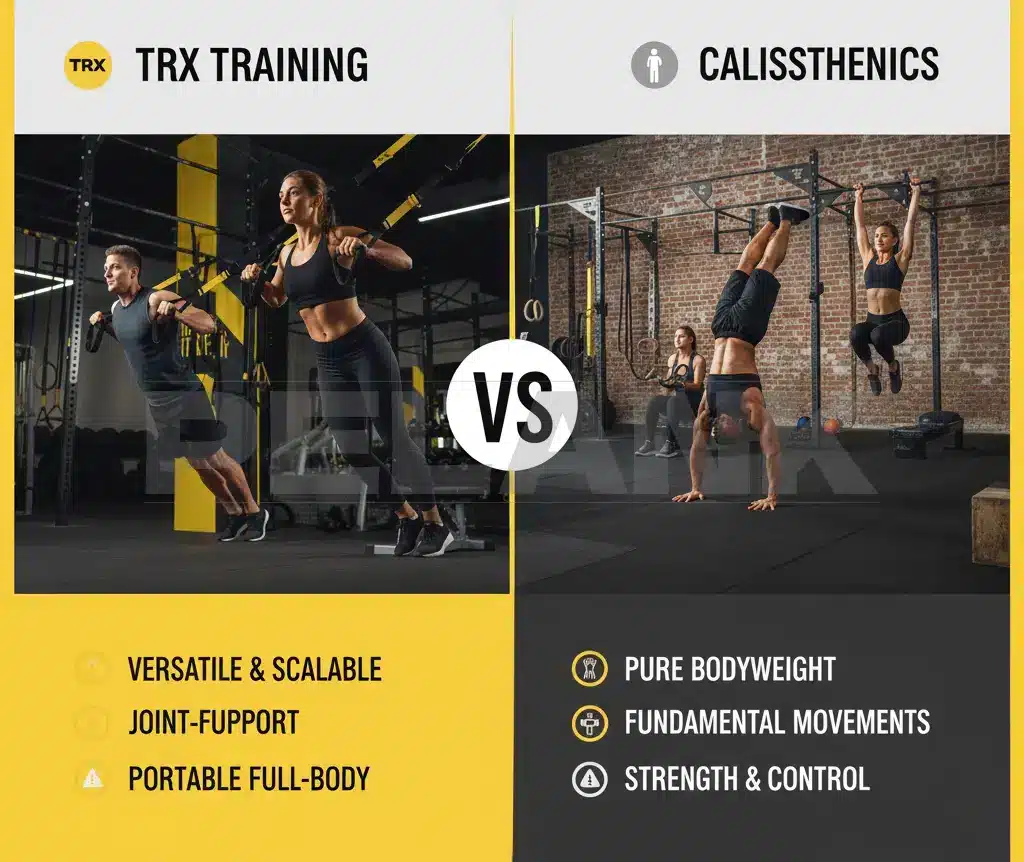
🤸 TRX vs Calisthenics
Bodyweight Training
🟢 Conceptual analysis:
Both use bodyweight, but the main difference lies in the level of instability and how adjustable the intensity is.
Calisthenics → more stability, skill-based
TRX → controlled instability, highly adjustable
Professional conclusion:
TRX is more accessible for beginners and corrective training; calisthenics is more challenging for advanced, skill-focused individuals.
📊 Comparative table: TRX vs other training methods
Comparison criteria | TRX | Weight training | Functional training | CrossFit | Calisthenics |
|---|---|---|---|---|---|
Type of resistance | Bodyweight + instability | External weights | Variable | Weights + cardio | Bodyweight |
Main Focus | Stability, control, core | Absolute strength, muscle mass | Functional movement | Power and endurance | Skill and control |
Joint stress | Low to moderate | Moderate to high | Variable | High | Moderate |
Suitable for beginners | ⭐⭐⭐⭐ | ⭐⭐⭐ | ⭐⭐⭐ | ⭐⭐ | ⭐⭐ |
Home workout capability | Excellent | Limited | Good | Moderate | Excellent |
Movement pattern correction | Very high | Low | High | Moderate | Moderate |
Muscle hypertrophy | Limited | Very high | Moderate | Moderate | Limited |
Risk of injury (improper execution) | Moderate | Moderate | Moderate | High | Moderate |
🧠 Expert summary
TRX → the best choice for stability, core strength, control, and smart training
Bodybuilding → essential for muscle size and absolute strength
Functional training → a comprehensive movement framework
CrossFit → high work capacity and intensity
Calisthenics → advanced skill, control, and relative strength
📌 The best results are achieved when TRX is used as a targeted complement alongside other methods—not as a replacement.
Who is TRX training suitable for?
🟢 One of the greatest advantages of TRX is that it adapts to the individual—not the other way around. By adjusting body angle, range of motion, and execution speed, training can be made safe, effective, and goal-oriented for very different groups.
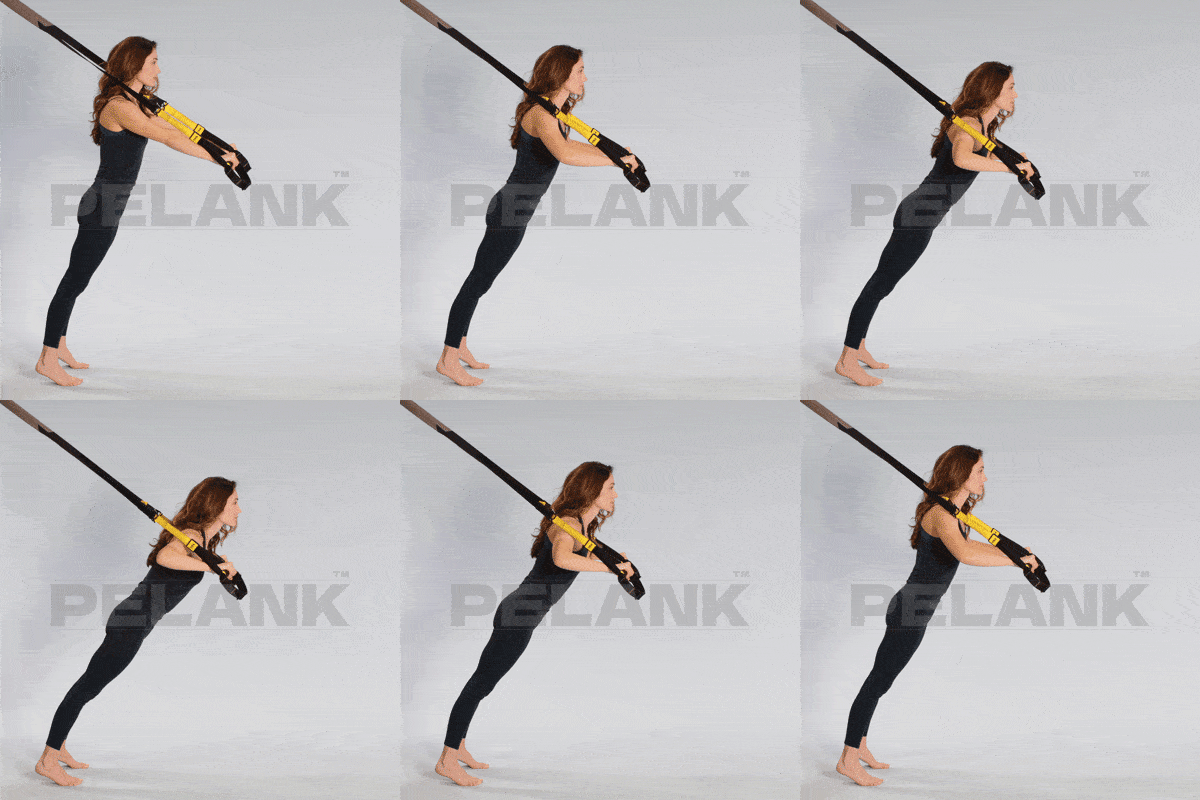
🌱 Beginners
🟢 For beginners, TRX is a smart starting point because:
📐 Training intensity is easily adjusted by changing body angle
🧠 Proper movement form is easier to learn
🦴 Unnecessary stress on the joints is reduced
TRX helps beginners learn body control and fundamental movement patterns correctly before progressing to heavy weights.
💪 Advanced trainees
🟢 For experienced individuals, TRX is not a “light” workout; rather, it is:
🔄 A tool for increasing neuromuscular challenge
⚡ A method for addressing weaknesses and imbalances
🧠 An excellent complement alongside heavy strength training
By adjusting tempo, using isometric pauses, and applying steeper body angles, TRX can be extremely challenging even for advanced athletes.
👩 Women
🟢 Due to its controllable nature, TRX is highly suitable for women:
🔥 Increased strength and toning without excessive strain
🧱 Strengthening the core and pelvis (especially for lower-body health)
⚖️ Improved balance and movement coordination
TRX allows for safe, effective, and progressive training without the need for heavy weights.
👴 Older adults
🟢 When performed with proper technique and appropriate supervision, TRX can be very beneficial for older adults:
🦵 Helps maintain muscle strength and balance
🧠 Reduces the risk of falls
🪑 Allows the straps to be used for additional support and stability
For this group, the focus is on movement control, limited range of motion, and low intensity.

🏃♂️ Professional athletes
🧠 For athletes, TRX is a specialized tool for:
🔄 Transferring force between limbs
🧠 Improving neuromuscular control
🛡️ Reducing the risk of non-contact injuries
TRX plays a key role especially during the pre-season, active recovery phases, and as a complementary training method.
🦴 Individuals with knee or back pain (with caution)
TRX can—when appropriate exercises are selected—be a safe option:
🟢 Reduces direct compressive load on the joints
🟢 Ability to limit range of motion
🟢 Strengthening the supportive muscles around the joints
⚠️ Important note:
Individuals with pain or a history of injury should:
Avoid advanced and heavy exercises
Start training at low intensity
Train under the supervision of a coach or specialist if needed
As a result:
TRX is suitable for most people, provided that:
Training intensity is selected appropriately
The training goal is clearly defined
Proper technique is prioritized
Disadvantages and limitations of TRX
🟢 For an article to be truly authoritative and trustworthy, it must clearly present limitations and challenges in addition to benefits. TRX is a very effective tool, but it is not perfect, and understanding these limitations helps with informed decision-making and safe execution.
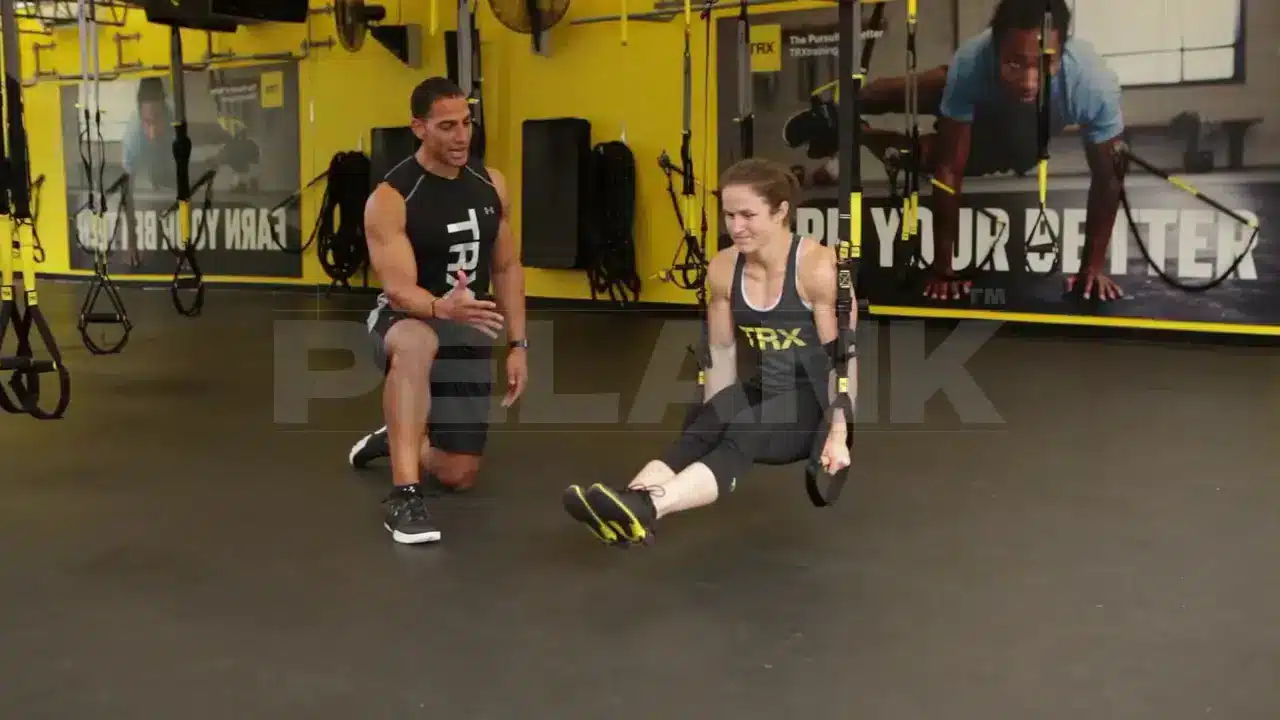
🎯 Requires proper technique
🟢 In TRX, because the body is in an unstable position, proper execution technique plays a critical role.
If movement form is incorrect:
Stress shifts from the target muscles to the joints
Faulty movement patterns are reinforced
The risk of pain or injury increases
For this reason, learning TRX correctly—especially at the beginning—is extremely important.
📉 Limitations in increasing absolute load
TRX is based on bodyweight, therefore:
It is not possible to increase load to the same extent as with free weights
There are limitations for goals such as maximal strength or advanced hypertrophy
As a result, TRX alone is not a complete replacement for weight training for individuals seeking maximal strength or muscle mass gains.
🔗 Dependence on an anchor point
TRX training requires a safe and stable anchor point:
In gyms, this is usually not an issue
At home or outdoors, choosing an unsuitable anchor point can be dangerous
Improper installation or using weak structures increases the risk of injury.
⚠️ Risk of incorrect execution for beginners
For beginners, the biggest challenge with TRX is that:
The instability of the straps may lead to poor movement control
There is a tendency to use momentum instead of muscle
Core muscles are not yet sufficiently prepared
For this reason, starting with simple movements, shallow angles, and coach supervision is recommended.
As a result:
TRX is a powerful tool, but:
Without proper technique, it can be ineffective or even injury-prone
It has limitations in increasing absolute load
It requires safe installation and proper initial instruction
Types of TRX exercises
Professional classification
🟢 TRX exercises can be precisely categorized based on body region, movement pattern, and training goal. Below, you’ll find nearly all common and well-known TRX exercises that form the foundation of beginner-to-advanced program design.
🏋️♂️ Upper Body TRX Exercises
🔹 Pull movements
TRX Row
✅ TRX Row is one of the most fundamental and effective suspension training exercises and is considered a primary pulling (Pull) movement. This exercise plays a key role in strengthening the back muscles, improving posture, and increasing core stability.
Other variations of the exercise:
✔️ TRX Low Row
✔️ TRX High Row
✔️ TRX Single-Arm Row
✔️ TRX Power Pull
✔️ TRX Face Pull
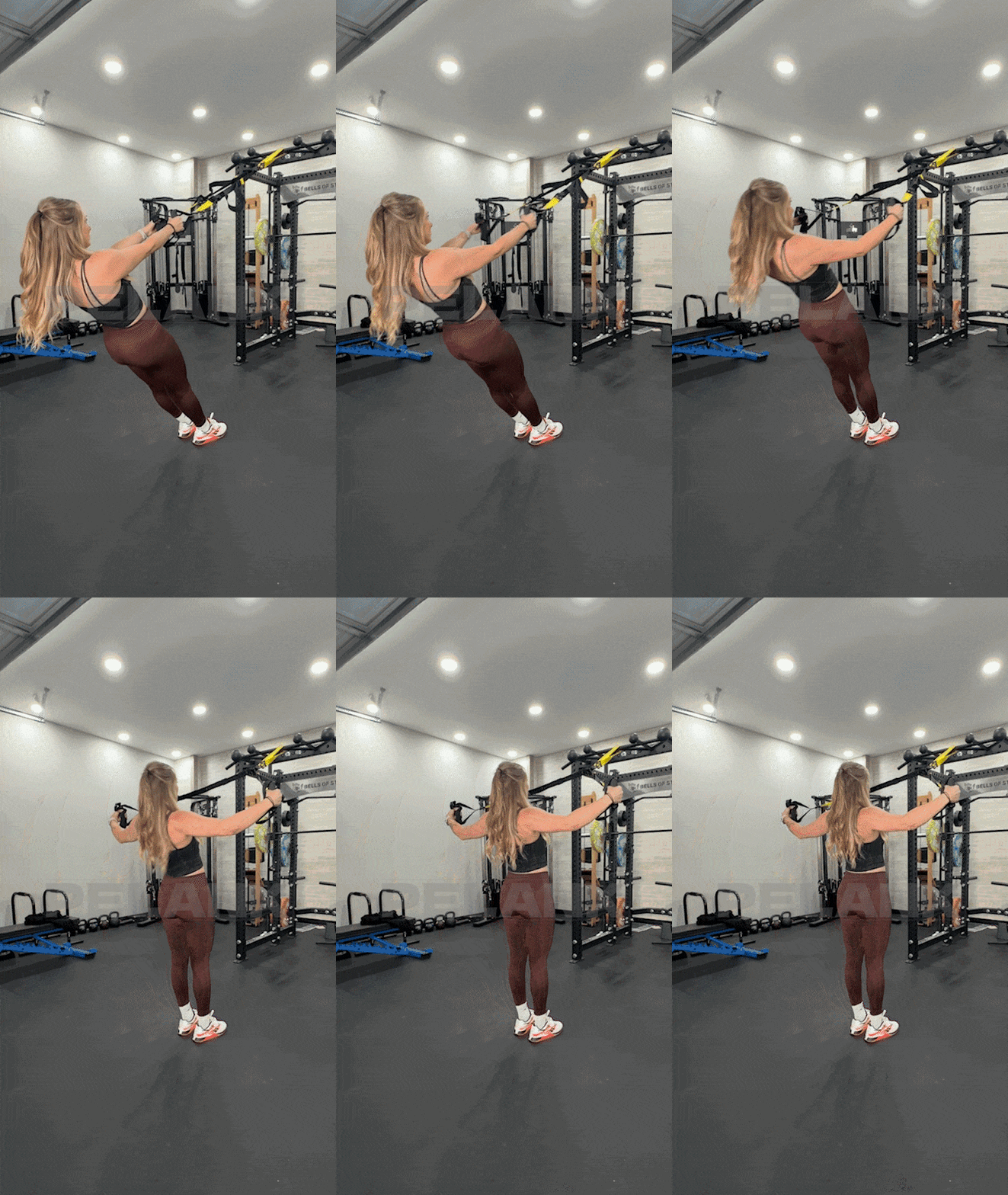
TRX Rear Delt Fly
✅ TRX Rear Delt Fly is a controlled pulling movement in suspension training that specifically targets the rear deltoids and the scapular stabilizers. This exercise plays an important role in correcting shoulder alignment, improving posture, and enhancing upper-body muscular balance.
By simultaneously engaging the upper back muscles and the deep shoulder stabilizers, this exercise helps reduce imbalances caused by pressing movements and prolonged sitting, making it highly suitable for corrective training, active recovery, and improving overall shoulder health.
Other variations of the exercise:
✔️ TRX Y Raise
✔️ TRX T Raise
✔️ TRX W Raise
🔹 Push movements
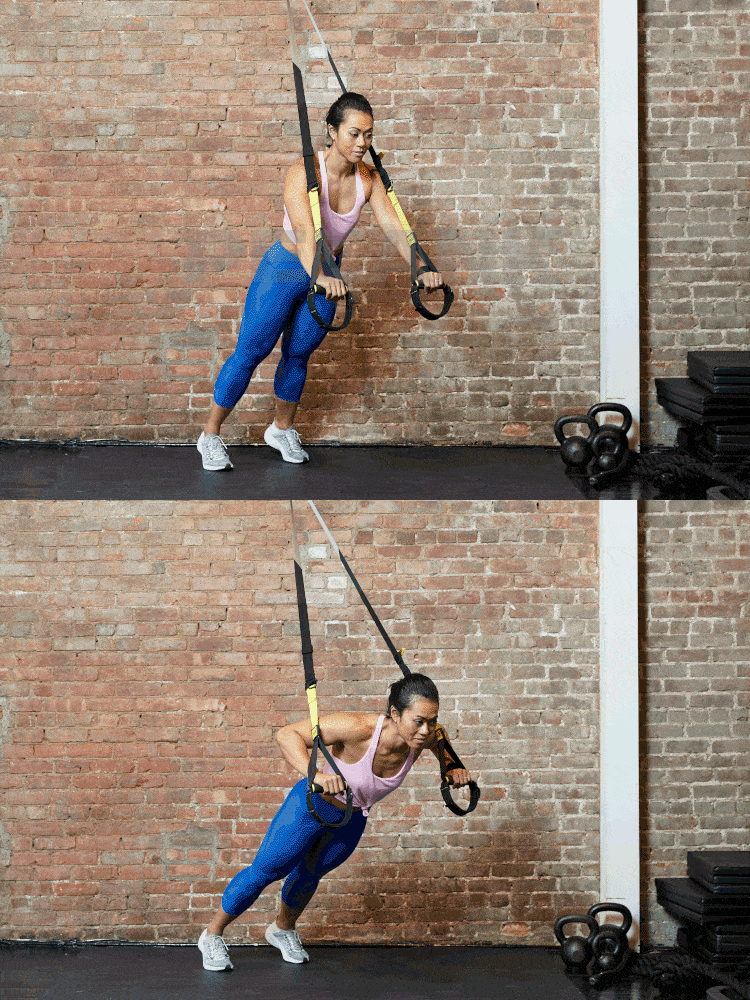
TRX Chest Press
✅ TRX Chest Press is a pushing (Push) movement in suspension training and is considered the suspended version of the chest press. In addition to strengthening the chest muscles, the instability of the straps leads to significant activation of the core muscles and shoulder stabilizers.
This exercise helps improve shoulder control, upper-body muscular balance, and functional strength. By changing body angle, its intensity can be adjusted from beginner to advanced levels. TRX Chest Press is an effective option for increasing pushing strength without placing excessive stress on the joints.
Other variations of the exercise:
✔️ TRX Push-Up
✔️ TRX Atomic Push-Up
✔️ TRX Plyometric Push-Up
✔️ TRX Triceps Press
✔️ TRX Triceps Extension
🔹 Arm exercises
TRX Biceps Curl
✅ TRX Biceps Curl is a controlled pulling movement in suspension training that primarily targets the biceps brachii. Unlike dumbbell curls, in this exercise the biceps are responsible not only for producing force but also for controlling the body against instability.
By simultaneously engaging the core muscles and shoulder stabilizers, this exercise increases biceps strength in a functional manner and improves upper-body movement control. The intensity can be easily adjusted by changing body angle, making it suitable for beginners through advanced trainees.
Other variations of the exercise:
✔️ TRX Single-Arm Biceps Curl
✔️ TRX Hammer Curl
✔️ TRX Triceps Kickback
✔️ TRX Overhead Triceps Extension
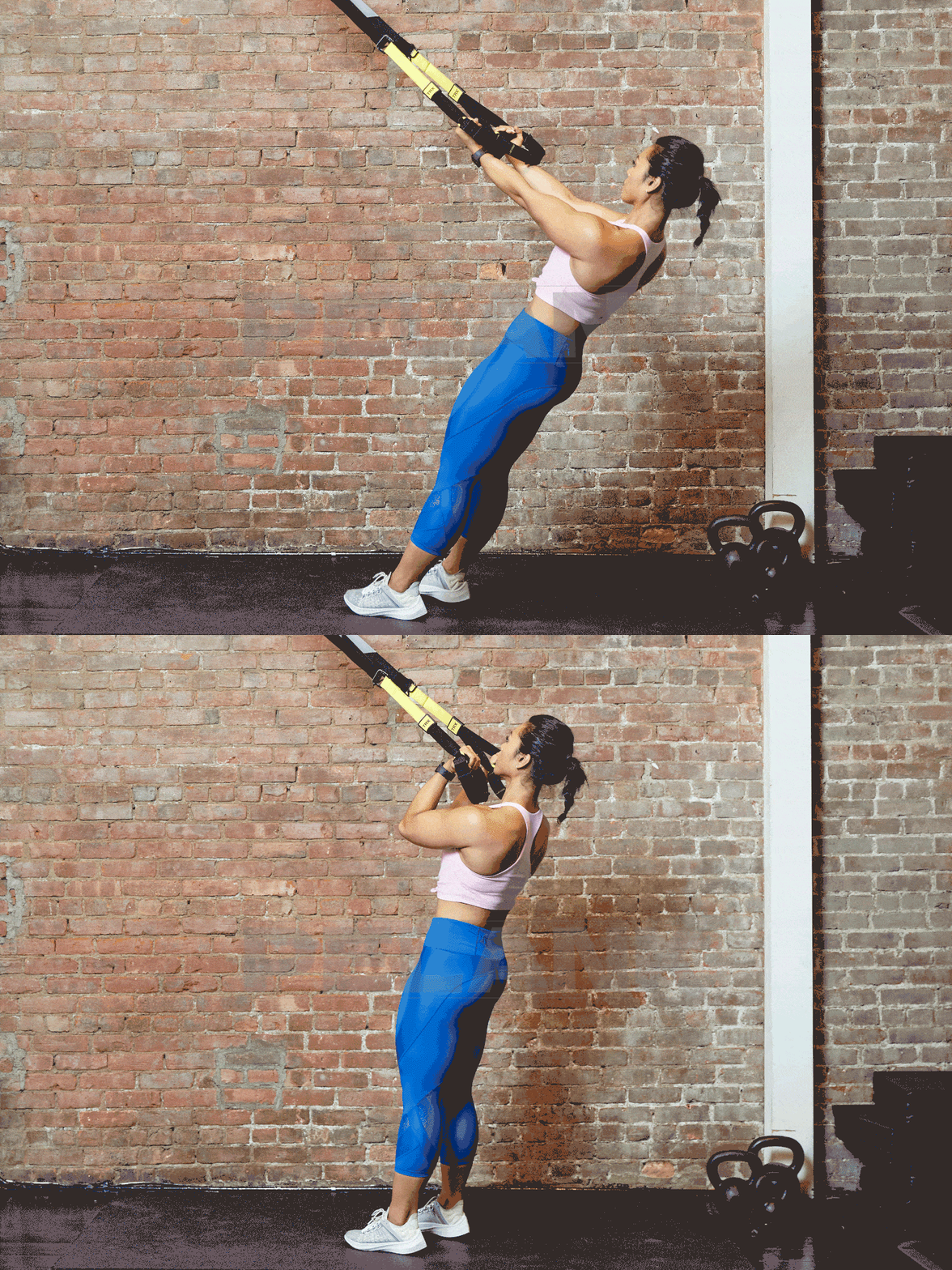
🎯 Upper-body goals:
Strength, shoulder stability, posture correction, improved scapular control
🦵 Lower Body TRX Exercises
🔹 Squat and lunge movements
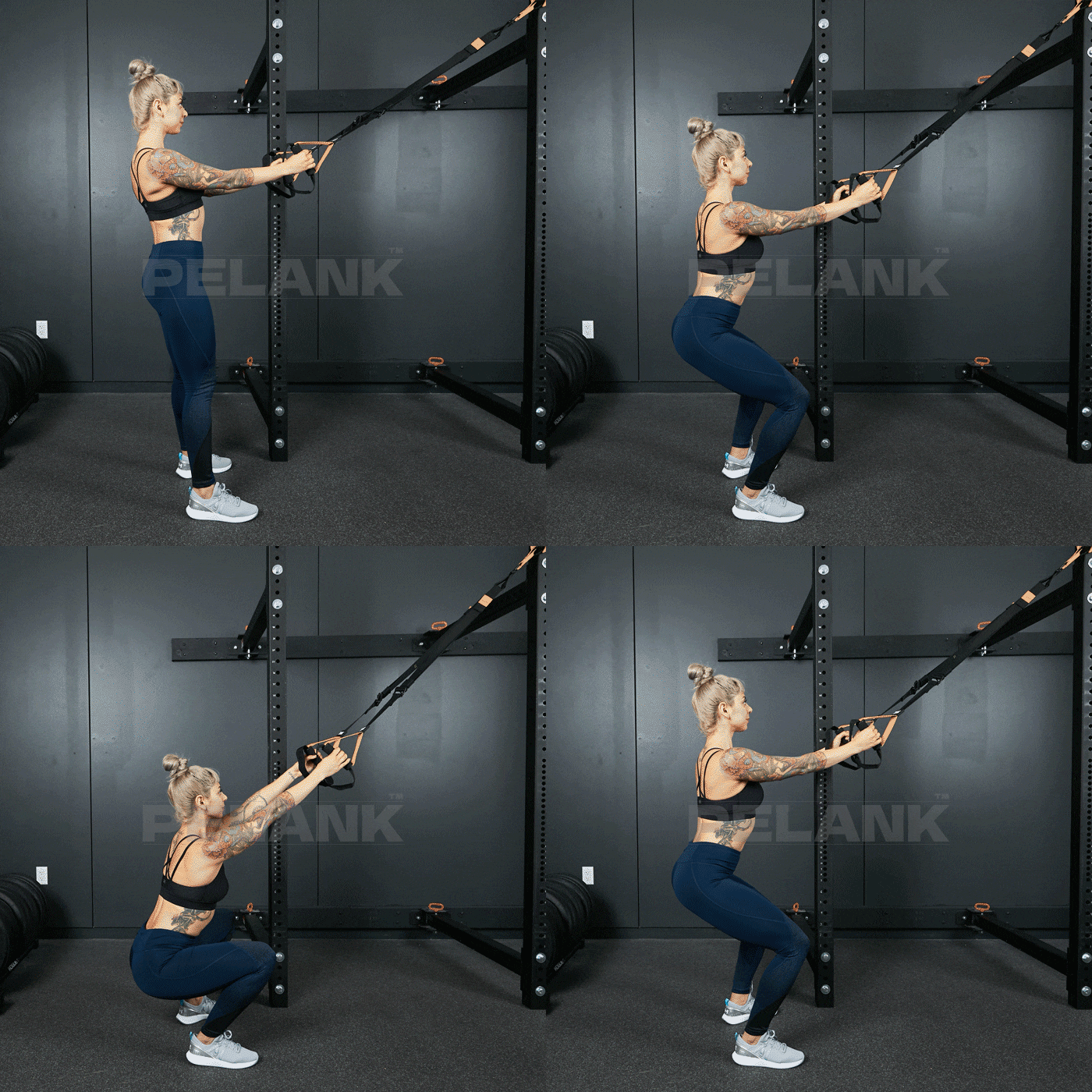
TRX Squat
✅ TRX Squat is one of the most fundamental lower-body exercises in suspension training, teaching the squat movement pattern in a safe and controlled manner. This exercise primarily targets the quadriceps, glutes, and hamstrings, while simultaneously activating the core muscles to maintain balance.
Using TRX straps helps reduce stress on the knees and lower back and allows for better control of range of motion; therefore, TRX Squat is an excellent option for beginners, corrective training, and re-learning the squat pattern. Exercise intensity can be easily adjusted by changing body angle and squat depth.
Other variations of the exercise:
✔️ TRX Assisted Squat
✔️ TRX Jump Squat
✔️ TRX Split Squat
✔️ TRX Single-Leg Squat (Pistol Assisted)
TRX Lunge
✅ TRX Lunge is a functional lower-body exercise in suspension training that primarily targets the glutes, quadriceps, and hamstrings while simultaneously strongly engaging the core muscles and pelvic stabilizers.
In this movement, the TRX straps act as an assistive tool to maintain balance and control range of motion, which helps reduce unwanted stress on the knees and lower back. TRX Lunge is an excellent option for unilateral leg strengthening, improving balance, and correcting muscular asymmetries, and by adjusting the level of strap support, it can be performed from beginner to advanced levels.
Other variations of the exercise:
✔️ TRX Reverse Lunge
✔️ TRX Side Lunge
✔️ TRX Curtsy Lunge

🔹 Posterior chain movements
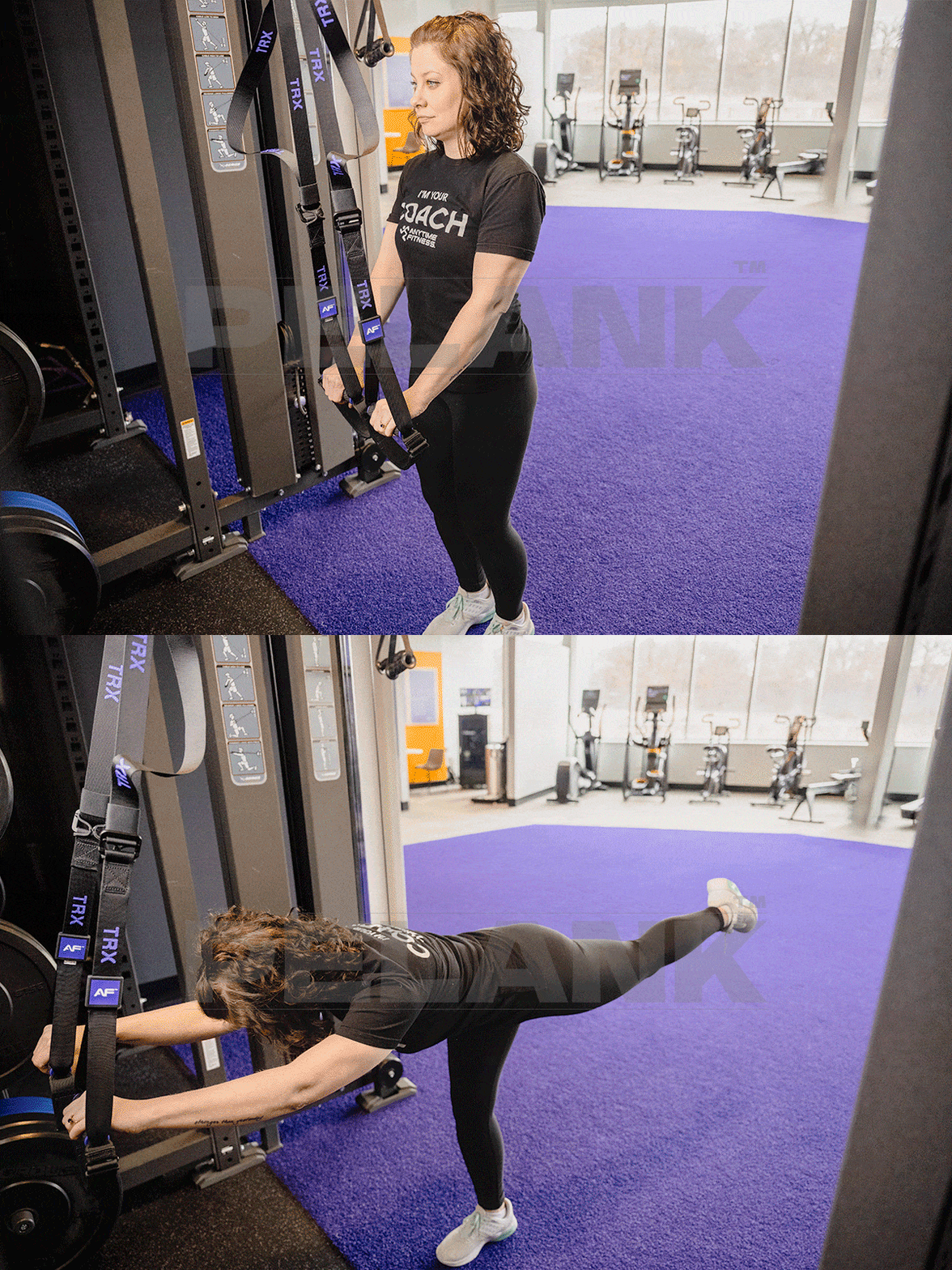
TRX Assisted Hip Hinge
✅ TRX Assisted Hip Hinge is a fundamental and instructional movement in suspension training, designed to teach the correct hip hinge pattern. This exercise primarily targets the glutes and hamstrings while helping reduce stress on the lower back.
In this exercise, the TRX straps act as a supportive and guiding tool, allowing the individual to control range of motion and maintain a neutral spine. For this reason, TRX Assisted Hip Hinge is an excellent choice for beginners, corrective training, and re-learning deadlift-like movement patterns.
Other variations of the exercise:
✔️ TRX Hamstring Curl
✔️ TRX Single-Leg Hamstring Curl
✔️ TRX Glute Bridge
✔️ TRX Assisted Deadlift
🎯 Lower-body goals:
Leg strength, pelvic balance, reduced joint stress, movement pattern correction
🧱 Core TRX Exercises
TRX is one of the most effective tools for training the core, because the core must perform a stabilizing role under unstable conditions.
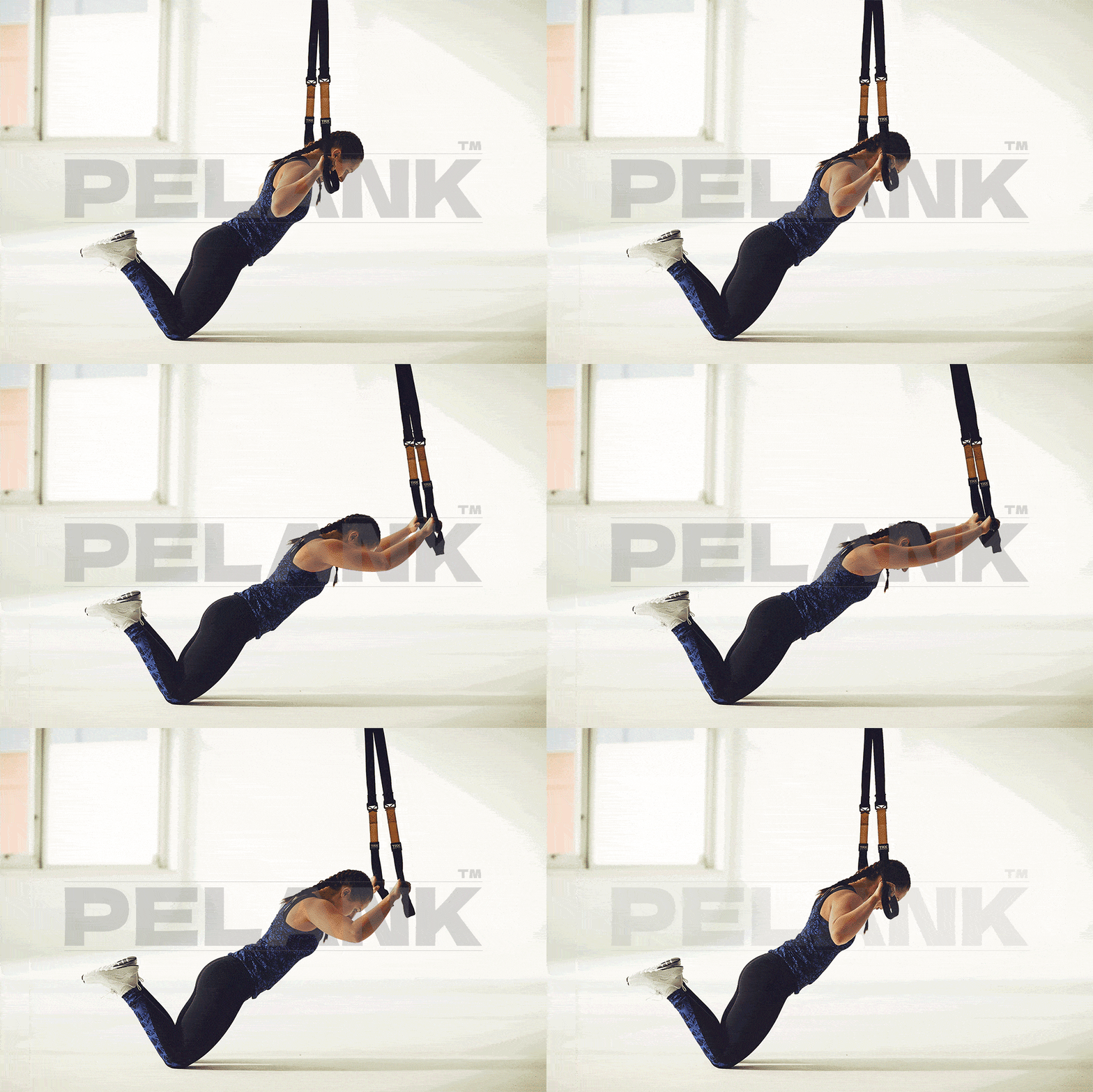
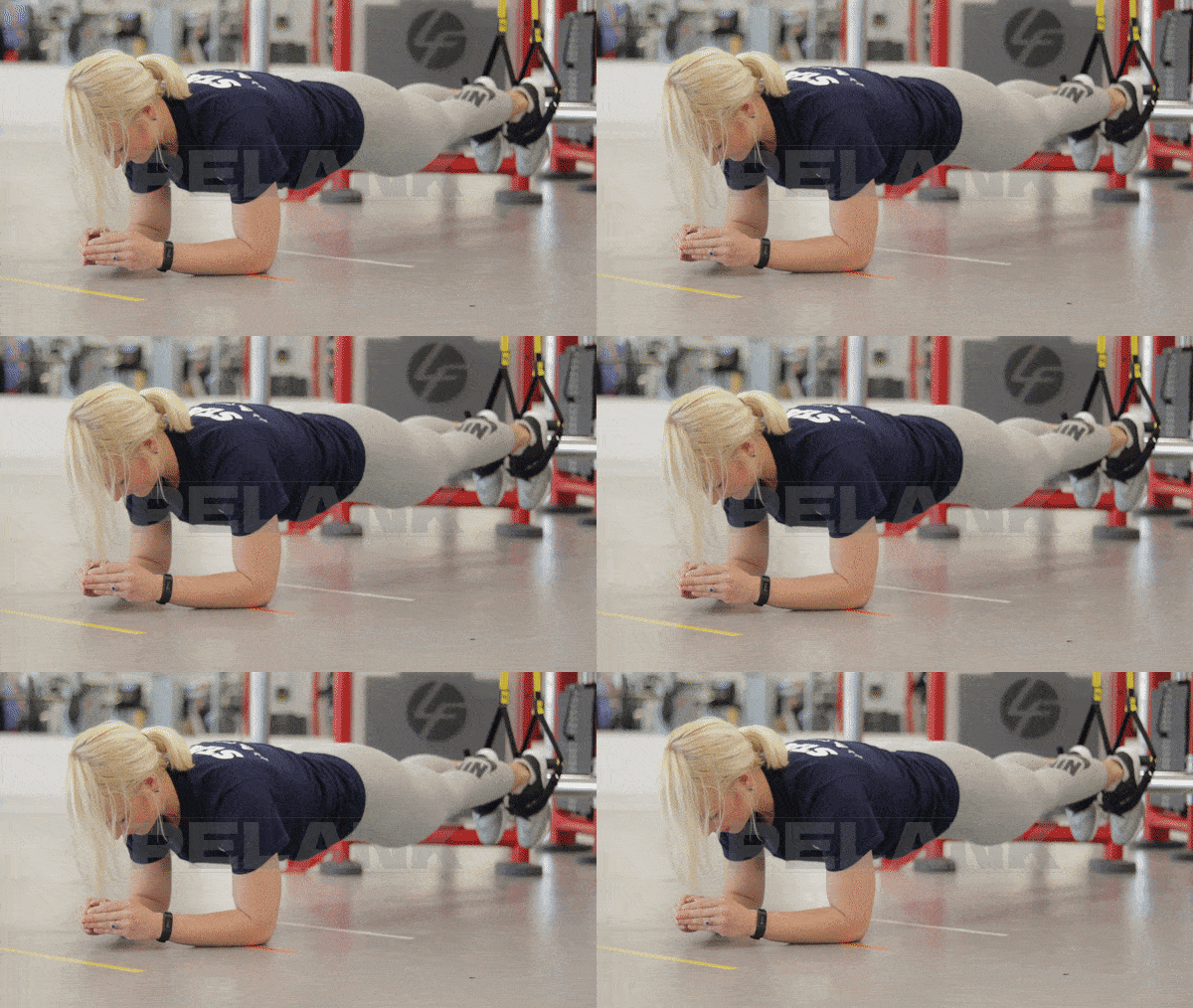
TRX Plank
✅ TRX Plank is one of the most effective suspension training exercises for strengthening the core muscles. In this movement, placing the feet in the TRX straps creates instability, engaging the abdominal muscles, spinal erectors, and shoulder stabilizers simultaneously.
This controlled instability makes TRX Plank more challenging and functional than a floor plank, playing an important role in increasing trunk stability, injury prevention, and improving force transfer in athletic movements. The intensity can be adjusted by changing distance from the anchor point or by using different plank variations (standard, side, dynamic).
Other variations of the exercise:
✔️ TRX Side Plank
✔️ TRX Pike
✔️ TRX Mountain Climber
✔️ TRX Knee Tuck
🎯 Goals: core stability, trunk control, injury prevention
📌 This is where the link to abdominal and TRX core exercise pages will be placed
🔥 TRX Full Body movements
These movements engage multiple muscle groups simultaneously and have a metabolic nature.
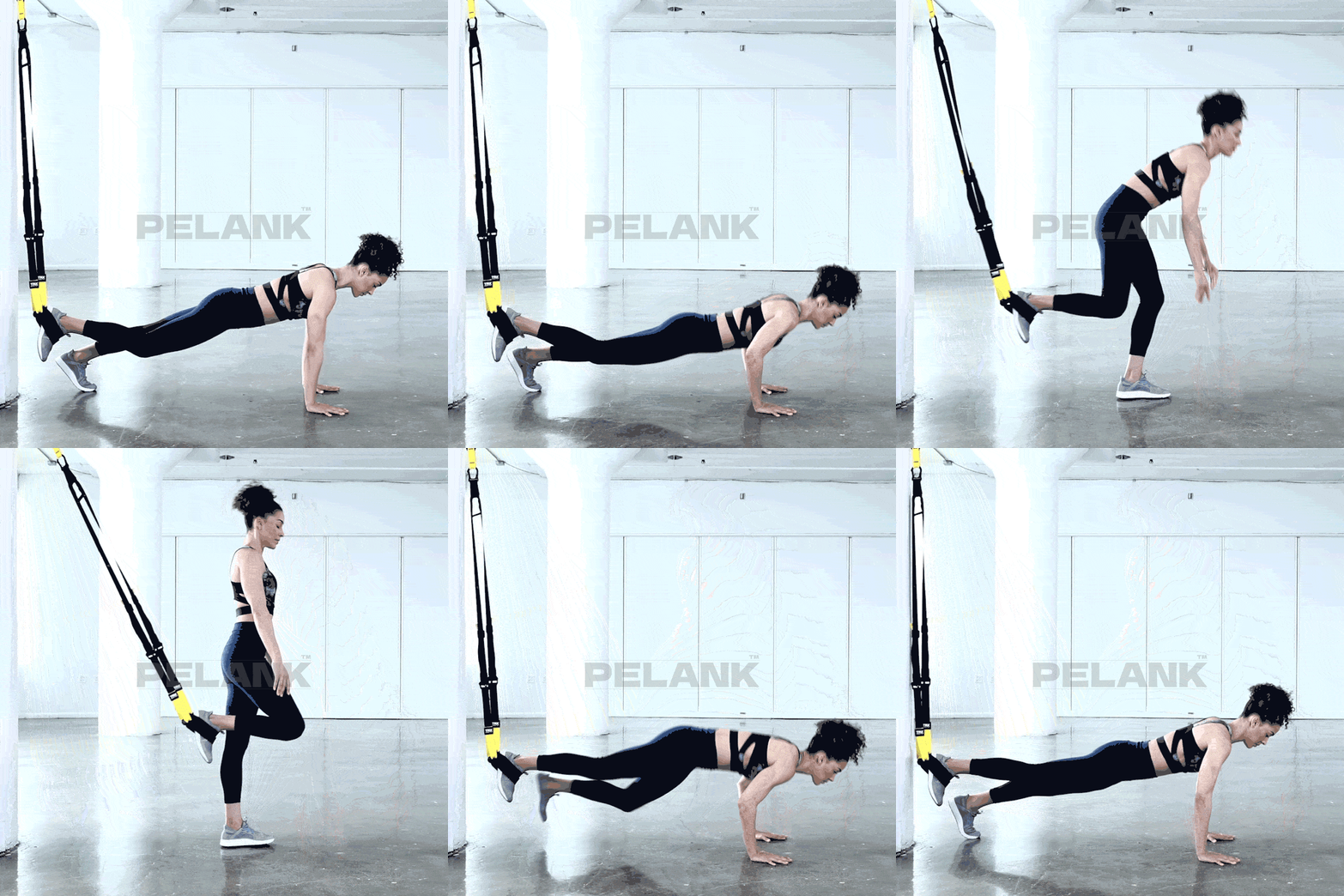
TRX Single Leg Burpee
✅ TRX Single Leg Burpee is an advanced, full-body suspension training exercise that challenges strength, balance, and aerobic–muscular capacity at the same time. Performing the movement on one leg places greater demand on the glutes, quadriceps, and pelvic stabilizers, while the upper body and core remain active to control instability.
In addition to increasing fat loss and heart rate, this exercise helps improve neuromuscular coordination and correct movement asymmetries. TRX Single Leg Burpee is primarily recommended for athletes and intermediate to advanced individuals and requires high levels of control and proper technique.
Other variations of the exercise:
✔️ TRX Squat to Row
✔️ TRX Lunge to Balance
✔️ TRX Power Pull to Rotation
✔️ TRX Jump Lunge
✔️ TRX Push-Up to Pike
✔️ TRX Clean & Press
✔️ TRX Total Body Press
🎯 Full-body goals:
Fat loss, endurance, full-body coordination, increased heart rate
⚖️ TRX Balance & Stability
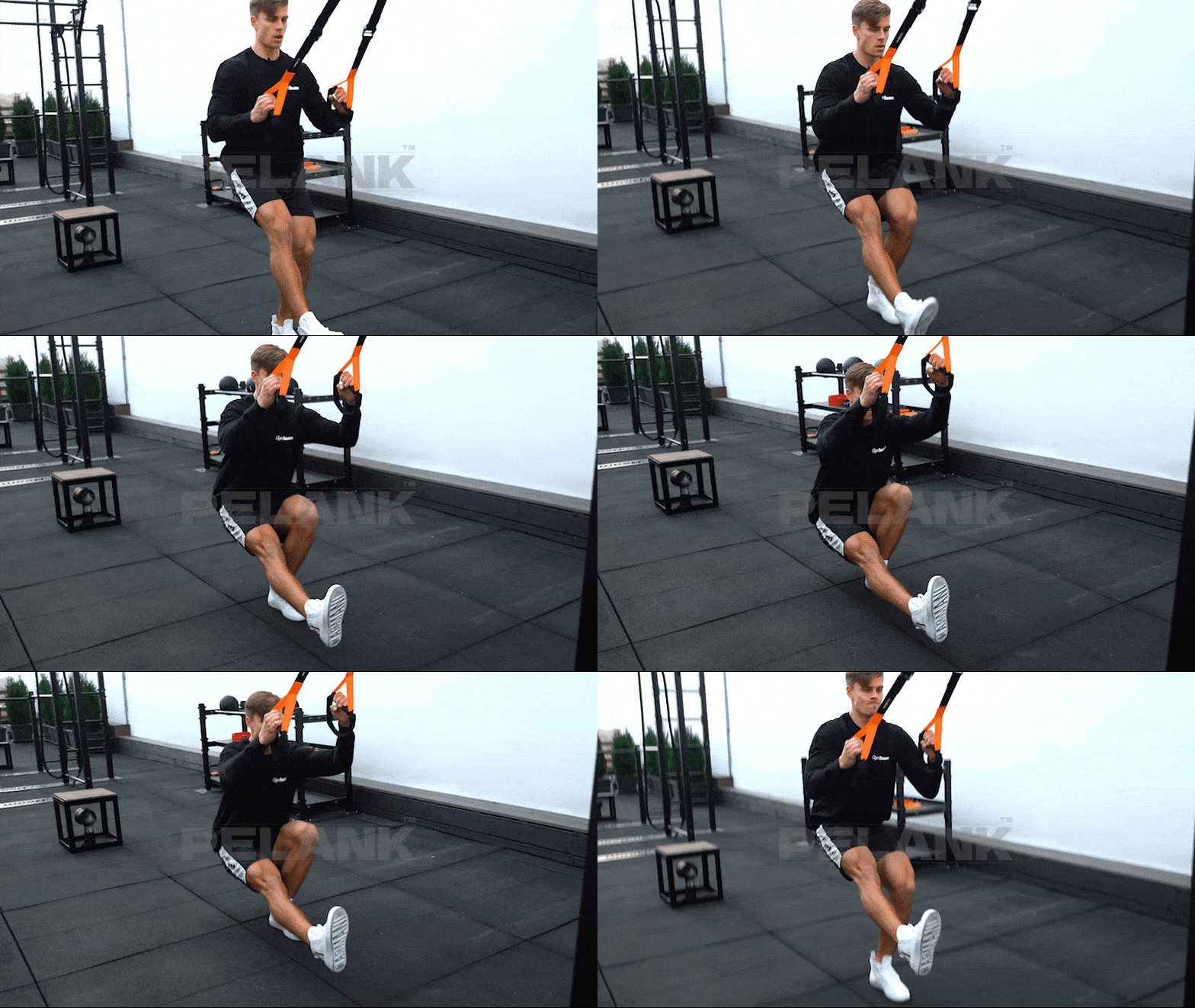
TRX Single-Leg Balance
✅ TRX Single-Leg Balance is a balance and control exercise in suspension training that primarily focuses on pelvic stability, unilateral balance, and neuromuscular control. In this exercise, standing on one leg with minimal support from the TRX straps leads to strong activation of the gluteus medius, deep hip muscles, and the core.
This movement is highly useful for corrective training, injury prevention, and balance re-education, and it helps improve knee and hip control during functional movements. TRX Single-Leg Balance is commonly used as a supplementary exercise or as a smart warm-up in training programs.
Other variations of the exercise:
✔️ TRX Assisted Single-Leg Squat
✔️ TRX Balance Lunge
✔️ TRX Reach Balance
✔️ TRX Single-Leg Hip Hinge
🎯 Balance goals:
Neuromuscular control, injury prevention, improved daily function
🧘♂️ TRX corrective and recovery exercises
These movements are mostly used in basic physiotherapy and corrective training.
TRX Thoracic Rotation
✅ TRX Thoracic Rotation is a corrective and mobility-focused movement in suspension training designed to increase thoracic spine mobility and improve upper-body coordination. This exercise is especially beneficial for individuals with upper-body stiffness, rounded shoulders, or limited trunk rotation.
In this movement, the TRX straps act as a supportive tool, allowing the trunk to rotate in a controlled and safe manner without placing excessive stress on the lower back. TRX Thoracic Rotation plays an important role in posture correction, shoulder health, and improved force transfer in functional movements, and is commonly used during warm-ups or active recovery sessions.
Other variations of the exercise:
✔️ TRX Assisted Stretch
✔️ TRX Chest Opener
✔️ TRX Shoulder Mobility Drill
✔️ TRX Hip Flexor Stretch
✔️ TRX Assisted Squat Hold

🎯 Corrective goals:
Increased range of motion, correction of imbalances, reduction of common aches and pains
🧠 Classification of exercises based on movement patterns
Professional View
Push: Push-Up, Chest Press

Pull: Row, Face Pull

Squat: Squat, Jump Squat

Lunge: Lunge Variations

Hinge: Hip Hinge, Hamstring Curl

Rotate: Power Pull, Oblique Crunch

Anti-Rotation: Plank, Body Saw
TRX Equipment and Safety Tips
🟢 Although TRX may seem like a simple tool, proper installation and safe execution play a decisive role in training quality and injury prevention. This is exactly where the difference between professional training and high-risk training becomes clear.
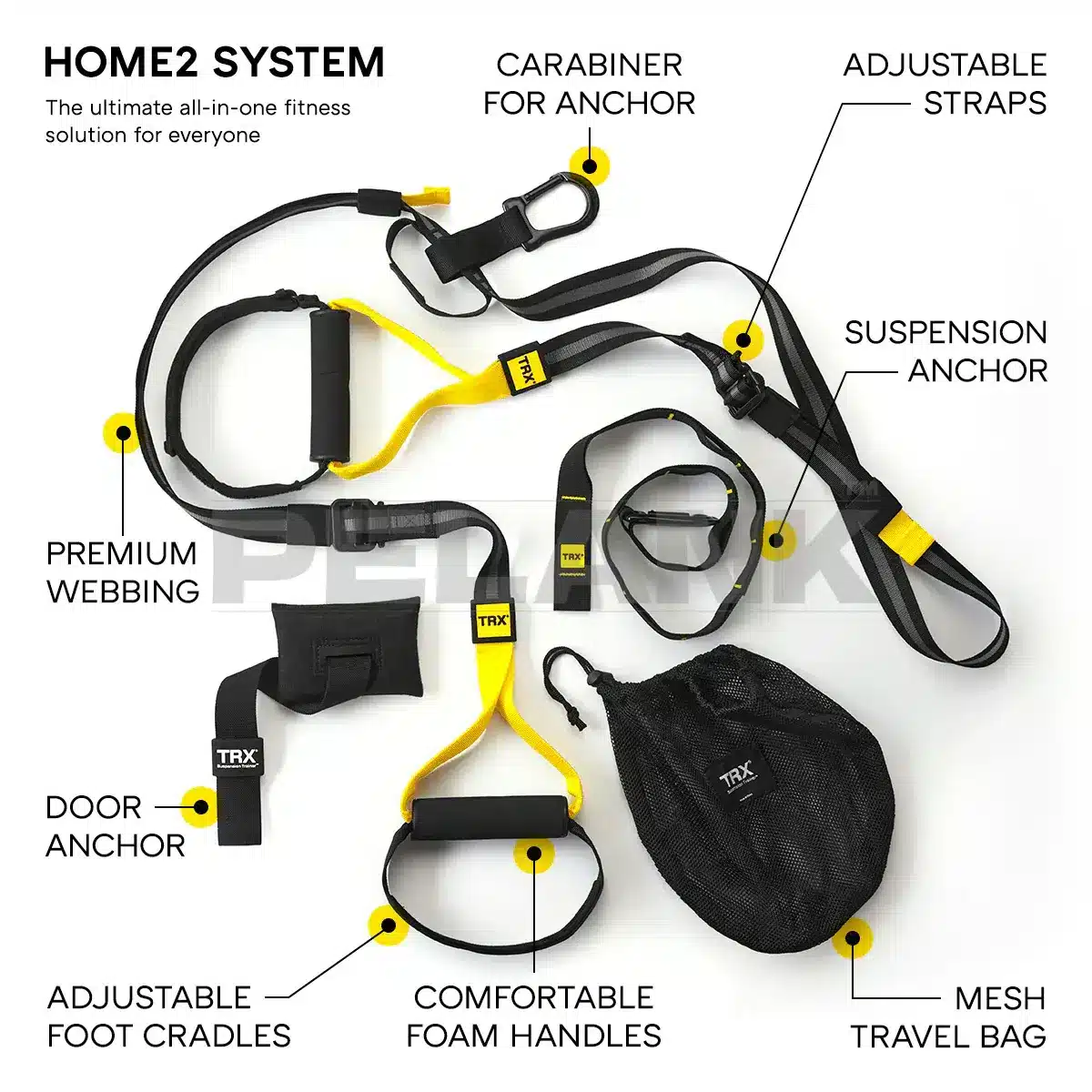
🧩 Main components of a TRX system
A standard TRX system usually consists of the following components:
🔗 Main suspension straps
Made from highly durable fibers with high load capacity
✋ Handles
Designed for a secure grip and performing upper-body movements
🦶 Foot cradles
Used for core, lower-body, and full-body exercises
🔒 Length adjuster / buckle
Allows shortening or lengthening the straps to adjust training intensity
🪝 Anchor strap
Used for secure attachment to a door, bar, structure, or tree
📌 Pro tip:
The quality of the buckles and stitching is more important than brand appearance. A standard TRX strap must withstand high loads and continuous tension.
🔧 How to install TRX safely
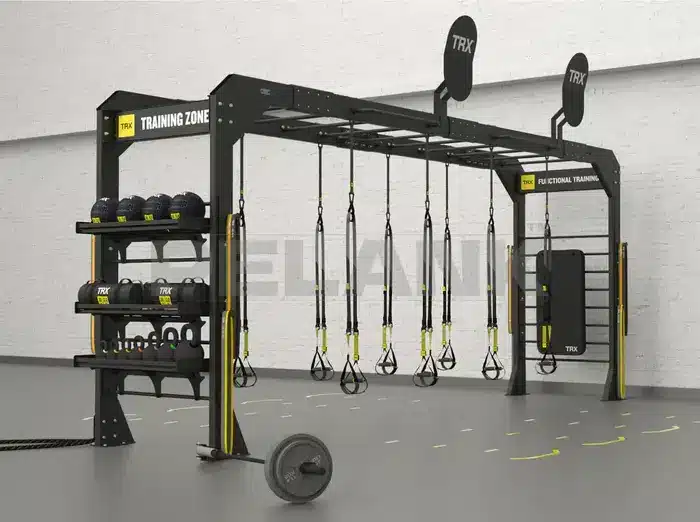
Proper installation is the foundation of safe TRX training:
🧱 The anchor point must be completely stable, solid, and immovable
🚪 When installing on a door:
The door must be closed and locked
The anchor strap should be placed on the opposite side of the door’s opening direction
🌳 Outdoors:
Only use very solid structures (metal bars, beams, thick trees)
❌ Using weak railings, door handles, unreliable hooks, or decorative structures is dangerous.
📐 Distance, angle, and strap locking
Three key factors for safety and training intensity:
📏 Distance from the anchor point
Greater distance → more instability and higher load
Shorter distance → better control and lower load
📐 Body angle
More upright angle → suitable for beginners
More inclined or closer to horizontal → suitable for advanced users
🔒 Locking the straps
Before starting the workout, the length adjustment buckle must be fully secured
Any slipping of the straps during training is a sign of improper installation or incorrect locking.
⚠️ Common safety mistakes in TRX training
These are the most common causes of injury or ineffective training:
❌ Attaching the straps to a weak anchor point
❌ Starting with an excessively steep angle for beginners
❌ Loose length adjustment buckle
❌ Using momentum and throwing the body instead of controlling the movement
❌ Letting the core relax and excessively arching the lower back
❌ Ignoring joint pain during training
🧠 The golden rule of TRX safety:
If you cannot perform the movement “slowly and under control,” the angle is too difficult for you.
TRX is a low-risk tool provided that:
Proper installation is performed
Angle and distance are selected according to the individual’s level
Movement control is prioritized over intensity
📌 Following these guidelines turns TRX from a regular workout into a safe, smart, and effective training system.
TRX Training Programs
Practical and professional examples
🟢 In this section, several ready-made and goal-oriented training programs are presented that users can apply directly. Each program is structured to ensure appropriate intensity, safety, and progression.
📌 Important note: Before starting any program, 5–8 minutes of dynamic warm-up is recommended, followed by cool-down and light stretching at the end.
🌱 Beginner TRX Program (3 sessions per week)
🎯 Goal: learning proper form, strengthening the core, joint preparation
⏱️ Session duration: 25–30 minutes
⚖️ Intensity: low to moderate
Exercise | Sets × reps |
|---|---|
TRX Assisted Squat | 3 × 12 |
TRX Low Row | 3 × 10 |
TRX Chest Press | 3 × 8–10 |
TRX Reverse Lunge | 2 × 10 each leg |
TRX Plank | 3 × 20–30 seconds |
📌 Coaching tip:
Keep the body angle relatively upright and focus on movement control, not repetition count.
🔥 TRX Fat Loss Program
(Circuit / HIIT)
🎯 Goal: increase calorie expenditure and EPOC
⏱️ Session duration: 25–35 minutes
🔥 Structure: circuit training
Execution structure:
40 seconds work
20 seconds rest
3–4 rounds
Exercise |
|---|
TRX Squat to Row |
TRX Mountain Climber |
TRX Push-Up |
TRX Jump Lunge |
TRX Plank Knee Tuck |
📌 Pro tip:
Do not sacrifice movement quality for speed. If your form breaks down, reduce the angle.
🏋️♂️ 30-minute full-body TRX program
🎯 Goal: strengthen the entire body in a limited time
⏱️ Session duration: 30 minutes
⚙️ Structure: superset or circuit
Exercise | Sets × reps |
|---|---|
TRX Squat | 3 × 12 |
TRX Row | 3 × 10 |
| TRX Chest Press | 3 × 10 |
TRX Hamstring Curl | 3 × 12 |
TRX Pike | 3 × 8–10 |
⏸️ Rest: 45–60 seconds between sets
📌 Note:
This program is adjustable for most people (beginner to intermediate).
🏠 TRX home workout program
🎯 Goal: safe training without additional equipment
⏱️ Session duration: 20–30 minutes
📍 Anchor point: sturdy door or fixed bar
Exercise | Sets × reps |
|---|---|
TRX Assisted Squat | 3 × 12 |
TRX Row | 3 × 10 |
TRX Chest Press | 3 × 8–10 |
TRX Glute Bridge | 3 × 12 |
TRX Plank | 3 × 20–30 seconds |
📌 Home safety tips:
Always lock the door
Install the strap on the opposite side of the door’s opening direction
Keep the surrounding area clear
These programs:
Are suitable for different fitness levels
Are easily customizable
Can serve as a foundation for designing more advanced programs
Differences Between Original TRX and Similar Straps
🟢 With the growing popularity of TRX training, many different straps with a wide range of prices have entered the market. However, not all of them are equal in terms of safety, durability, and performance. In this section, we clearly and professionally examine the differences to help you make a more informed choice.
🧵 Strap quality
Original TRX straps are made from highly durable fibers (typically multi-layer industrial nylon) that:
Are resistant to continuous tension and abrasion
Do not undergo unwanted length changes
Maintains its shape over time
In contrast, many similar straps:
Use thinner or lower-quality fibers
Develop fraying or loosen over prolonged use
Provide a lower sense of security during training
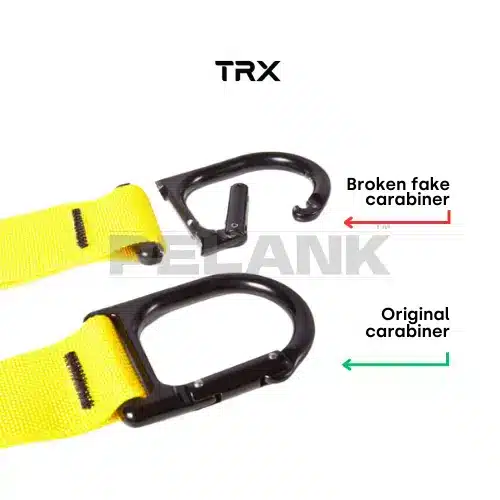
🔒 Buckles and length adjustment system
Load Capacity
One of the most important differences lies in the length adjustment buckle system.
✅ Original TRX:
Metal or reinforced composite buckles
Smooth and precise length adjustment
No slipping during training
❌ Cheaper straps:
Weak plastic buckles
Risk of sudden slipping
Reduced safety, especially during explosive movements or steep angles
📌 Buckle slippage in TRX is not just a quality issue; it creates a direct injury risk.
⚖️ Load capacity
Original TRX is typically designed to handle very high loads (around 300–350 kg), which:
Includes dynamic forces (not just body weight)
Maintains safety during fast and explosive movements
Cheaper alternative straps:
Often have lower nominal load capacity
Perform more poorly in real-world dynamic testing
Are not suitable for heavier individuals or intense training
💰 Are cheaper straps worth it?
Short and honest answer:
👉 It depends on your goal.
🔹 If:
You are a beginner
Perform light and controlled workouts
Are looking for short-term use
Mid-quality straps can be acceptable.
🔹 But if:
You perform professional or high-intensity training
You have a higher body weight
You are concerned about long-term safety and durability
Original TRX or highly reputable brands are a more logical choice.
Original TRX = safety, durability, confidence
Similar straps = price variety, variable quality
📌 Golden rule:
In training where your body is “suspended,” excessive cost-cutting on quality carries high risk.
TRX progression system
Progression Model
🟢 Unlike weight training—where progression usually comes from adding load—progression in TRX is designed to be smart and multidimensional. This means you can make workouts harder, more effective, and more advanced without adding external weight.
🧠 The fundamental principle of progression in TRX
The harder it becomes to control your body, the more advanced the exercise is.
Progression in TRX means:
Increased stability demands
Greater neuromuscular control
Higher effective mechanical tension without added joint stress
1️⃣ Progression through body angle
Angle Progression
The most important and fundamental method of progression in TRX.
🔰 More upright body → less resistance
🔥 More inclined body or closer to horizontal → greater resistance
Example:
TRX Row
Beginner: body almost upright
Intermediate: body inclined
Advanced: body close to horizontal + feet positioned farther forward
📌 This method is the safest form of progression and is recommended for all levels.
2️⃣ Progression through movement tempo
Tempo Progression
Controlling movement time significantly increases training load.
⬆️ Slowing down the eccentric phase (for example, 3–4 seconds)
⏸️ Isometric pause at the hardest point of the movement
🔄 Combining different tempos within a single set
Example of an advanced tempo:
3–1–1
3 seconds eccentric – 1 second pause – 1 second concentric
📌 Tempo makes workouts highly challenging without increasing risk.
3️⃣ Progression through reducing points of support
Stability Progression
The less support you have, the more the core and stabilizers are engaged.
Two feet → one foot
Two hands → one hand
Stable surface → more unstable
Example:
TRX Squat → TRX Single-Leg Squat
📌 This method requires high control and is recommended for intermediate to advanced levels.
4️⃣ Progression through unilateral movements
Unilateral Progression
Unilateral movements:
Reveal imbalances
Increase neuromuscular demand
Engage the core in an anti-rotation role
Examples:
TRX Single-Arm Row
TRX Single-Leg Lunge
📌 This type of progression is highly valuable for athletes and corrective training.
5️⃣ Progression through increased range of motion and movement patterns
ROM & Pattern Progression
Controlled increase in range of motion
Adding rotation
Combining multiple movement patterns in a single exercise
Example:
TRX Row → TRX Power Pull (Row + Rotation)
6️⃣ Metabolic progression
Density & Volume Progression
For fat loss and endurance goals:
Reducing rest time
Increasing time under tension (TUT)
Performing exercises as supersets or circuits
📌 This type of progression is more metabolic than mechanical.
⚠️ The golden rule of progression in TRX
If during progression:
Movement form breaks down
Core is disengaged
Or momentum is used
❌ That progression is not “real.”
🧠 Suggested 4-week TRX progression model
Week | Type of progression |
|---|---|
1 | Learning form + basic angle |
2 | Increased angle + controlled tempo |
3 | Isometric holds + unilateral work |
4 | Movement combinations + reduced rest |
Progression in TRX:
Is not dependent on adding weight
It depends on control, training intelligence, and execution quality
If this system is applied correctly, TRX can compete with many weight-training methods in terms of difficulty and effectiveness.
Scientific research and studies on TRX training
🟢 In the scientific literature, TRX is usually studied under the broader term Suspension Training / Suspension Exercise Training (SET) (meaning “suspension training,” not just the TRX brand). Existing evidence mainly focuses on four areas: muscle activation (EMG), adequacy of training load, balance/neuromuscular control, and basic-level clinical applications.
🧠 1) Muscle activation and the core
EMG studies
Several EMG studies have shown that performing suspension-based versions of common exercises (such as push-ups, planks, inverted rows, and bridges) can produce higher activation in many core and stabilizer muscles compared to stable-surface versions—especially in the abdominal muscles and spinal erectors. [1]
Important professional note: In some exercises, activation of the “primary mover” muscles (such as the chest or shoulders) may not increase dramatically, but the trunk and stabilizer muscles are engaged significantly more. In other words, TRX particularly excels at stability and control. [2]
💪 2) Does TRX provide “sufficient load” for upper-body training?
Some studies have compared TRX from the perspective of percentage of body weight (%BW) and muscle activation levels with traditional exercises such as the bench press and barbell row. The findings suggest that with smart modifications (body angle, foot position, isometric/isotonic work), a significant training intensity can be achieved—although its nature differs from increasing absolute load with weights.[3]
Additionally, studies comparing different suspension systems have reported variations in muscle activation levels.[4]
⚖️ 3) Balance and neuromuscular coordination
In functional studies on athletes, multi-week suspension training programs have been shown to improve balance indicators (static/dynamic and sometimes skill-based), and in some scenarios, results superior to traditional balance training have even been reported. [5]
🧑⚕️ 4) Clinical evidence (basic level, with caution)
In the field of rehabilitation, several systematic reviews/meta-analyses have examined suspension training / SET in certain musculoskeletal conditions and reported improvements in outcomes such as pain and disability; however, these findings relate to clinical protocols and conditions and do not necessarily imply a recommendation for self-treatment with TRX. [6]
Frequently Asked Questions
FAQ
TRX is a bodyweight suspension training system that simultaneously improves strength, balance, core stability, and movement control.
Yes. Due to the simultaneous engagement of multiple muscle groups and the ability to perform circuit-style workouts, TRX can increase calorie expenditure and fat loss.
To a certain extent, yes. TRX primarily improves relative strength and muscular endurance, but advanced hypertrophy requires external weights.
Yes, as long as a simple body angle is chosen and the focus is on learning proper form.
2 to 4 sessions per week is ideal for most people, depending on goals and fitness level.
Neither is “absolutely better”; TRX is more suitable for control and performance, while weights are better for strength and muscle size.
Yes, TRX is highly suitable for strengthening muscles, toning, and improving balance without excessive stress.
With low intensity and controlled execution, TRX can help maintain balance and strength.
In some cases, yes—but only with appropriate exercise selection and proper caution or professional guidance.
Yes, as long as the straps are installed correctly and the anchor point is completely secure.
About a 2 × 2 meter clear space is sufficient to safely perform most exercises.
Improvements in strength and body control are usually noticeable after 3 to 4 weeks of consistent training.
It is highly effective for core strengthening, injury prevention, and improving force transfer.
They may be usable for light training, but they are not recommended for professional or high-intensity use.
For general fitness, yes—but for advanced strength and muscle mass, no.
Final Summary
🤔 Is TRX right for you?
If you’re looking for a method that simultaneously improves strength, balance, core stability, and movement control, TRX can be an excellent choice. Instead of relying on heavy weights, this training system forces the body to move more intelligently and engage muscles through real-life and sport-specific movement patterns.
TRX is especially suitable for people who:
Want a safe yet effective workout
Care about movement quality and joint health
Need compact and portable equipment
Or are looking for a professional complement to their bodybuilding program
🎯 Who benefits the most from TRX?
The following groups benefit the most from TRX:
🌱 People who are new to exercise and want to build a solid foundation
💪 Athletes seeking to improve core strength, balance, and performance
🧘♂️ Individuals with a history of mild joint pain who need low-impact training
🏠 People who prefer to train at home or in limited spaces
🧠 Those who are interested in smart, performance-oriented training rather than just lifting weights
🚀 Pelank’s recommendation for getting started
At Pelank, we recommend starting TRX training in a gradual and goal-oriented way:
First, learn the basic movements and simple angles
Focus on core control and proper form
Then move on to fat-loss, full-body, or performance-based programs
If needed, use TRX alongside bodybuilding or other training methods
📌 Pelank final takeaway:
TRX is neither a passing trend nor a replacement for everything; it is a smart, flexible, and evidence-based training system that—when used correctly—can transform the quality of your workouts and your overall body health.
Pelank Life | Body Health Assessment
The Best Body Health Calculators Using Scientific Methods
Developed by Pelank Life ©

Mohsen Taheri
December 21 , 2025
Resources
Galaxy Gym. What Is TRX? Kahkeshan Gym Magazine. Accessed December 15, 2025.
https://kahkeshan-gym.ir/mag/what-is-trx/TRX Suspension Training. Why TRX. TRX Training (EU). Accessed December 15, 2025.
https://www.trxtraining.com/pages/why-trx
Harris S, Ruffin E, Brewer W, Ortiz A. Muscle activation patterns during suspension training exercises. Int J Sports Phys Ther. 2017;12(1):42-52. Accessed December 15, 2025.
https://pubmed.ncbi.nlm.nih.gov/28217415/Aguilera-Castells J, Buscà B, Fort-Vanmeerhaeghe A, Montalvo AM, Peña J. Muscle activation in suspension training: a systematic review. Sports Biomech. 2020;19(1):55-75. doi:10.1080/14763141.2018.1472293. Accessed December 15, 2025.
https://pubmed.ncbi.nlm.nih.gov/29902124/Youdas JW, Baartman HE, Gahlon BJ, Kohnen TJ, Sparling RJ, Hollman JH. Recruitment of shoulder prime movers and torso stabilizers during push-up exercises using a suspension training system. J Sport Rehabil. 2020;29(7):993-1000. doi:10.1123/jsr.2019-0381. Accessed December 15, 2025.
https://pubmed.ncbi.nlm.nih.gov/31910394/Calatayud J, Borreani S, Colado JC, et al. Muscle activation during push-ups with different suspension training systems. J Sports Sci Med. 2014;13(3):502-510. Accessed December 15, 2025.
https://pubmed.ncbi.nlm.nih.gov/25177174/Vural F, Erman B, Ranisavljev I, et al. Can different variations of suspension exercises provide adequate loads and muscle activations for upper body training? PLoS One. 2023;18(9):e0291608. doi:10.1371/journal.pone.0291608. Accessed December 15, 2025.
https://pubmed.ncbi.nlm.nih.gov/37738266/Wang Z, Ma Y, Huang Q, Guo Z, Jia M, Zheng W. Study on the influence of TRX suspension training on the specific balance ability of surfers. PeerJ. 2025;13:e20180. doi:10.7717/peerj.20180. Accessed December 15, 2025.
https://pubmed.ncbi.nlm.nih.gov/41116788/Wang Z, Ma Y, Huang Q, Guo Z, Jia M, Zheng W. Effects of TRX suspension training versus traditional balance training on balance performance in elite surfers. BMC Sports Sci Med Rehabil. 2025;17:352. doi:10.1186/s13102-025-01411-z. Accessed December 15, 2025.
https://pubmed.ncbi.nlm.nih.gov/41287061/Liu Y, Huang S, Zhang X, Liao H, Liu W, Zhang Z. Effects of suspension exercise training in the treatment of lumbar disk herniation: a systematic review and meta-analysis. Front Neurol. 2024;15:1455505. doi:10.3389/fneur.2024.1455505. Accessed December 15, 2025.
https://pubmed.ncbi.nlm.nih.gov/39687406/Li Y, Wu M, Pan J, Zhu L. Efficacy of suspension exercise training in spinal cord injury: a systematic review and meta-analysis. J Orthop Surg Res. 2025;20(1):627. doi:10.1186/s13018-025-06044-z. Accessed December 15, 2025.
https://pubmed.ncbi.nlm.nih.gov/40629468/Related Articles

Neck Flexion with Weighted Neck Harness
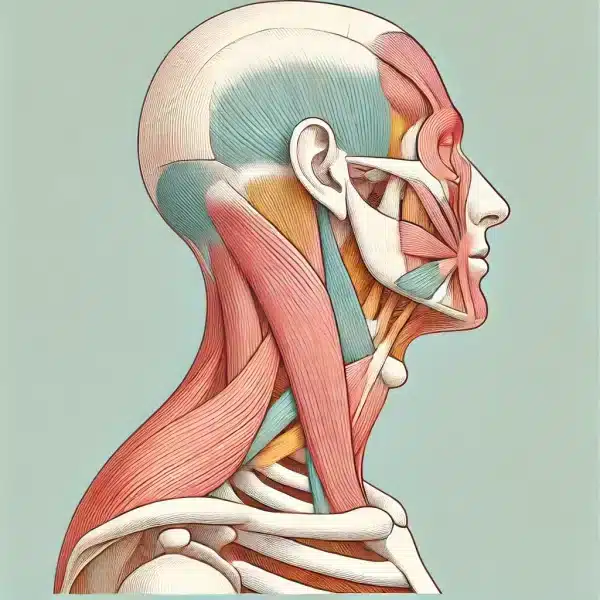
Neck Flexion Stretch
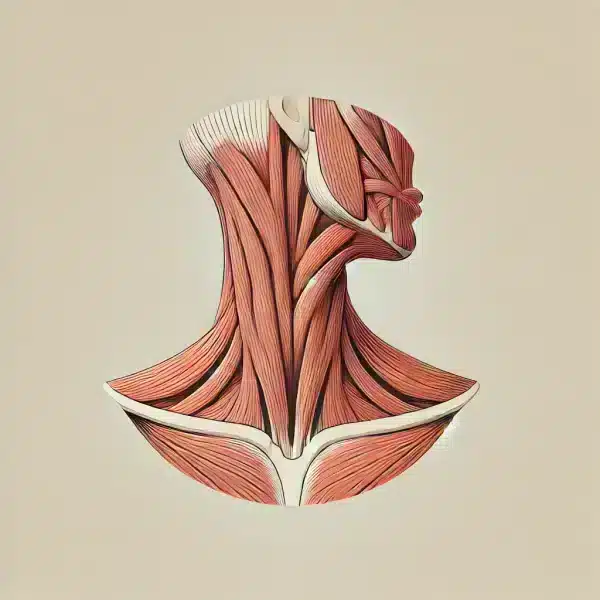
Neck Extension with Neck Harness

Body Energy Systems – Phosphagen, Glycolytic, and Aerobic Systems
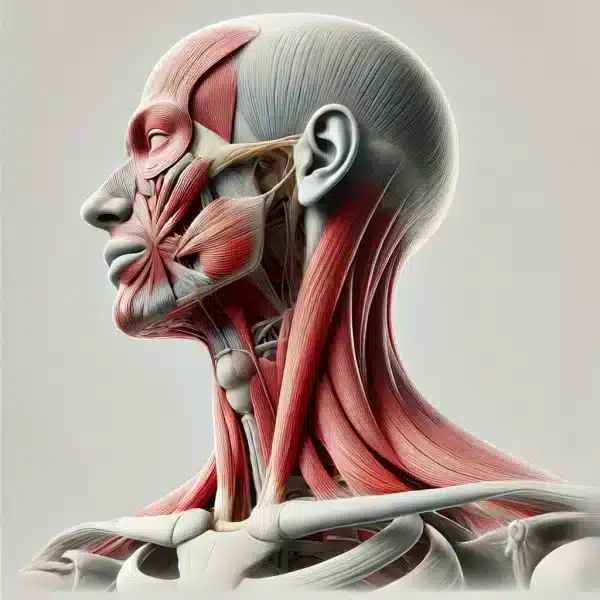
Weighted Neck Lateral Flexion with Neck Harness
Benefits of Cold Water: 12 Advantages from Immediate Contact to Long-Term Effects on the Body

Founder of Pelank Platform (6+ years) | Founder & Manager of Galaxy Gym (11+ years) | M.Sc. Student in Exercise Physiology & Nutrition | Certified Fitness & Conditioning Coach | Official Member of the Bodybuilding & Physical Fitness Federation
- This author does not have any more posts.
