

Swing Gymstick
| English Name | Swing – Gymstick |
|---|---|
| Difficulty | Intermediate |
| Movement Patterns | Push Pattern |
| Muscle Contraction Types | Mixed (Con + Ecc) |
| Primary Muscle (EN) | Gluteus Maximus |
| Muscle Groups | Erector Spinae Hips muscles Shoulder Muscles |
|---|---|
| Workout Type | Strength training |
| Required equipment | Resistance band |
💠 Exercise guide
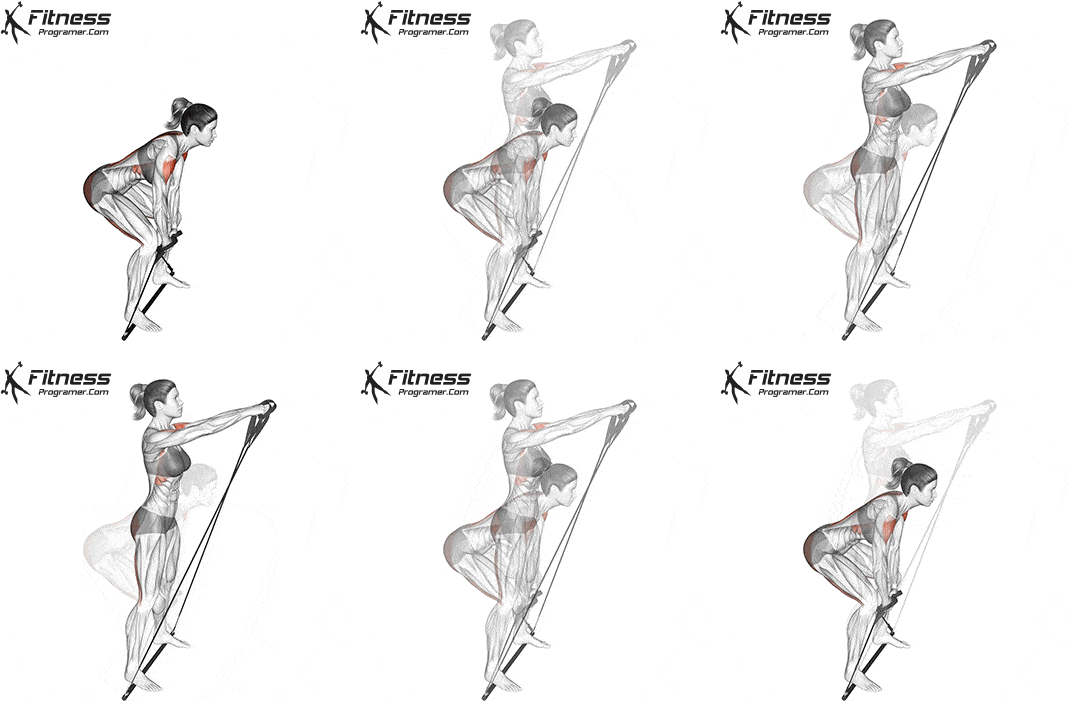
Swing with Gymstick is an explosive power exercise that uses the hip-drive pattern to engage the posterior chain muscles. This movement is applied both in fitness programs and in functional and agility training, helping to boost lower-body power and improve overall body coordination.
💠 How to perform the exercise
Preparation
✅ Hold the Gymstick with both hands in front of your body, with the bar positioned between your legs
✅ Stand with your feet slightly wider than shoulder-width apart, knees slightly bent
✅ Hinge your torso forward with a straight back and eyes looking down
Execution method
✅ Drive the Gymstick forward explosively from the hips and thighs until it reaches shoulder height
✅ Keep the arms acting only as force transmitters, not as the main drivers
✅ Pause briefly at the top, then return to the starting position with control
✅ Focus on generating power from the hips, not lifting with the arms
Coaching tips and recommendations
✔ The power of the movement comes from the hips, not the arms
✔ Control the descent to avoid any sudden impact
✔ Keep the back straight throughout the entire motion
✔ Breathing: exhale during the drive, inhale on the return
Benefits of the exercise
🔹 Increased lower-body power:
The Gymstick swing, with its focus on hip and thigh explosiveness, is one of the most effective exercises for strengthening the posterior chain muscles.
🔹 Enhanced athletic performance:
In sports such as running, jumping, football, and martial arts, explosive hip movement is crucial. This exercise directly improves that capability.
🔹 Simultaneous activation of multiple muscle groups:
Engaging the glutes, legs, shoulders, and core increases calorie burn and enhances the body’s multi-joint performance.
🔹 A great option for metabolic or HIIT workouts:
With high repetitions, this movement significantly elevates heart rate and is excellent for fat burning.
💠 Muscles engaged in the movement
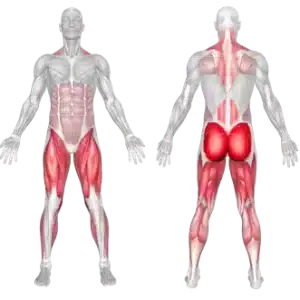
The Gymstick swing, driven by the hips and explosive power from the glutes, directly activates the gluteus maximus. The hamstrings, core, and lower back muscles act as synergists, playing a key role in controlling and transferring force.
Main muscles
Synergistic muscles
Stabilizers
Gluteus Maximus Muscle
Gluteus Maximus Muscle
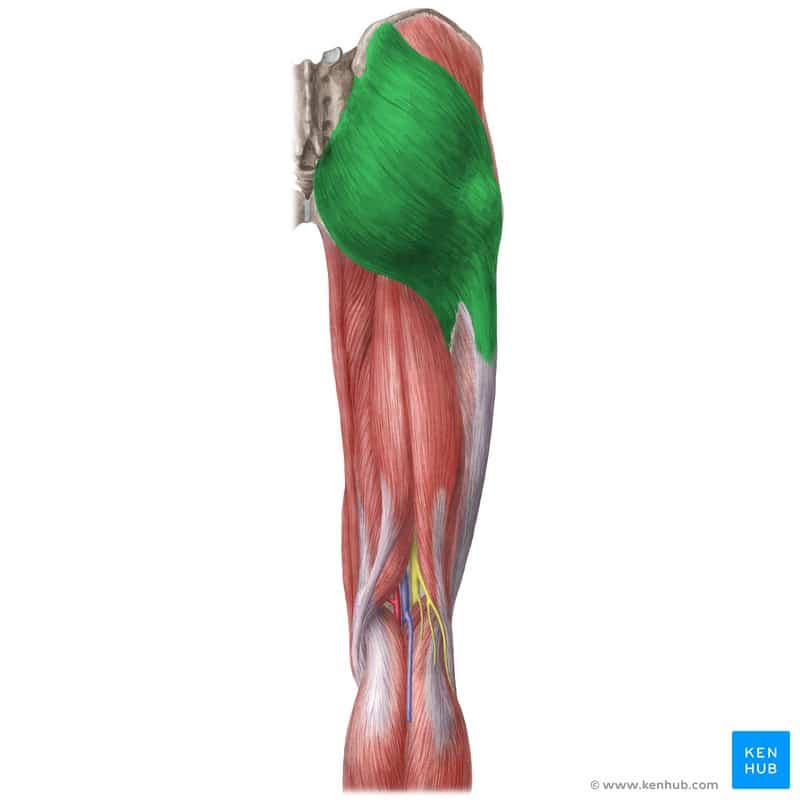
The gluteus maximus is one of the most important and powerful muscles in the body, playing a key role in hip movement, balance, and pelvic stability. It’s essential for strength-based activities like squats, deadlifts, and running, where it drives hip extension and helps maintain pelvic stability.
✅ Persian Name: Sorini Bozorg
✅ Latin Name: Gluteus Maximus
✅ Common Name: Buttock Muscle, Glutes
✅ Location:
🟡 Located at the back of the pelvis, lying over the other gluteal and thigh muscles.
🟡 It is the largest and most superficial muscle in the gluteal region.
🟡 Originates from the ilium (hip bone) and sacrum, attaching to the iliotibial band and the femur.
✅ 🦾 Origin
✔ Posterior surface of the ilium (Ilium)
✔ Posterior surface of the sacrum (Sacrum) and coccyx (Coccyx)
✔ Sacrotuberous ligament (Sacrotuberous Ligament)
✅ 🦿 Insertion
✔ Iliotibial band (IT Band)
✔ Gluteal tuberosity of the femur
✅ 📌 Function
1️⃣ Hip extension (moving the hip backward, as in deadlifts and climbing stairs)
2️⃣ External rotation of the hip (turning the thigh outward, like in lateral lunges)
3️⃣ Hip abduction and adduction (moving the thigh away from or toward the body, depending on muscle fibers)
4️⃣ Stabilizing the pelvis and knee through the iliotibial band (IT Band)
✅ 💪🏻 Muscle Fiber Types
✔ Contains fast-twitch fibers (Type II) for powerful movements like deadlifts and squats.
✔ Also includes slow-twitch fibers (Type I) to maintain balance and stability during static positions.
✅ 🏋🏻♂️ Role in Movement and Athletic Performance
✔ Bodybuilding: Engaged in key exercises like squats, deadlifts, and hip thrusts.
✔ Running and Jumping: Generates the force needed for propulsion and acceleration.
✔ Endurance and Balance: Supports static activities such as prolonged standing and walking.
✅ 🧗🏻♂️ Muscle Strength and Endurance
✔ The strongest muscle in the body when it comes to hip extension power.
✔ Weakness can lead to pelvic imbalance, increased lumbar lordosis (excessive lower back curve), knee pain, and reduced athletic performance.
🧠 Innervation
✔ Inferior gluteal nerve (L5, S1, S2)
🩸 Blood Supply
✔ Superior and inferior gluteal arteries
✅ 🤼♂️ Role in Sports and Physical Activities
✔ Weightlifting: Drives hip extension in deadlifts, squats, lunges, and hip thrusts
✔ Running and Jumping: Aids in acceleration and pelvic stabilization
✔ Resistance Sports: Enhances knee and pelvic stability for dynamic movements
✅ 🏌🏻♂️ Interaction with Other Muscles and Joints
✔ Works alongside the gluteus medius and minimus to control hip movements
✔ Collaborates with the hamstrings for hip extension and pelvic stabilization
✔ Stabilizes the knee through the iliotibial band (IT Band)
✅ 💉 Vulnerability and Potential Issues
✔ Weakness in the gluteus maximus increases the risk of lower back pain, knee problems, and poor balance.
✔ Insufficient strengthening can lead to muscle spasms and pain in the gluteal region.
✅ 🏋🏻♂️ Strength Training Exercises to Build the Gluteus Maximus
1️⃣ Deadlifts – the primary movement for hip extension
2️⃣ Hip Thrusts – directly target the gluteus maximus
3️⃣ Weighted Squats – a compound exercise strengthening both glutes and hamstrings
4️⃣ Lunges – work the gluteus maximus while challenging balance
5️⃣ Glute Bridge – an excellent exercise to engage the muscle at home
✅ 🧘🏻♀️ Stretching and Recovery Exercises
✔ Glute Stretch to relieve muscle spasms and enhance function
✔ Pigeon Pose to increase gluteal flexibility and reduce lower back tension
✅ 🔬 Interesting Fact:
✔ The gluteus maximus plays the biggest role in shaping and powering the lower body.
✔ In professional athletes, this muscle is often highly developed due to intense training.
✅ 💡 Practical Tip:
✔ To better activate the gluteus maximus during workouts, start with activation exercises like bodyweight glute bridges and lunges before your main training.
🔴 Name and Location: The largest and most superficial muscle in the gluteal region, attaching to the hip bone (ilium) and the femur.
🟠 Anatomy: Originates from the ilium and sacrum, attaching to the gluteal tuberosity of the femur and the iliotibial band.
🟡 Function: Hip extension, external rotation, and stabilization of the pelvis and knee.
🟢 Physiology: A blend of slow-twitch and fast-twitch muscle fibers, providing both strength and endurance.
🔵 Innervation: Inferior gluteal nerve (L5, S1, S2)
🟣 Importance: Active during weightlifting, running, jumping, and lower body movements
🟤 Exercises: Deadlifts, hip thrusts, squats, lunges, glute bridges
⚫ Interesting Fact: The most important muscle for… shaping and strengthening the lower body, as well as preventing lower back pain.
Hamstring Muscles
Hamstring Muscles
The hamstring muscles are a group of three main muscles located at the back of the thigh: the biceps femoris, semitendinosus, and semimembranosus. They originate from the pelvis and extend down to the bones of the lower leg (tibia and fibula). Functionally, they play a crucial role in bending (flexing) the knee and extending the hip joint.
These muscles also play a vital role in pelvic stability and in controlling movements involved in running, jumping, and changing direction during sports. Injuries in this area are common, especially in speed-based activities. Regular strengthening and stretching of the hamstring group help reduce injury risk, increase speed, and improve overall lower limb performance.

✅ Persian Name: Hamstring Muscles | Hamstrings
✅ Latin Name: Hamstring Muscles
✅ Common Name: Posterior Thigh Muscles
✅ Location:
🟡 Situated in the posterior thigh, between the pelvis and the lower leg
🟡 Composed of three main muscles:
Biceps Femoris Muscle: located in the posterolateral part of the thigh.
Semitendinosus Muscle: located in the middle of the back of the thigh.
Semimembranosus Muscle: Located deep in the inner part of the thigh
🟡 All of these muscles originate from the pelvic region (ischial tuberosity) and attach to the bones of the lower leg (tibia or fibula).
🟡 Their primary functions:
▪️ Knee flexion
▪️ Hip extension
▪️ Stabilizing the pelvis and controlling movements during activities such as walking, running, jumping, and sudden stopping
🦾 1. Biceps Femoris Muscle
🔹 Long Head
✅ Origin:
✔ Ischial Tuberosity
✅ Insertion:
✔ Head of Fibula
✅ Functions:
✔ Knee Flexion
✔ Hip Extension
✔ Pelvic stabilization during walking and running
✅ Innervation:
✔ Tibial Nerve (L5, S1, S2)
🔹 Short Head
✅ Origin:
✔ Linea Aspera of Femur
✅ Insertion:
✔ Head of Fibula
✅ Functions:
✔ Involved only in knee flexion
✔ No role in hip extension
✅ Innervation:
✔ Common Peroneal Nerve (L5, S1, S2)
🦾 2. Semitendinosus Muscle
✅ Origin:
✔ Ischial Tuberosity
✅ Insertion:
✔ Proximal medial surface of tibia (Pes Anserinus)
✅ Functions:
✔ Knee flexion
✔ Hip extension
✔ Internal rotation of the leg when the knee is flexed
✔ Pelvic stabilization during movement
✅ Innervation:
✔ Tibial Nerve (L5, S1, S2)
🦾 3. Semimembranosus Muscle
✅ Origin:
✔ Ischial Tuberosity
✅ Insertion:
✔ Posterior part of the medial condyle of the tibia
✅ Functions:
✔ Knee flexion
✔ Hip extension
✔ Internal rotation of the leg when the knee is flexed
✔ Stabilization of the hip and knee joints
✅ Innervation:
✔ Tibial Nerve (L5, S1, S2)
✅ 💪🏻 Muscle Fiber Types
✔ The hamstrings consist of a combination of Type I (slow-twitch) and Type II (fast-twitch) fibers.
✔ Type I fibers are used for endurance activities such as long-distance running and sustained walking.
✔ Type II fibers are recruited in powerful, jumping, and explosive movements such as sprinting, quick direction changes, and throwing.
✅ 🏋🏻♂️ Role in Movement and Athletic Performance
✔ They play a central role in knee flexion, hip extension, jumping, squats, lunges, deadlifts, sprints, and running acceleration.
✔ By preventing knee hyperextension during running and jumping, the hamstrings contribute to the dynamic stability of the hip and knee joints.
✔ These muscles are highly active in deceleration and sudden changes of direction, especially in sports such as football, basketball, and track and field.
✅ 🧗🏻♂️ Muscle Strength and Endurance
✔ Regular strengthening of the hamstrings leads to:
🔹 Reduced risk of hamstring tears, especially during explosive movements
🔹 Prevention of anterior cruciate ligament (ACL) injuries
🔹 Improved muscular balance between the quadriceps and hamstrings
🔹 Enhanced performance in strength training, sprints, and acrobatic movements
🧠 Innervation
✔ Biceps Femoris Muscle:
▪️ Long Head: Tibial Nerve (L5, S1, S2)
▪️ Short Head: Common Peroneal Nerve (L5, S1, S2)
✔ Semitendinosus Muscle:
▪️ Tibial Nerve (L5, S1, S2)
✔ Semimembranosus Muscle:
▪️ Tibial Nerve (L5, S1, S2)
🩸 Blood Supply
✔ Deep Femoral Artery (Profunda Femoris)
✔ Perforating Branches of the Deep Femoral Artery
✔ Popliteal Artery – especially in the posterior knee region to support the hamstrings distally
✅ 🤼♂️ Role in Sports and Physical Activities
✔ Bodybuilding: The hamstrings are heavily engaged in strength exercises such as squats, deadlifts, and lunges, particularly during the hip extension phase and in controlling the return movement.
✔ Running and Jumping: During the swing phase of running, the hamstrings are responsible for knee flexion and shock absorption upon landing. They also generate the initial force needed for sprints, vertical jumps, and quick directional changes.
✔ Team Sports such as football and basketball: They play a key role in explosive movements, acceleration, sudden deceleration, and knee stability.
✅ 🏌🏻♂️ Connection with Other Muscles and Joints
✔ The hamstrings, together with the semitendinosus and semimembranosus, help stabilize and control movements of the knee and hip, especially during compound exercises or weightlifting.
✔ The hamstrings reduce excessive stress on the knee joint and create a balance of strength with the quadriceps.
✔ In forward-bending movements, the interaction between the hamstrings and the spinal erectors is essential for maintaining balance.
✅ 💉 Vulnerability and Potential Issues
✔ The hamstrings are among the most commonly injured muscles in professional athletes, especially during high-speed movements and sudden changes of direction.
✔ Common injuries include:
▫️ Strain
▫️ Partial or complete tear
✔ Weakness or tightness in the hamstrings can lead to:
▫️ Reduced control of knee movements
▫️ Increased risk of ACL injury
▫️ Hip joint instability
✔ Regular strengthening and stretching exercises can play a significant role in injury prevention.
✅ 🏋🏻♂️ Key Exercises to Strengthen the Biceps Femoris Muscle
1️⃣ Romanian Deadlift
🔹 Primarily emphasizes the long head of the biceps femoris
🔹 Increases controlled stretch during the lowering phase
🔹 Strengthens power and control in the hamstrings and hips
2️⃣ Single-Leg Squat
🔹 Isolated activation in the lower limb
🔹 Enhances neuromuscular balance and joint control
🔹 Effectively targets the hamstrings and supporting muscles
3️⃣ Reverse Lunges
🔹 Engage both heads of the biceps femoris
🔹 Improve dynamic function of the hip and knee joints
🔹 Suitable for injury prevention and rehabilitation
4️⃣ Swiss Ball Hamstring Curls
🔹 Focus on both concentric and eccentric phases of the muscle
🔹 Improve muscular endurance and core control
🔹 Can be performed at home or in minimally equipped environments
5️⃣ Resistance Band Glute Bridge
🔹 Simultaneously activates the glutes and hamstrings
🔹 Ideal for strengthening the posterior chain
🔹 Enhances stability in the hip region
✅ 🧘🏻♀️ Stretching and Recovery Movements
✔ Standing Hamstring Stretch
▪️ Reduces tension in the back of the thigh
▪️ Improves flexibility and decreases muscle stiffness
✔ Cobra Stretch
▪️ Although primarily designed for the spine, it also enhances posterior chain flexibility and supports hamstring function
▪️ A suitable addition for recovery after strength training
✅ 🧠 Interesting Fact
✔ The short head of the biceps femoris, unlike the long head and other hamstring muscles, does not originate from the pelvis but instead arises from the linea aspera of the femur.
🔹 For this reason, from an anatomical perspective, some sources do not consider it part of the true hamstring group.
🔹 This muscle only affects the knee joint and plays no role in hip movements.
✅ 🛡️ Practical Tip
✔ The hamstrings are among the most commonly injured muscles in athletes, especially during high-speed movements or sudden changes of direction.
🔹 To reduce the risk of hamstring tears or strains:
▪️ Include eccentric strengthening exercises (such as the Nordic Hamstring) in your program.
▪️ Perform both dynamic and static stretches regularly before and after training.
▪️ Pay special attention to maintaining a strength balance between the quadriceps and hamstrings.
🔴 Name and Location:
A group of muscles in the posterior thigh consisting of three muscles:
▫️ Biceps Femoris
▫️ Semitendinosus
▫️ Semimembranosus
These muscles originate from the pelvis and attach to the bones of the lower leg (tibia and fibula).
🟠 Anatomy:
All originate from the ischial tuberosity (pelvic sitting bone), except for the short head of the biceps femoris, and they function in knee flexion and hip extension.
The biceps femoris has two distinct heads (long and short) with different innervations.
🟡 Function:
✔ Knee flexion
✔ Hip extension
✔ Assisting in stabilizing the pelvis and knee during movement
✔ Internal rotation of the leg by the semimembranosus and semitendinosus
✔ External rotation of the leg by the long head of the biceps femoris
🟢 Physiology:
✔ A combination of slow-twitch (Type I) and fast-twitch (Type II) fibers
✔ Slow-twitch fibers support long-term endurance
✔ Fast-twitch fibers are used for explosive movements and jumps
🔵 Innervation:
✔ Biceps Femoris:
▫️ Long Head: Tibial Nerve (L5–S2)
▫️ Short Head: Common Peroneal Nerve (L5–S2)
✔ Semitendinosus and Semimembranosus:
▫️ Tibial Nerve (L5–S2)
🟣 Functional Importance:
✔ Play a key role in sports such as running, jumping, squats, lunges, deadlifts, football, and basketball
✔ Contribute to pelvic stabilization and knee protection during dynamic movements
✔ Hamstrings are especially active in deceleration and quick directional changes
🟤 Recommended Exercises:
1️⃣ Romanian Deadlift
2️⃣ Reverse Lunge
3️⃣ Resistance Band Glute Bridge
4️⃣ Standing Hamstring Stretch
5️⃣ Swiss Ball Exercises for improved control and stability
⚫ Interesting Fact:
The short head of the biceps femoris, unlike the other hamstring muscles, does not originate from the pelvis and only acts on the knee; therefore, some sources do not consider it a “true” member of the hamstring group.
Erector Spinae Muscles
Erector Spinae Muscles
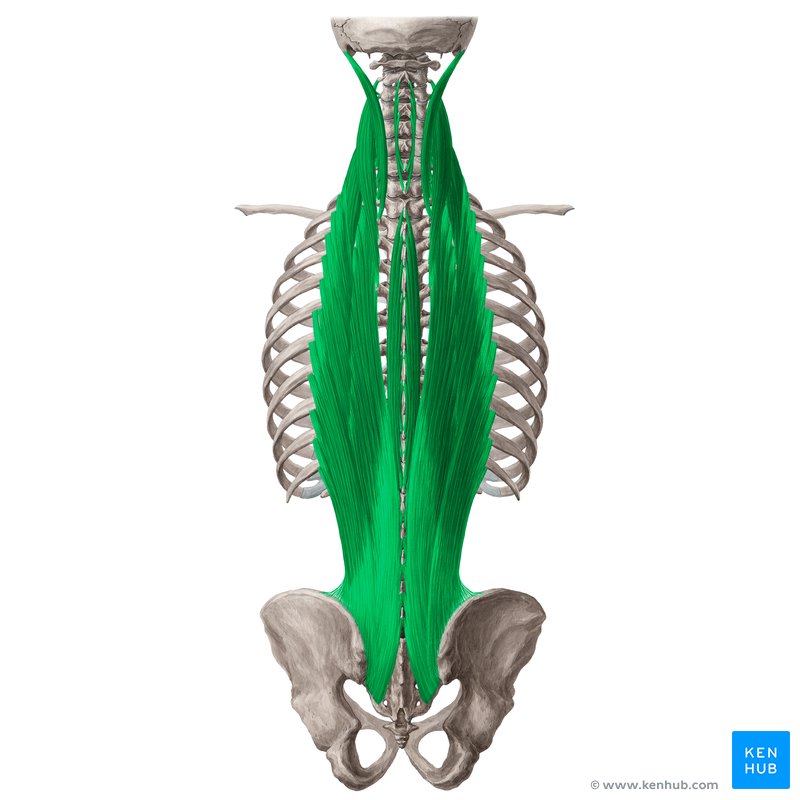
🔹 The erector spinae muscles are a group of deep, long muscles located on both sides of the spine, extending from the lower back to the base of the skull. These muscles are responsible for maintaining spinal integrity, flexing and extending the back, and stabilizing the body’s posture.
✅ These muscles are one of the most important muscle groups for maintaining body stability and performing daily movements, as well as strength and endurance exercises.
📌 The erector spinae muscles consist of three main sections:
1️⃣ Iliocostalis – The most lateral part of this group
2️⃣ Longissimus – Located in the center, and the longest muscle in this group
3️⃣ Spinalis – The closest part to the spine
✅ Persian Name: azolat raste-konande sotun-e faghraat
✅ Latin Name: Erector Spinae Muscles
✅ Common Name: Lumbar and Dorsal Stabilizing Muscles
✅ Location:
🟡 A group of deep, long muscles extending along the spine, from the sacrum to the skull.
🟡 They are positioned bilaterally along the vertebrae and are responsible for maintaining the body’s balance and stability.
✅ 🦾 Origin
✔ Sacrum
✔ Iliac Crest
✔ Lumbar vertebrae and ribs
✅ 🦿 Insertion
✔ Cervical and thoracic vertebrae
✔ Ribs
✔ Occipital Bone in the skull
✅ 📌 Classification and Function | Erector Spinae Muscle Duties
🔹 These muscles are divided into three main categories, each with specific functions:
1️⃣ Iliocostalis
✔ Responsible for lateral flexion of the lower back and stabilizing the spine
2️⃣ Longissimus
✔ Helps keep the back upright and assists in moving the head and neck
3️⃣ Spinalis
✔ Brings the vertebrae of the spine closer together and stabilizes the body
✅ Main Functions:
✔ Maintain body balance in an upright position
✔ Assist in the flexion and extension of the spine
✔ Stabilize the vertebrae and prevent spinal injuries
✅ 💪🏻 Muscle Fiber Types
✔ This group primarily consists of slow-twitch fibers (Type 1) for body endurance.
✔ It also contains some fast-twitch fibers (Type 2) to assist with powerful movements like deadlifts and weightlifting.
✅ 🏋🏻♂️ Role in Movement and Sports Performance
✔ Plays a key role in fundamental movements such as squats, deadlifts, heavy lifting, and stretching exercises.
✔ Responsible for the muscular endurance of the spine in endurance and strength sports.
✅ 🧗🏻♂️ Muscle Strength and Endurance
✔ These muscles are among the most important for body stability and preventing lower back injuries.
✔ Weakness in these muscles leads to lower back pain, decreased endurance, and an increased risk of injury during heavy training.
🧠 Innervation | Neural Control
✔ The lumbar, thoracic, and cervical spinal nerves (Spinal Nerves – C1 to L5) control the movements of these muscles.
🩸 Blood Supply
✔ Posterior Intercostal Arteries
✔ Lumbar Arteries
✅ 🤼♂️ Role in Sports and Physical Activities
✔ These muscles play a stabilizing role in movements like deadlifts, squats, pull-ups, and shoulder presses.
✔ They are vital for maintaining balance in endurance sports and explosive movements like weightlifting and CrossFit.
✅ 🏌🏻♂️ Connection with Other Muscles and Joints
✔ Works in conjunction with the gluteal muscles, hamstrings, and abdominal muscles to stabilize the spine.
✔ Strengthening these muscles helps reduce pressure on the intervertebral discs and prevents lower back issues.
✅ 💉 Vulnerability and Potential Issues
✔ Weakness in these muscles can lead to lower back pain, lumbar lordosis, and spinal injuries.
✔ Strain or spasms in these muscles can cause chronic pain in the lower back and reduce the range of motion.
✅ 🏋🏻♂️ Main Exercises to Strengthen These Muscles
1️⃣ Deadlift – The most important exercise for strengthening the lower back and erector spinae muscles.
2️⃣ Hip Thrusts – Increases strength in the lower back and gluteal muscles.
3️⃣ Glute Bridge – Activates the posterior muscles and enhances lower back stability.
4️⃣ Superman Pose – Endurance exercise to strengthen these muscles.
5️⃣ Weighted Squats – Helps stabilize the spine and strengthen deep muscles.
✅ 🧘🏻♀️ Stretching and Recovery
✔ Cat-Cow Stretch – Increases spinal flexibility.
✔ Lumbar Stretch – Reduces muscle tension in the lower back.
✅ Interesting Fact:
✔ These muscles are among the primary muscles for body balance and play a vital role in all standing and strength movements.
✅ Practical Tip:
✔ To prevent lower back pain and improve the performance of these muscles, combining strength exercises (such as deadlifts) with stretching movements (like yoga) is highly effective.
🔴 Name and Location: A group of deep muscles that extend along the spine from the lower back to the neck.
🟠 Anatomy: Consists of three parts (Iliocostalis, Longissimus, Spinalis) with different functions.
🟡 Function: Stabilize the spine, assist in bending and extending the body, maintain balance.
🟢 Physiology: It has slow-twitch fibers for endurance and fast-twitch fibers for powerful movements.
🔵 Innervation: The lumbar, thoracic, and cervical spinal nerves (C1 to L5).
🟣 Importance: Active in bodybuilding, weightlifting, yoga, and stretching movements.
🟤 Exercises: Deadlift, Hip Thrust, Glute Bridge, Squat, Superman.
⚫ Interesting Facts: The most important muscle group for maintaining body balance and preventing lower back injuries.
Deltoid Muscle
Deltoideus Muscle
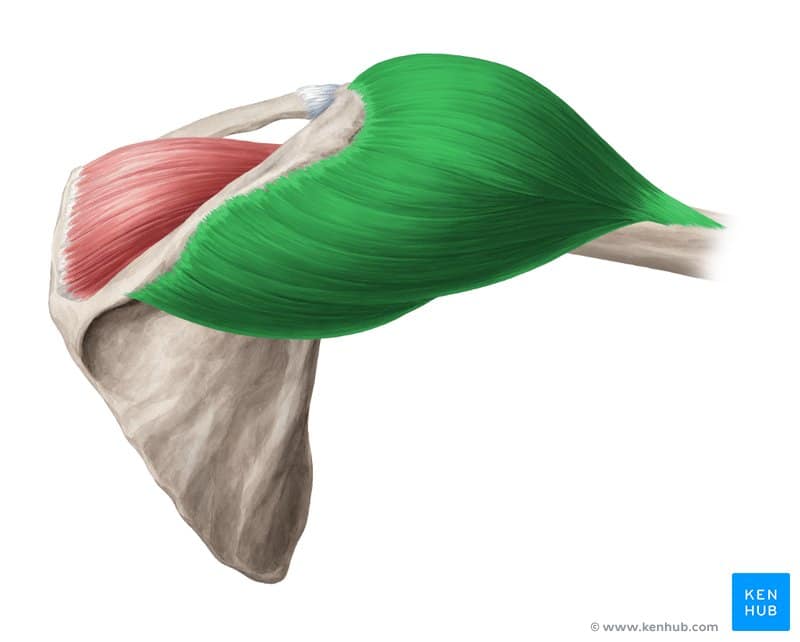
🔹 The deltoid muscle is one of the most important and voluminous muscles of the shoulder region. Its primary function is to move the arm in various directions and stabilize the shoulder joint. Due to its triangular shape, it is named “deltoid,” derived from the Greek word “Δέλτα” (delta), meaning triangle.
🔹 The deltoid muscle is divided into three distinct heads, each playing a specific role in shoulder movement. The anterior head assists in forward motions and arm flexion, the middle head is responsible for abduction and lifting the arm, and the posterior head supports extension and movements behind the body. This muscle is essential for the stability and strength of the shoulder joint, and its weakness can lead to limited range of motion, reduced shoulder power, and an increased risk of injury.
✅ Persian Name: Deltoeid
✅ Latin Name: Deltoideus
✅ Common Name: Shoulder Muscle
✅ Location:
🟡 A superficial muscle located at the top of the upper arm, covering the shoulder joint.
🟡 It forms a cap-like structure over the shoulder joint.
🟡 It directly overlays the head of the humerus and originates from the clavicle, scapula, and the upper part of the arm.
✅ 🔹 Origin
✔ Anterior part: from the outer surface of the clavicle
✔ Middle part: from the acromion, a portion of the scapula
✔ Posterior part: from the spine of the scapula
✅ 🔹 Insertion
✔ All parts of the deltoid muscle insert onto the deltoid tuberosity of the humerus.
✅ 🔹 Function
📌 The deltoid muscle is divided into three parts, each with a specific function:
1️⃣ Anterior Head
- ✔ Moving the arm forward (shoulder flexion)
- ✔ Internal rotation of the arm
- ✔ Assists in horizontal adduction of the arm (moving the arm forward across the body)
2️⃣ Middle Head
- ✔ Lifting the arm outward (shoulder abduction)
- ✔ Assists in stabilizing the shoulder during arm elevation
3️⃣ Posterior Head
- ✔ Moving the arm backward (shoulder extension)
- ✔ External rotation of the arm
- ✔ Assists in horizontal abduction of the arm (moving the arm backward across the body)
📌 Function Summary: The deltoid muscle plays a key role in all shoulder movements and is one of the primary muscles responsible for moving the arm in various directions.
✅ 💪🏻 Muscle Fiber Types
✔ The deltoid muscle consists of a combination of fiber types. ✔ A combination of slow-twitch fibers (Type I) and fast-twitch fibers (Type II). ✔ It is composed of both fiber types.
✔ The anterior and posterior heads contain more fast-twitch fibers, which are suited for powerful and rapid movements.
✔ The middle head has a higher proportion of slow-twitch fibers, which help maintain muscular endurance during sustained activity.
✅ 🏋🏻♂️ Role in Sports and Physical Activities
✔ Plays a key role in all overhead movements, such as shoulder press and bench press.
✔ Crucial for sports like weightlifting, swimming, gymnastics, and wrestling.
✔ Considered one of the primary muscles involved in carrying heavy objects, throwing, and raising the arm.
✅ 🧗🏻♂️ Strength and Endurance
✔ The deltoid plays a vital role in maintaining shoulder joint stability, and its weakness can reduce control over shoulder movements.
✔ This muscle is well-suited for both strength and endurance activities and is heavily engaged in many professional sports.
✅ 🧠 Innervation
✔ Axillary Nerve (also known as the underarm nerve) – responsible for controlling deltoid muscle movements and providing sensation to the shoulder area.
✅ 🩸 Blood Supply
✔ Posterior Circumflex Humeral Artery
✔ Thoracoacromial Artery
✅ 🤼♂️ Role in Sports and Physical Activities
✔ Directly involved in all shoulder and arm movements.
✔ A key muscle for athletes in bodybuilding, weightlifting, swimming, boxing, and combat sports.
✔ Strengthening this muscle improves shoulder shape, prevents injuries, and boosts upper body strength.
✅ 🏌🏻♂️ Interaction with Other Muscles and Joints
✔ Works closely with the rotator cuff muscles, back muscles, and pectoralis major.
✔ Weakness in this muscle can lead to excessive strain on the shoulder and scapular joints, increasing the risk of injury.
✅ 💉 Vulnerability and Potential Issues
✔ One of the most injury-prone muscles in bodybuilding and strength sports due to its crucial role in heavy movements.
✔ Common injuries include tears, strains, tendon inflammation, and cramps—often caused by improper use of heavy weights.
✅ 🏋🏻♂️ Strength Training Exercises for the Deltoid Muscle
1️⃣ Dumbbell or Barbell Shoulder Press – Strengthens all parts of the deltoid
2️⃣ Lateral Raise – Targets the middle head of the deltoid
3️⃣ Bent-Over Reverse Fly – Strengthens the posterior head of the deltoid
4️⃣ Front Raise with Dumbbell or Barbell – Focuses on the anterior head
5️⃣ Arnold Press – Activates all heads of the deltoid simultaneously
✅ 🧘🏻♀️ Stretching and Recovery
✔ Forward and backward shoulder stretches
✔ Wall walks with the hand to improve flexibility
✅ Fun Fact
✔ The deltoid muscle is actually one of the key muscles that shapes and enhances the appearance of the upper body.
✅ Practical Tip
✔ Overtraining the deltoid without strengthening the back and rotator cuff muscles can disrupt shoulder muscle balance.
🔴 Name and Location: A superficial muscle that covers the shoulder joint and originates from the clavicle, scapula, and humerus.
🟠 Anatomy: Composed of three parts—anterior, middle, and posterior—each responsible for different shoulder movements.
🟡 Function:
✔ Anterior: Arm flexion and internal rotation
✔ Middle: Arm abduction and elevation
✔ Posterior: Arm extension and external rotation
🟢 Physiology: A combination of slow- and fast-twitch fibers, allowing for both endurance and explosive power movements.
🔵 Innervation: Axillary nerve, which controls the muscle’s movement and sensation in the shoulder area.
🟣 Importance: Active in all upper-body movements, bodybuilding, weightlifting, swimming, boxing, and combat sports.
🟤 Exercises: Shoulder press, lateral raise, front raise, bent-over raise, Arnold press.
⚫ Fun Fact: A key muscle for shoulder strength and aesthetics, yet one of the most injury-prone muscles during heavy training.
Muscle training
Pelank is a comprehensive encyclopedia of the body’s muscles, providing an accurate and scientific review of all muscles. Below, you can find muscle groups. By clicking on each muscle group, you will have access to complete information about it, including:
1️⃣ Basic information about the muscle
2️⃣ Muscle anatomy
3️⃣ Muscle physiology
4️⃣ Innervation and blood supply
5️⃣ Importance of the muscle in the body and sports
6️⃣ Strengthening exercises
7️⃣ Scientific and interesting facts
📌 At the end, a summary review of each muscle will be provided.
Body muscles training guide link
🔹 The muscle group engaged in this movement is highlighted in color.
References
Anatomy and medical books :
- Gray’s Anatomy (one of the standard references in anatomy).
- Netter’s Atlas of Human Anatomy (a famous visual atlas in anatomy).
- Clinically Oriented Anatomy by Keith Moore
Sports and training references :
- Strength Training Anatomy by Frederic Delavier
- Essentials of Strength Training and Conditioning by NSCA
- Well-known articles and training programs by international coaches
Medical databases :
- PubMed (for scientific and research articles)
- MedlinePlus (health and medical information)
- WebMD (for practical and general health information)
Pelank Life | Body Health Assessment
The Best Body Health Calculators Using Scientific Methods
Developed by Pelank Life ©

Comments