

Lateral Raise Machine
| English Name | Lateral Raise Machine |
|---|---|
| Difficulty | Beginner |
| Movement Patterns | Push Pattern |
| Muscle Contraction Types | Isotonic |
| Primary Muscle (EN) | Lateral Deltoid |
| Muscle Groups | Shoulder Muscles |
|---|---|
| Workout Type | Isolated Strength training |
| Required equipment | Machine |
💠 Exercise guide
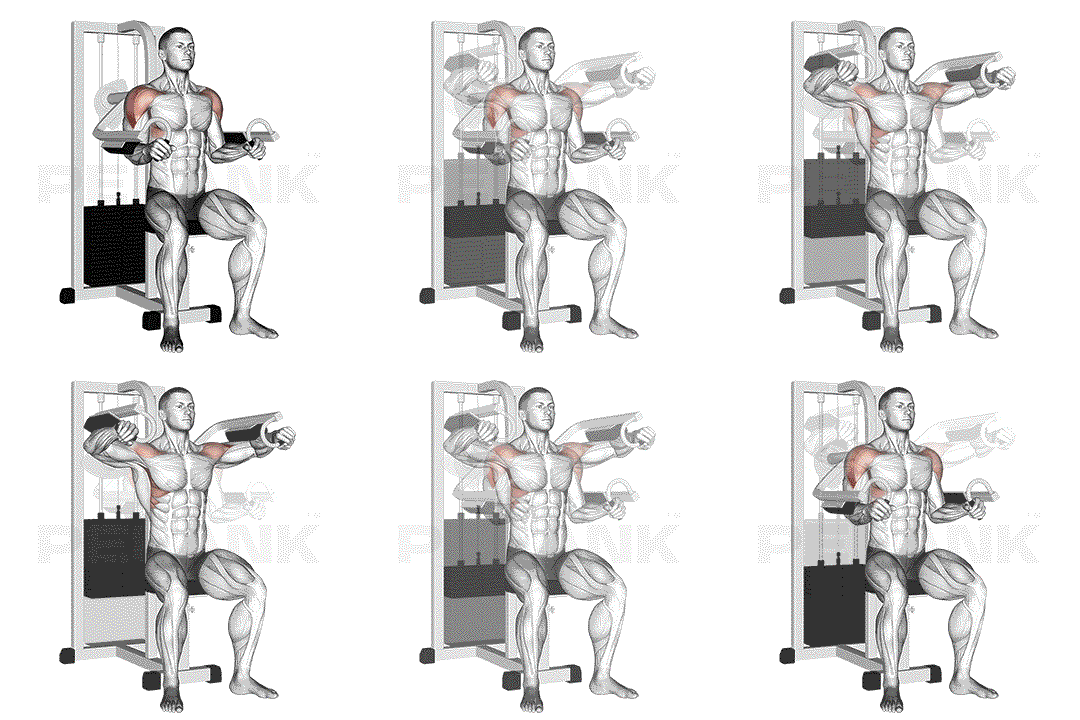
✅ The Lateral Raise Machine is one of the best single-joint (isolation) exercises for targeting the middle section of the shoulder (Lateral Head). Due to the machine’s fixed path, it creates constant tension on the muscle and is highly effective for increasing shoulder width and creating a “V-taper” appearance.

💠 Execution Guide

Setup
✅ Adjust the seat height; the machine’s axis of rotation should align exactly with your shoulder joints.
✅ Sit on the seat, press your chest against the pad (if available), or keep your back flat against the backrest.
✅ Grasp the handles or place your arms against the pads; elbows should be at approximately a 90-degree angle (depending on machine design).
✅ Plant your feet firmly on the ground to maintain body stability.
Execution
✅ By contracting the shoulder muscles, raise your arms out to the sides.
✅ Continue the movement until your elbows or upper arms are level with your shoulders (parallel to the floor).
✅ Hold a brief pause at the peak of contraction.
✅ Lower the arms back to the starting position with full control, resisting the weight.
Coaching Cues
✔️ Imagine you are trying to push the walls on both sides of the room away with your elbows.
✔️ Keep your wrists relaxed and drive the force through your elbows (especially on padded machines).
✔️ Keep your shoulders depressed; avoid shrugging them up toward your ears.
✔️ Keep your head and neck neutral and aligned with your spine; do not crane your neck forward.
Benefits of the exercise
1️⃣ Precise isolation of the middle shoulder section (Lateral Deltoid).
2️⃣ Elimination of momentum and cheating compared to dumbbells.
3️⃣ High safety profile for beginners due to the fixed movement path.
4️⃣ Creates consistent mechanical tension throughout the range of motion.
5️⃣ Helps create wider-looking shoulders and improves physique proportions.
6️⃣ Reduces lower back strain compared to standing dumbbell variations.
7️⃣ Ideal for drop-sets and high-intensity techniques.
8️⃣ Strengthens the stability of the glenohumeral (shoulder) joint.
9️⃣ No need to focus heavily on balance, unlike free weights.
🔟 Allows for greater mental focus on the target muscle (Mind-Muscle Connection).
Common Mistakes
❌ Excessive Range of Motion: Raising elbows above shoulder level, which places stress on the joint and engages the upper traps.
❌ Shrugging: Using the Trapezius muscles to hike the weight up.
❌ Leaving the Pad: Arching the back or throwing the torso to generate momentum.
❌ Dropping the Weight: Releasing the weight during the return phase without eccentric control.
❌ Forward Head Posture: Unnecessary strain on the cervical spine.
Breathing Pattern
🌬️ Concentric Phase (Lifting): Exhale – Blow air out forcefully.
💨 Eccentric Phase (Lowering): Inhale – Breathe air into the lungs.
ROM Guidelines
🔵 Start: Arms at the sides (but do not let the weight stack touch completely to keep tension).
🔵 End: Elbows level with the shoulders (90-degree angle relative to the torso).
🔵 Danger Zone: Raising arms beyond the shoulder line (can cause Supraspinatus tendon impingement).
Precautions & Contraindications
⚠️ Individuals with Impingement Syndrome should limit the range of motion.
⚠️ Stop the exercise immediately if you feel a sharp pain in the top of the shoulder.
⚠️ Avoid using excessively heavy weights that compromise form.
Variations & Alternatives
🔹 Simpler Version: Cable Lateral Raise (Single Arm) for better focus.
🔹 Free Weight Alternative: Dumbbell Lateral Raise (Seated or Standing).
🔹Advanced Version: Unilateral Machine Lateral Raise (to fix asymmetries).
Advanced Biomechanics
🧠 Lever Arm: On machines where the pad rests on the elbow, the lever arm is shorter, applying more direct pressure to the deltoid and eliminating the role of the forearm/wrist grip.
🧠 Resistance Curve: Machines are usually designed (often using a Cam) to match the resistance to the muscle’s strength curve throughout the range, unlike dumbbells where peak tension is only at the top.
Programming Tips
📌 Sets & Reps: 3 to 4 sets of 10 to 15 repetitions (this muscle responds well to higher reps and metabolic stress).
📌 Tempo: 1 second up, 1 second pause, 2 seconds down (1-1-2).
📌 Placement: Usually performed after heavy compound movements (like Overhead Press) or as a Pre-exhaust before pressing movements.
📌 Best Position: At the end of the shoulder workout or the specialized middle deltoid section.
📌Application: Excellent for Hypertrophy (muscle growth) and aesthetic shaping.
💠 Muscle Involvement
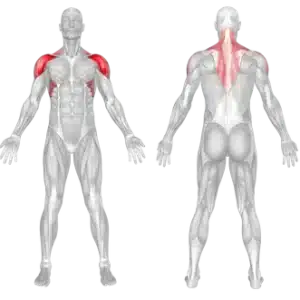
✅ While the Machine Lateral Raise is specifically designed to strengthen the side of the shoulder, other muscles assist in stabilization and execution:
Main muscles
Synergistic muscles
Stabilizers
Middle Deltoid muscle
Middle Deltoid Muscle
🔹 The middle deltoid is one of the three parts of the deltoid muscle. Its primary function is to lift the arm outward (abduction) and assist in stabilizing the shoulder during overhead movements. Due to its position on the side of the shoulder, it has the greatest impact on creating the rounded, muscular shape of the shoulders.
🔹 This part of the deltoid is less involved than the anterior section in daily activities and requires specific training for strengthening. Weakness in this muscle can lead to narrower shoulders and limited overhead movement. Strengthening it improves muscular balance in the shoulder and helps prevent shoulder injuries.

🔷 Full Description
Click on the title to read the sections.
✅ Persian Name: Deltoid Miani | Deltoid Janebi
✅ Latin Name: Lateral Deltoid | Middle Deltoid
✅ Common Names: Middle part of the deltoid muscle | Middle head of the shoulder
✅ Location:
🟡 Located on the lateral side of the shoulder, between the anterior and posterior deltoids.
🟡 A superficial muscle covering the shoulder joint that, along with the other two parts, shapes the size and form of the shoulder.
🟡 The primary muscle responsible for moving the arm away from the body (abduction) and plays a role in shoulder joint stabilization.
✅ 🔹 Origin
✔ Acromion process of the scapula (Acromion of Scapula)
✅ 🔹 Insertion
✔ Deltoid tuberosity on the humerus bone (Deltoid Tuberosity, Humerus)
✅ 🔹 Function
📌 Primary functions of the middle deltoid:
✔ Arm abduction – moving the arm outward from the body
✔ Stabilizing the shoulder joint during overhead movements
✔ Assisting lateral arm movements in resistance training exercises
📌 Movements that activate the middle deltoid:
✔ Raising the arm sideways (such as lateral raises)
✔ Overhead movements (such as shoulder press)
✔ Lateral arm movements in sports like volleyball and swimming
✅ 💪🏻 Muscle Fiber Types
✔ A combination of ✔ A combination of slow-twitch fibers (Type I) and fast-twitch fibers (Type II).
✔ Predominantly composed of slow-twitch fibers for controlled and endurance movements
✔ Plays a significant role in stability and sustained strength during shoulder activities
✅ 🏋🏻♂️ Role in Sports and Physical Activities
✔ A key muscle in all lateral and overhead movements
✔ Essential in swimming, volleyball, basketball, handball, and gymnastics
✔ Weakness in this muscle reduces arm control and increases the risk of shoulder injury
✅ 🧗🏻♂️ Strength and Endurance
✔ Plays a key role in sustained overhead activities such as volleyball and weightlifting
✔ Requires focused training for strengthening, as it is less engaged in daily exercises
✅ 🧠 Innervation
✔ Axillary nerve (C5, C6), which controls the movements of this muscle.
✅ 🩸 Blood Supply
✔ Posterior Circumflex Humeral Artery
✔ Thoracoacromial Artery
✅ 🤼♂️ Role in Sports and Physical Activities
✔ One of the most important muscles for shoulder width and muscular shape
✔ Involved in all lateral and overhead exercises such as swimming, volleyball, and throwing
✔ Weakness can cause muscular imbalances and increase stress on the shoulder joint
✅ 🏌🏻♂️ Interaction with Other Muscles and Joints
✔ Strong connection with the anterior deltoid, posterior deltoid, and rotator cuff muscles
✔ Weakness in this muscle can cause excessive strain on the anterior deltoid and upper back muscles
✅ 💉 Vulnerability and Potential Issues
✔ Weakness in this muscle can lead to limited lateral movements and increased stress on the shoulder joint.
✔ Improper use of heavy weights during lateral exercises may cause shoulder tendon inflammation.
✅ 🏋🏻♂️ Strength Training Exercises for the Middle Deltoid
1️⃣ Dumbbell Lateral Raise – the most effective exercise for strengthening this muscle
2️⃣ Overhead Shoulder Press – directly engages the middle deltoid
3️⃣ Cable Lateral Raise – provides continuous tension on the muscle
4️⃣ Arm Raises with Resistance Bands – enhances muscular endurance
5️⃣ Reverse Fly with Bands or Dumbbells – fully activates the muscle through its range of motion
✅ 🧘🏻♀️ Stretching and Recovery
✔ Stretching the arm out to the sides with gentle pressure toward the body
✔ Using a foam roller to reduce tension and accelerate recovery
✅ Fun Fact
✔ The middle deltoid greatly influences the V-shaped appearance of the upper body. Athletes with broad, well-defined shoulders typically have a well-developed middle deltoid.
✅ Practical Tip
✔ Improper form and incomplete execution of lateral raises reduce middle deltoid activation and place extra strain on other muscles. For better results, perform the movement through the full range of motion with proper control.
🔴 Name and Location: A superficial muscle located at the sides of the shoulder joint, responsible for moving the arm away from the body (abduction).
🟠 Anatomy: Originates from the acromion of the scapula and inserts into the deltoid tuberosity of the humerus.
🟡 Function:
✔ Lifting the arm out to the side
✔ Stabilizing the shoulder during overhead movements
🟢 Physiology: Contains slow-twitch fibers suited for controlled and endurance movements.
🔵 Innervation: Axillary nerve, which controls the movements of this muscle.
🟣 Importance: Plays a vital role in swimming, volleyball, gymnastics, and weightlifting.
🟤 Exercises: Lateral raise, shoulder press, cable lateral raise.
⚫ Fun Fact: The key muscle responsible for shoulder width and the V-shaped upper body appearance.
Anterior Deltoid muscle
Anterior Deltoid Muscle
🔹 The anterior deltoid is one of the three parts of the deltoid muscle. Its primary functions are moving the arm forward (flexion), internal rotation, and assisting in horizontal shoulder movements. This muscle plays a key role in many upper-body exercises, especially strength training movements like bench press, front raises, and throwing actions.
🔹 The anterior deltoid is one of the most important muscles involved in pressing and pushing movements. Due to its engagement in many strength exercises, it is often well-developed among athletes and bodybuilders. However, overusing this muscle without strengthening the posterior shoulder muscles (posterior deltoid and rotator cuff) can lead to muscular imbalances and increase the risk of shoulder injuries.

🔷 Full Description
Click on the title to read the sections.
✅ Persian Name: Deltoid Ghodami
✅ Latin Name: Anterior Deltoid
✅ Common Names: Front part of the deltoid muscle | Anterior head of the shoulder
✅ Location:
🟡 Located at the front of the shoulder, forming the anterior part of the deltoid muscle.
🟡 Originates from the clavicle and lies over the upper part of the humerus.
🟡 Alongside the middle and posterior parts of the deltoid, it acts as part of the shoulder cap and assists in arm movements.
✅ 🔹 Origin
✔ Anterior surface of the lateral third of the clavicle (Clavicle – Anterior Surface of Lateral Third)
✅ 🔹 Insertion
✔ Deltoid tuberosity on the humerus bone (Deltoid Tuberosity, Humerus)
✅ 🔹 Function
📌 Primary functions of the anterior deltoid:
✔ Arm flexion – moving the arm forward (like raising the hand in front of the body)
✔ Internal rotation of the arm – rotating the arm inward toward the body
✔ Assisting in horizontal adduction – moving the arm inward on a horizontal plane (such as during a chest fly)
✔ Helping stabilize the shoulder joint during upper-body movements
📌 Movements that activate the anterior deltoid:
✔ Raising the arm forward (such as front raises)
✔ Throwing movements (ball throws, javelin throws)
✔ Moving weights in pressing and fly exercises
✅ 💪🏻 Muscle Fiber Types
✔ A combination of fast-twitch fibers (Type II) and slow-twitch fibers (Type I)
✔ Predominantly composed of fast-twitch fibers for rapid and powerful movements
✔ This characteristic makes the anterior deltoid highly active in explosive and strength exercises like weightlifting and throwing
✅ 🏋🏻♂️ Role in Sports and Physical Activities
✔ Active in all pressing, throwing, and forward arm-raising exercises
✔ Plays a key role in strength sports, bodybuilding, weightlifting, boxing, and discus throwing
✔ An important muscle in daily activities such as lifting objects and carrying items
✅ 🧗🏻♂️ Strength and Endurance
✔ Requires high strength for pressing exercises and overhead movements
✔ Overdevelopment can lead to muscular imbalances and increase the risk of shoulder injuries
✅ 🧠 Innervation
✔ Axillary nerve (C5, C6), which controls the movements of this muscle.
✅ 🩸 Blood Supply
✔ Posterior Circumflex Humeral Artery
✔ Thoracoacromial Artery
✅ 🤼♂️ Role in Sports and Physical Activities
✔ One of the key muscles for pushing and pressing movements in bodybuilding and weightlifting
✔ Active in throwing sports, swimming, boxing, gymnastics, and pulling movements
✔ Weakness can reduce pressing strength and increase the risk of shoulder injury
✅ 🏌🏻♂️ Interaction with Other Muscles and Joints
✔ Closely connected with the middle deltoid, pectoralis major, rotator cuff muscles, and triceps brachii
✔ Weakness in this muscle can lead to excessive strain on the shoulder joint and reduced upper body strength
✅ 💉 Vulnerability and Potential Issues
✔ One of the muscles prone to inflammation and strain due to high activity in upper-body training
✔ Weakness can cause excessive strain on the pectoral and shoulder muscles, leading to shoulder injuries
✅ 🏋🏻♂️ Strength Training Exercises for the Anterior Deltoid
1️⃣ Front Raise with Dumbbells – the most important exercise for strengthening the anterior deltoid
2️⃣ Overhead Shoulder Press with Dumbbells or Barbell – high engagement of the anterior deltoid
3️⃣ Arnold Press – simultaneous strengthening of all deltoid parts with emphasis on the anterior head
4️⃣ Incline Bench Press – combined strengthening of the anterior deltoid and pectoralis major
5️⃣ Close-Grip Push-ups – bodyweight exercise targeting this muscle
✅ 🧘🏻♀️ Stretching and Recovery
✔ Stretching the arm forward and across the body to improve flexibility and prevent muscle tightness
✔ Using a foam roller to reduce muscle tension and enhance blood flow
✅ Fun Fact
✔ The anterior deltoid is most engaged in throwing movements, which is why athletes in discus, javelin, and boxing typically have a very strong anterior deltoid.
✅ Practical Tip
✔ Overdeveloping the anterior deltoid without balancing it with the posterior deltoid can lead to muscular imbalances and increased stress on the shoulder joint.
🔴 Name and Location: A superficial muscle located at the front of the shoulder joint, originating from the clavicle.
🟠 Anatomy: Part of the deltoid muscle that, along with the middle and posterior deltoids, surrounds the shoulder and attaches to the humerus.
🟡 Function:
✔ Arm flexion – moving the hand forward
✔ Internal rotation of the arm – rotating the hand inward
✔ Horizontal adduction – assisting in bringing the arm inward on a horizontal plane
🟢 Physiology: Composed mainly of fast-twitch fibers, which provide power and speed in pressing movements.
🔵 Innervation: Axillary nerve, which controls the movements of this muscle.
🟣 Importance: Plays a vital role in pressing exercises, throwing, bodybuilding, boxing, and strength sports.
🟤 Exercises:
✔ Front raise
✔ Shoulder press
✔ Arnold press
✔ Incline bench press
✔ Close-grip push-ups
⚫ Fun Fact: One of the most utilized muscles in throwing and pressing movements, which, if overdeveloped, can lead to muscular imbalances and shoulder injuries.
Supraspinatus Muscle
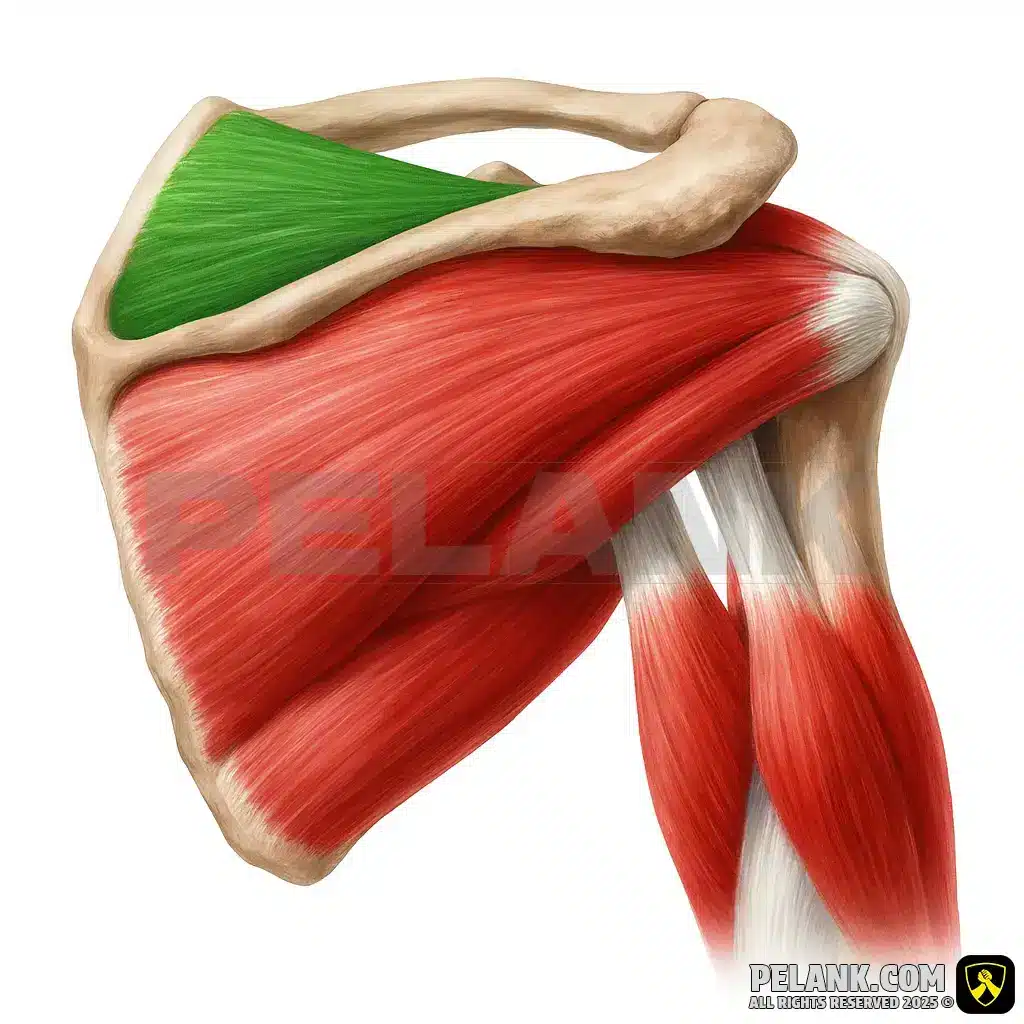
Supraspinatus Muscle
🔹 The supraspinatus muscle is one of the four main rotator cuff muscles and plays a vital role in stabilizing the glenohumeral (shoulder) joint. It is especially important in initiating arm abduction before the middle deltoid activates. Additionally, it helps prevent shoulder dislocation and enhances joint stability.
🔹 The supraspinatus muscle is often undertrained in daily workouts, but its weakness is one of the most common causes of shoulder pain and injuries such as shoulder impingement syndrome. Therefore, athletes and bodybuilders should pay special attention to strengthening this muscle.
🔷 Full Description
Click on the title to read the sections.
✅ Persian Name: Fogh-e Khari
✅ Latin Name: Supraspinatus
✅ Common Names: Upper Scapular Muscle | Superior Rotator Cuff Muscle
✅ Location:
🟡 Located at the upper part of the scapula, within the supraspinous fossa.
🟡 This muscle is part of the rotator cuff group, which stabilizes the shoulder joint.
🟡 Responsible for initiating arm abduction (moving the arm away from the body) and assisting in shoulder stabilization during arm movements.
✅ 🔹 Origin
✔ Supraspinous fossa of the scapula (Supraspinous Fossa of Scapula)
✅ 🔹 Insertion
✔ Superior facet of the greater tubercle of the humerus (Greater Tubercle of Humerus)
✅ 🔹 Function
📌 Primary functions of the supraspinatus muscle:
✔ Initiates arm abduction – moving the arm outward away from the body during the first 15 degrees
✔ Assists in stabilizing the shoulder joint throughout arm movements
✔ Prevents shoulder dislocation during heavy or sudden movements
📌 Movements that activate the supraspinatus:
✔ Raising the arm in lateral raises and resistance shoulder exercises
✔ Assisting shoulder joint stabilization in sports like tennis, volleyball, basketball, and swimming
✔ Throwing and pulling movements that require high control
✅ 💪🏻 Muscle Fiber Types
✔ A combination of ✔ A combination of slow-twitch fibers (Type I) and fast-twitch fibers (Type II).
✔ Predominantly composed of slow-twitch fibers, which enhance the muscle’s endurance during prolonged and controlled movements.
✅ 🏋🏻♂️ Role in Sports and Physical Activities
✔ An important muscle for controlling overhead movements and stabilizing the shoulder in sports like swimming, volleyball, and basketball
✔ Active in light resistance and stretching exercises to prevent shoulder injuries
✔ Weakness in this muscle increases the risk of shoulder joint injuries and reduces range of motion
✅ 🧗🏻♂️ Strength and Endurance
✔ A small but crucial muscle for shoulder stability and movement control
✔ Requires controlled training to strengthen without excessive strain
✅ 🧠 Innervation
✔ Suprascapular nerve (C5, C6), which controls the movements of this muscle.
✅ 🩸 Blood Supply
✔ Suprascapular artery
✅ 🤼♂️ Role in Sports and Physical Activities
✔ A key muscle for stabilizing the shoulder joint and preventing dislocation
✔ Active in throwing sports, tennis, basketball, gymnastics, and weightlifting
✔ Weakness can increase the likelihood of shoulder pain and injuries
✅ 🏌🏻♂️ Interaction with Other Muscles and Joints
✔ Strong synergy with the middle deltoid, other rotator cuff muscles (infraspinatus, teres minor, subscapularis), and pectoral muscles
✔ Weakness in this muscle increases stress on the deltoid and shoulder joint
✅ 💉 Vulnerability and Potential Issues
✔ One of the most commonly injured muscles prone to tears and inflammation.
✔ Weakness or inflammation of this muscle can lead to Shoulder Impingement Syndrome.
✅ 🏋🏻♂️ Strength Training Exercises for the Supraspinatus
1️⃣ Lateral Raise with Light Dumbbells – gradual strengthening without excessive strain
2️⃣ External Rotation with Resistance Band – improves muscle control and strength
3️⃣ Isometric Shoulder Exercises – helps stabilize the shoulder joint without injury
4️⃣ Controlled movements within the natural range of motion – prevents excessive stress on the muscle
5️⃣ Physiotherapy exercises to improve rotator cuff function
✅ 🧘🏻♀️ Stretching and Recovery
✔ Stretching the arm across the body to improve flexibility and reduce muscle tension
✔ Using a foam roller to enhance blood flow and decrease inflammation
✅ Fun Fact
✔ The supraspinatus muscle initiates arm abduction, but after the first 15 degrees, the middle deltoid takes over this function.
✅ Practical Tip
✔ Strengthening the supraspinatus with light weights and resistance bands is the best way to prevent injury and improve shoulder function.
🔴 Name and Location: A deep muscle located on the top of the scapula, and part of the rotator cuff.
🟠 Anatomy: Originates from the supraspinous fossa of the scapula and inserts into the greater tubercle of the humerus.
🟡 Function:
✔ Initiates arm abduction (moving the arm away from the body)
✔ Stabilizes the shoulder during arm movements
🟢 Physiology: Predominantly composed of slow-twitch fibers for precise and stable movement control.
🔵 Innervation: Suprascapular nerve, which controls this muscle.
🟣 Importance: Plays a vital role in controlling overhead movements and preventing shoulder injuries.
🟤 Exercises: Light lateral raises, external rotations with resistance bands, physiotherapy exercises.
⚫ Fun Fact: It initiates the abduction movement, but after 15 degrees, the middle deltoid takes over.
💠 Other Exercises

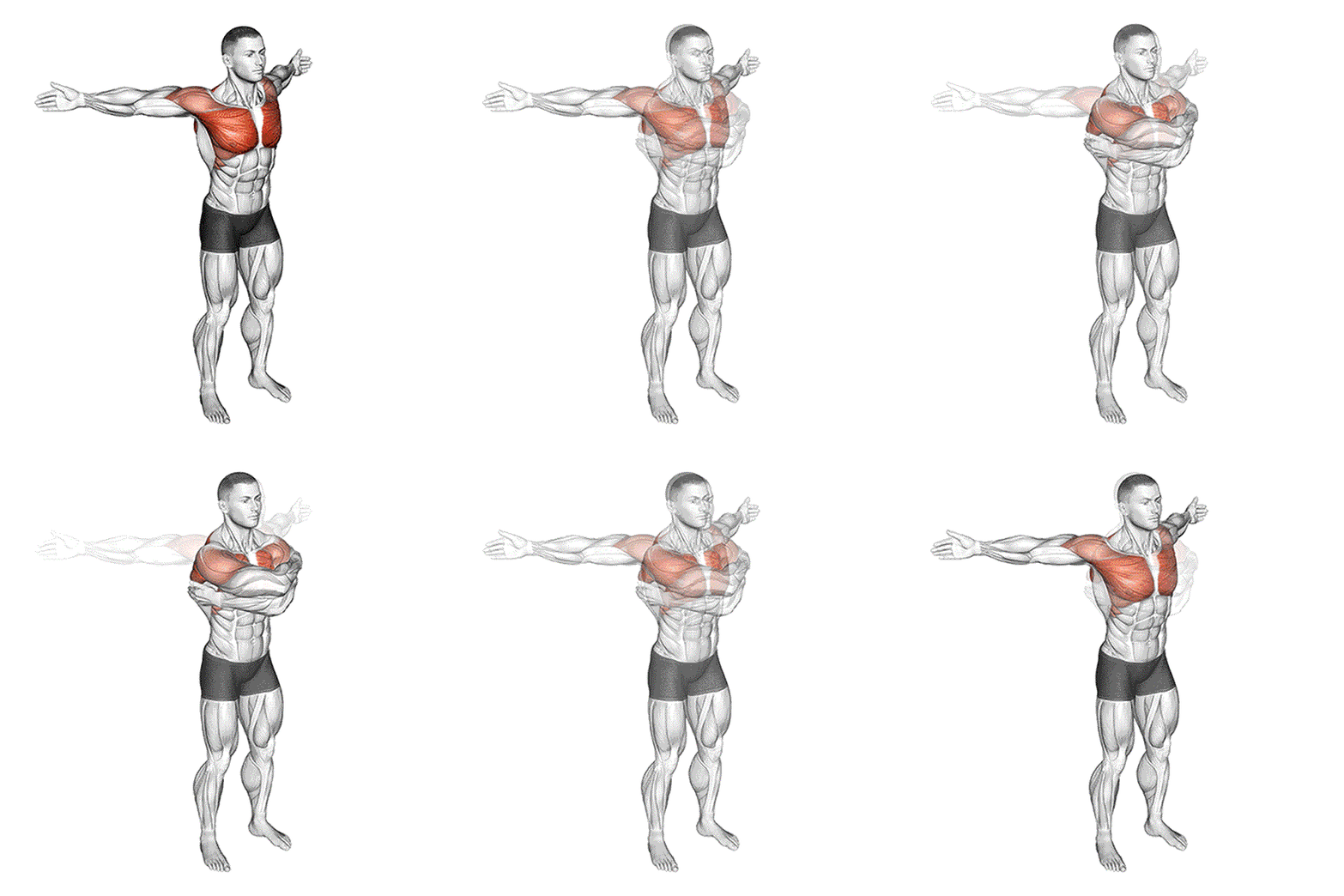
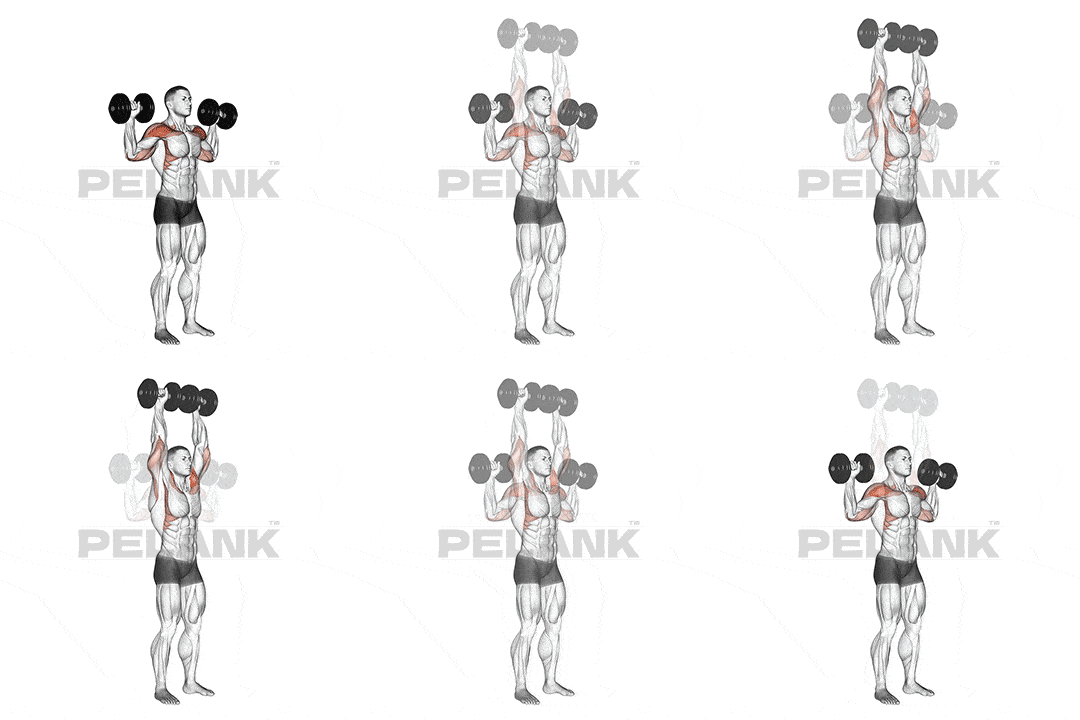


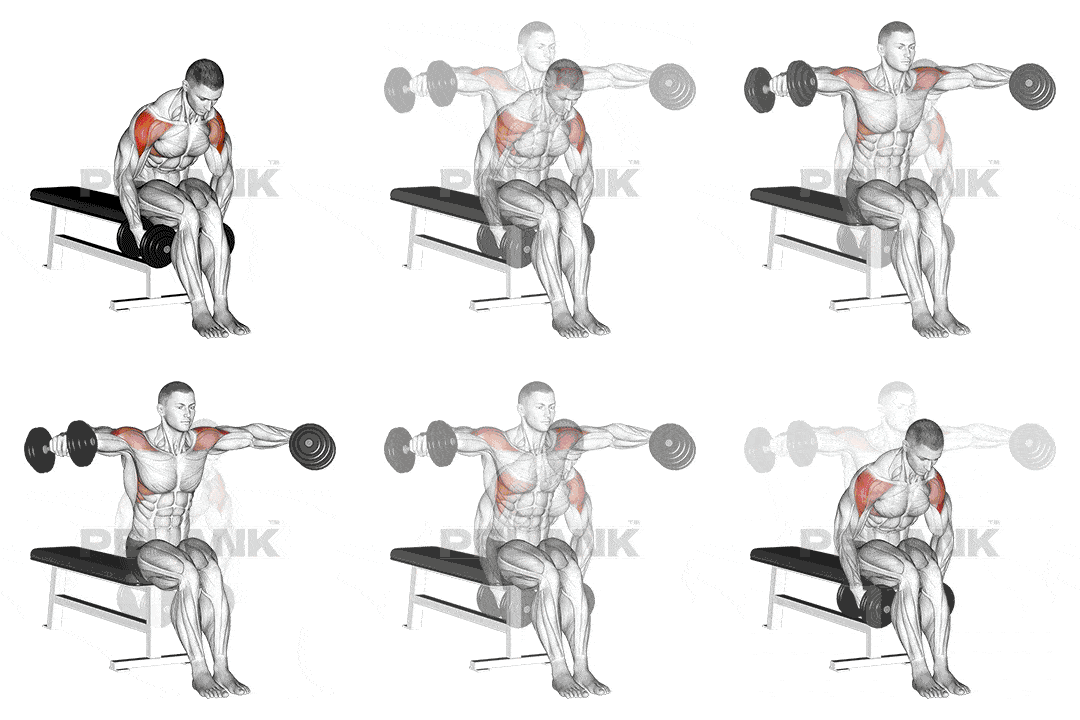
Pelank Life | Body Health Assessment
The Best Body Health Calculators Using Scientific Methods
Developed by Pelank Life ©
Muscle training
Pelank is a comprehensive encyclopedia of the body’s muscles, providing an accurate and scientific review of all muscles. Below, you can find muscle groups. By clicking on each muscle group, you will have access to complete information about it, including:
1️⃣ Basic information about the muscle
2️⃣ Muscle anatomy
3️⃣ Muscle physiology
4️⃣ Innervation and blood supply
5️⃣ Importance of the muscle in the body and sports
6️⃣ Strengthening exercises
7️⃣ Scientific and interesting facts
📌 At the end, a summary review of each muscle will be provided.
Body muscles training guide link
🔹 The muscle group engaged in this movement is highlighted in color.
Sharing
References
✅ Official Physical Activity Guidelines
✅ General Overview and Recommendations for the Public
✅ Science-Based and Health-Oriented Education
✅ Policy Making and Comparative Data

Comments