

Half-Kneeling Cable Pallof Press

| English Name | Cable Half-Kneeling Pallof Press |
|---|---|
| Difficulty | Intermediate |
| Movement Patterns | Rotation / Anti-Rotation |
| Muscle Contraction Types | Isometric |
| Primary Muscle (EN) | External & Internal Obliques |
| Muscle Groups | Abdominal muscles Chest muscles Shoulder Muscles |
|---|---|
| Workout Type | Balanced Corrective Strength training |
| Required equipment | Cable machine Resistance band |
💠 Exercise guide
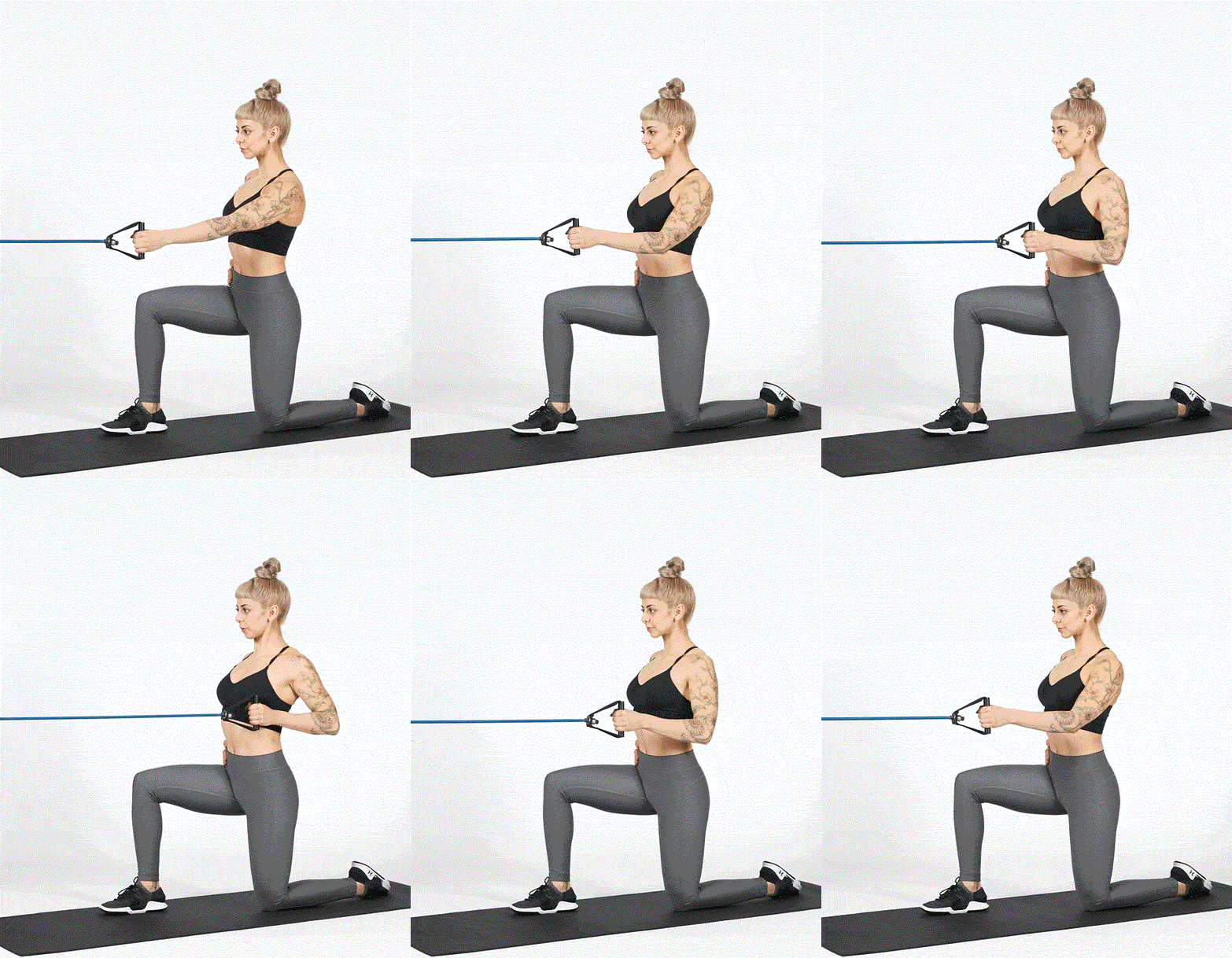
✅ The half-kneeling cable Pallof press is an “anti-rotation” exercise; the cable pulls from the side, and by pressing your hands forward without allowing your torso to rotate, you resist rotational force. The half-kneeling position reduces lumbar–pelvic compensation and enhances core stability focus.
💠 How to perform the exercise

Preparation
✅ Set the pulley at about navel to chest height.
✅ Position yourself beside the machine in a half-kneeling stance: front foot flat on the floor, back knee on the ground; hips and chest facing forward.
✅ Hold the handle with both hands and bring it to your chest; keep your elbows close to your body.
✅ Lock your shoulder blades “down and slightly back”; keep your ribs down (avoid flaring your chest).
✅ Breathing brace: inhale through your nose, fill your abdomen and sides 360°, and keep your diaphragm engaged.
Execution method
✅ 1. Starting the movement:
From the chest position, press your hands forward slowly and under full control.
Extend your elbows nearly to full lockout, but avoid snapping them straight.
Keep your shoulders down and away from your ears throughout the movement.
✅ 2. Pause and maintain stability:
At the end of the movement, pause for 1–2 seconds.
Make sure your torso doesn’t rotate or lean toward the cable.
Keep your full focus on core stability and maintaining a neutral spine position.
✅ 3. Controlled return:
While keeping your core engaged, slowly bring your hands back toward your chest over 2–3 seconds.
Maintain resistance throughout this phase and don’t let the cable pull you toward the machine.
✅ 4. Body position throughout the movement:
Keep your hips square and stable; no rotation should occur in the hips or torso.
Maintain a neutral and upright spine.
Keep your gaze forward, with your neck aligned with your body.
✅ 5. Breathing and intra-abdominal pressure control:
As you press your hands forward, exhale slowly through your mouth.
As you return to the chest, inhale in a controlled manner through your nose.
Maintain internal abdominal pressure (breathing brace) throughout the entire movement to keep core stability.
Coaching tips and recommendations
✔ Keep your back knee directly under your hip and firmly “screw” your front foot into the ground; keep the glute of the back leg engaged.
✔ Imaginary belt cue: gently draw your navel inward and upward; avoid lumbar hyperextension (keep your ribs down).
✔ The handle should move in a straight line forward and backward; don’t let your hands wobble.
✔ “Shoulders down” — avoid shrugging or engaging your traps.
✔ Choose a weight that allows you to perform 10–15 clean reps without torso rotation.
✔ Knee setup: in the common version, the knee closest to the machine stays on the floor; switch sides as well to identify and correct any asymmetries.
Benefits of the exercise
1️⃣ Builds strong anti-rotational strength in the oblique muscles
2️⃣ Enhances shoulder–pelvic stability and trunk control
3️⃣ Reduces lumbar compensations (hyperextension or rotation)
4️⃣ Improves force transfer in pushing/pulling and rotational sports movements
5️⃣ Helps prevent lower back pain caused by core instability
6️⃣ Develops a better diaphragm-based breathing and bracing pattern
7️⃣ Improves knee and hip stability in the half-kneeling position (Glute Med/Adductors)
8️⃣ Scalable with bands or adjustable cable resistance for rehab to performance levels
Muscles involved in the exercise
✅ The lateral force from the cable attempts to rotate the torso, but the core resists through isometric anti-rotational contraction. The arms act merely as levers to increase torque, while the primary goal remains trunk stability.
Main muscles
Synergistic muscles
Stabilizers
Dynamic Stabilizers
External Oblique Muscle
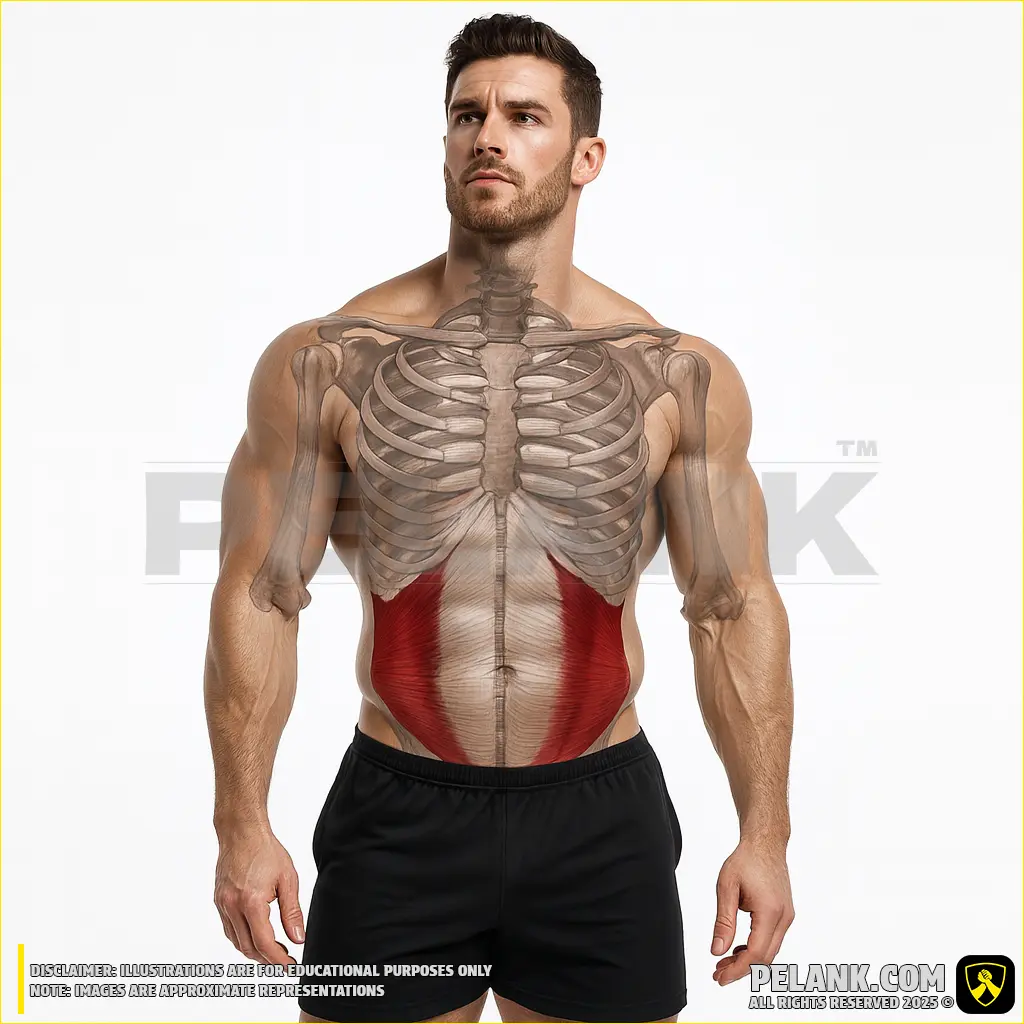
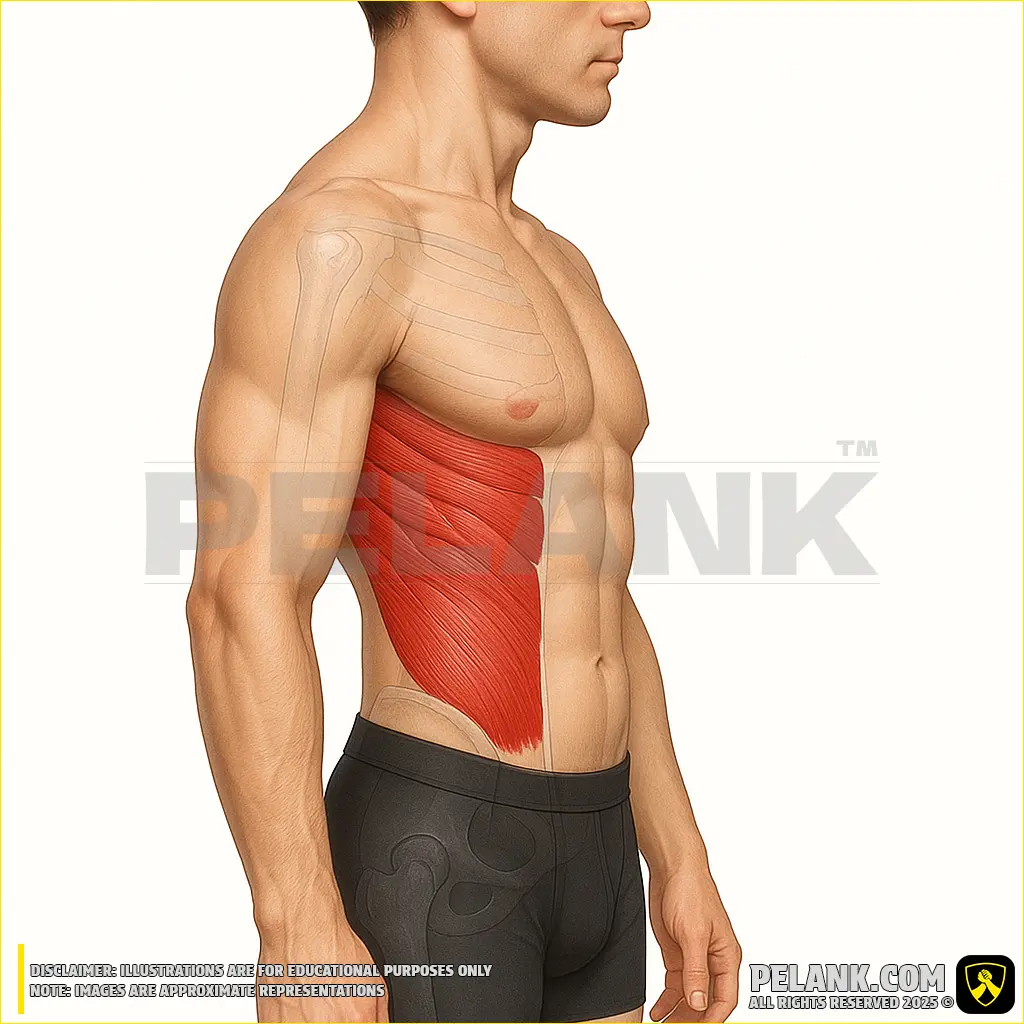
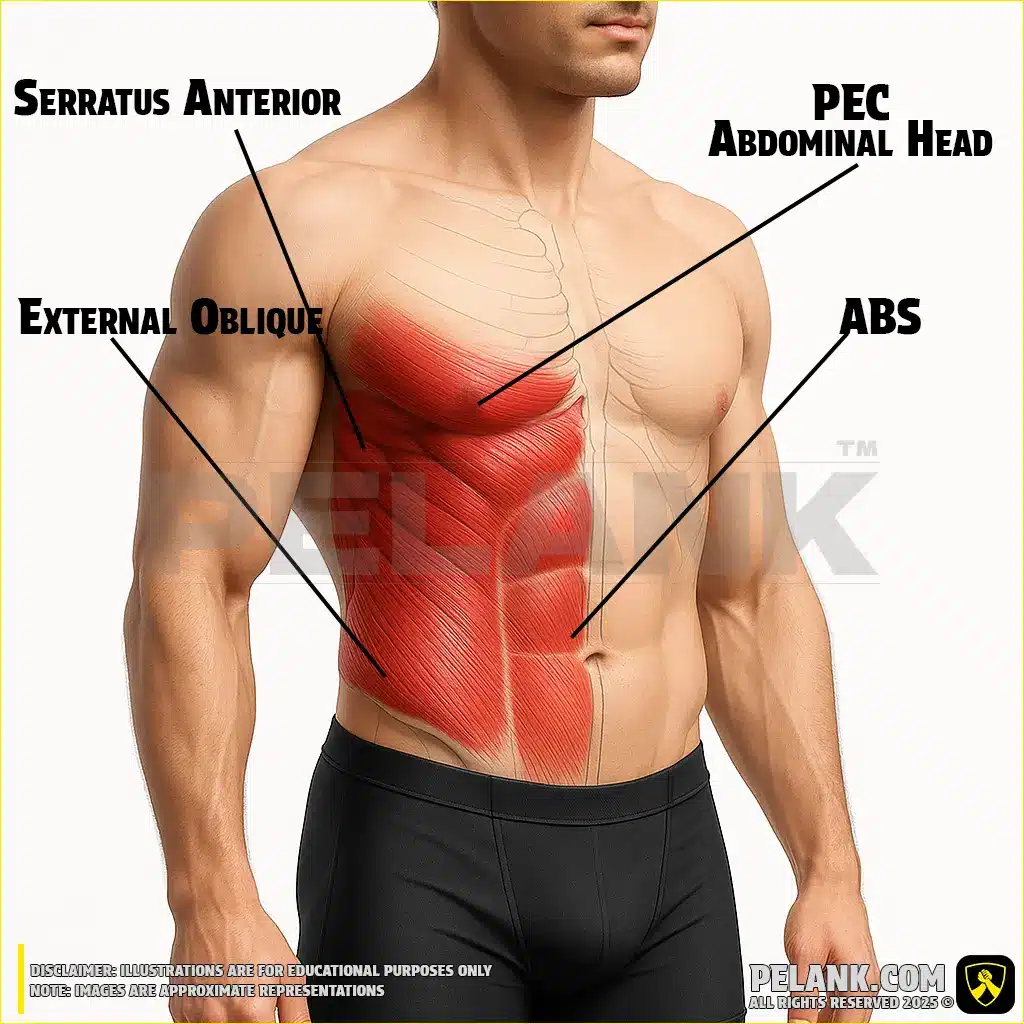
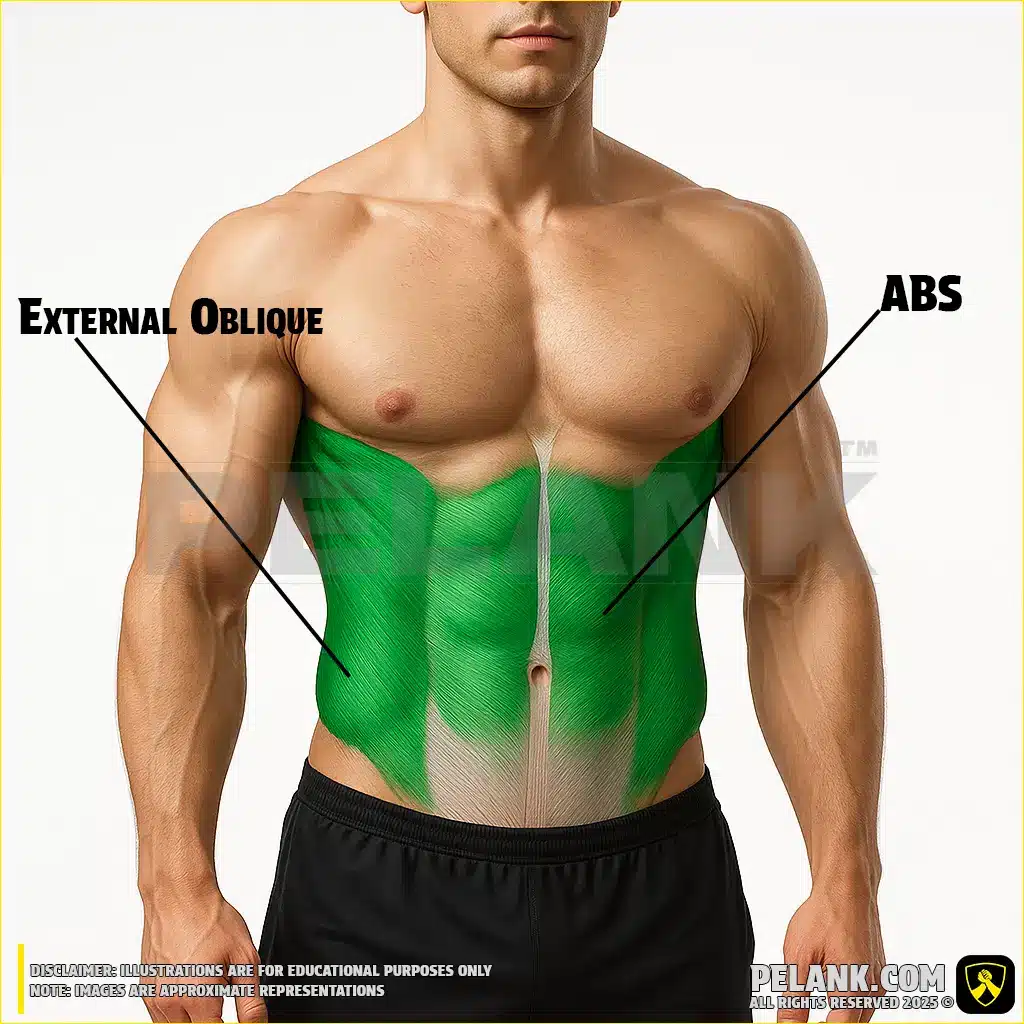
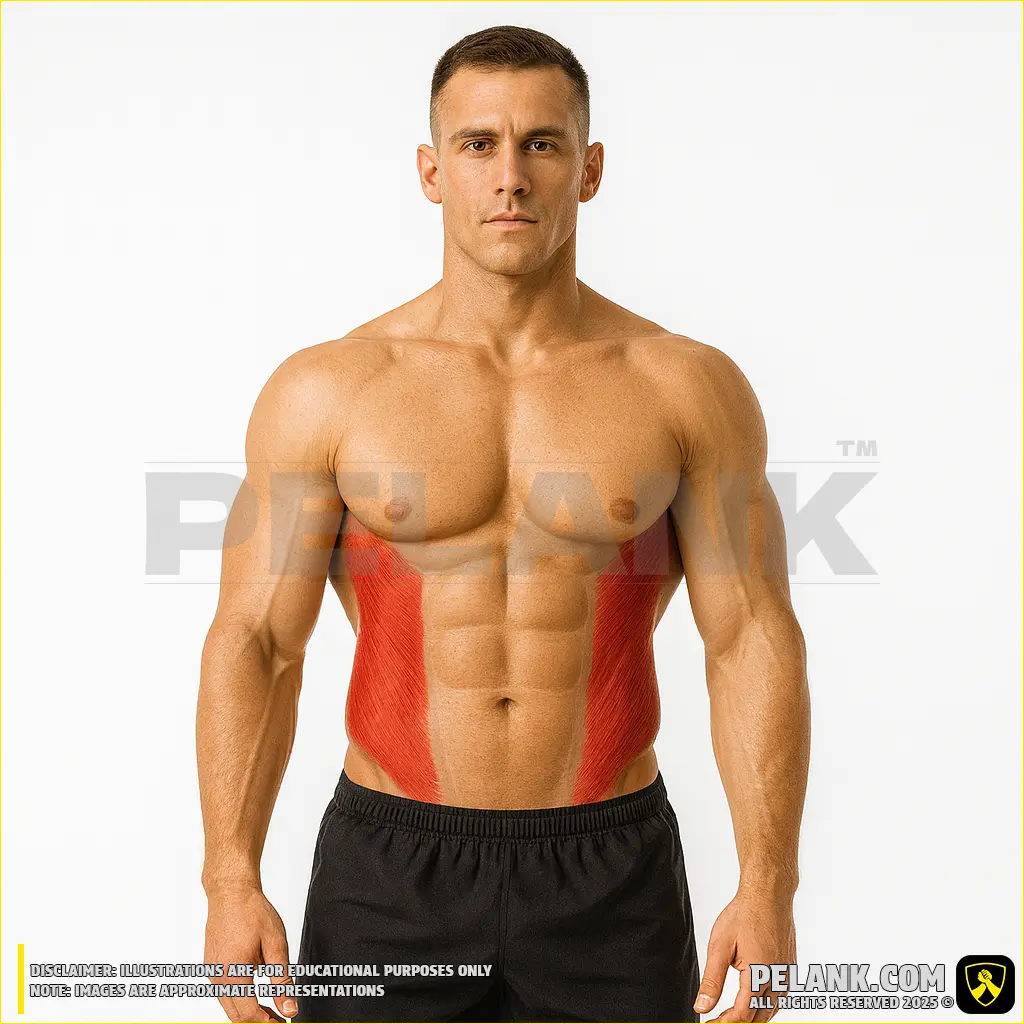
The external oblique muscle is one of the most important lateral abdominal muscles, located on both sides of the torso. This muscle performs essential functions such as trunk rotation and lateral flexion, abdominal compression, and assists in breathing.
✅ The external oblique muscle is the largest and most superficial lateral abdominal muscle, and due to the direction of its fibers, it slopes downward and forward (similar to the motion of putting your hand in your pocket).
✅ This muscle is highly activated in exercises such as twisting crunches, bicycle crunches, side planks, and Russian twists, playing a key role in core stability and rotational movements.
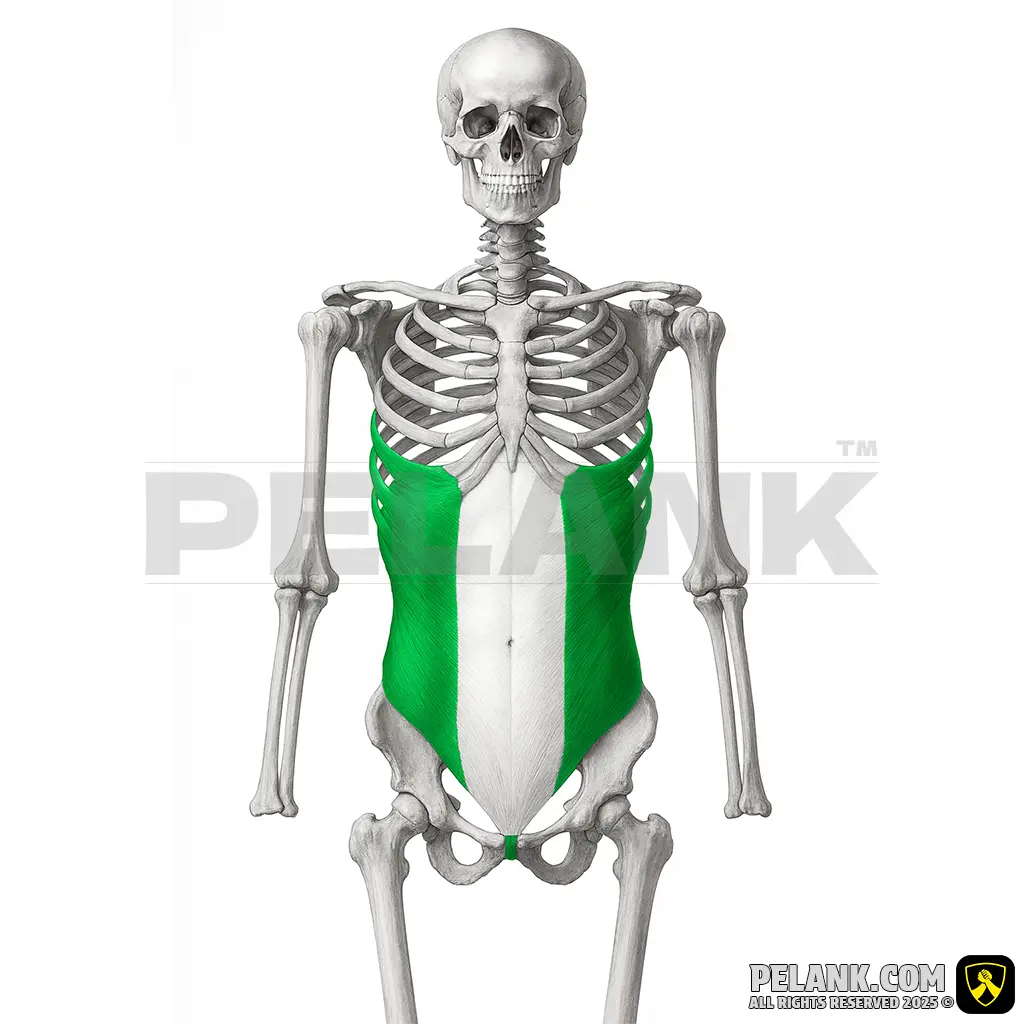

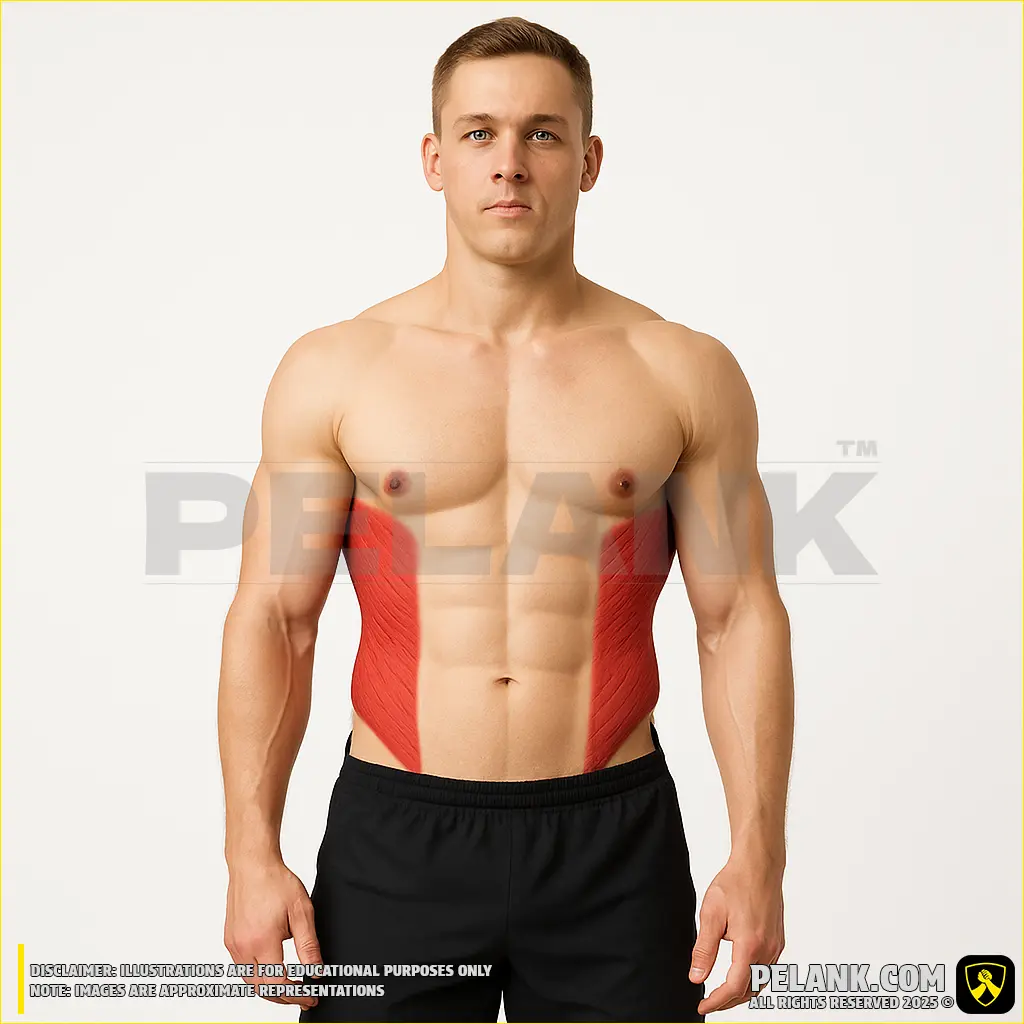
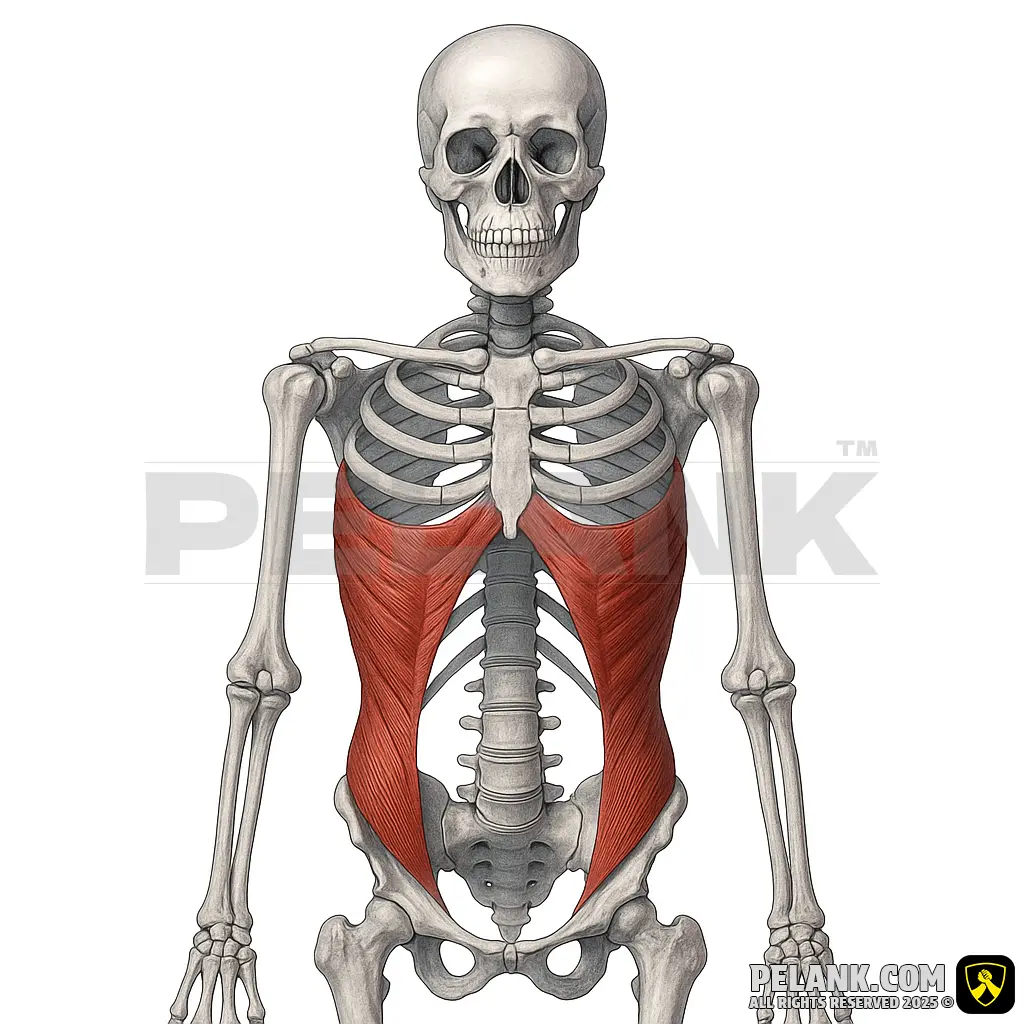
✅ Persian Name: Azole Mayel Khareji
✅ Latin Name: External Oblique
✅ Common Name: Side Abs | External Obliques
✅ Location:
🟡 This muscle extends on both sides of the abdomen, from the lower ribs to the pelvic bone.
🟡 It is the largest and most superficial lateral abdominal muscle.
🟡 It has fibers that run diagonally from top to bottom and from back to front.
✅ 🦾 Origin
✔ Ribs 5-12 – The origin of this muscle begins from the outer surface of these ribs.
✅ 🦿 Insertion
✔ Linea Alba – A fibrous connective tissue structure located at the center of the abdomen.
✔ Iliac Crest – The upper portion of the pelvic bone.
✔ Inguinal Ligament – A band that runs between the pelvis and the groin area.
✅ 📌 Classification and Function
✔ Trunk Rotation – For rotating the abdomen and sides, such as in bicycle crunches.
✔ Lateral Flexion – In bending to the side, like in side planks.
✔ Compression of Abdominal Contents – Helps increase intra-abdominal pressure, such as during a strong exhalation.
✔ Maintaining trunk stability and assisting in strength movements like deadlifts and squats.
✅ 💪🏻 Muscle Fiber Type
✔ It has a combination of ✔ A combination of slow-twitch fibers (Type I) and fast-twitch fibers (Type II). ✔ For maintaining balance and power movements.
✅ 🏋🏻♂️ Role in Motor and Athletic Performance
✔ It is active in all twisting and lateral exercises, such as Russian twists and twisting crunches.
✔ Responsible for core stability during weightlifting and stretching movements.
✅ 🧗🏻♂️ Muscle Strength and Endurance
✔ This muscle has high endurance due to its activity in all daily and athletic movements.
✔ Its weakness can lead to trunk imbalance and reduced spinal stability.
🧠 Innervation
✔ Intercostal Nerves T7-T11
✔ Subcostal Nerve – T12
🩸 Blood Supply
✔ Posterior Intercostal Arteries
✔ Superior & Inferior Epigastric Arteries
✅ 🤼♂️ Role in Sports and Physical Activities
✔ Bodybuilding and Fitness: Plays a crucial role in rotational and lateral abdominal movements such as Russian twists and side planks.
✔ Martial Arts: This muscle plays an important role in rotation and body stability during punching, kickboxing, wrestling, and MMA.
✔ Yoga and Pilates: Helps improve flexibility and body balance.
✅ 🏌🏻♂️ Connection with Other Muscles and Joints
✔ Interacts with the internal oblique muscles, rectus abdominis, and lumbar muscles to create lateral and rotational movements of the torso.
✔ Works together with the gluteal muscles and erector spinae in trunk stability and spinal balance.
✅ 💉 Vulnerability and Potential Issues
✔ Weakness of this muscle leads to trunk weakness, sagging sides, and spinal imbalance.
✔ Muscle strain may occur due to intense abdominal exercises or excessive twisting movements.
✅ 🏋🏻♂️ Main exercises to strengthen the external oblique muscle:
1️⃣ Russian Twists – The most effective movement for strengthening trunk rotation
2️⃣ Bicycle Crunches – Builds power and endurance in the sides
3️⃣ Side Plank – Increases trunk stability and balance
4️⃣ Oblique Crunches – Enhances size and definition of the sides
5️⃣ Dumbbell Side Bends – Increases strength in lateral movements
✅ 🧘🏻♀️ Stretching and Recovery Movements
✔ Cobra Stretch – Enhances flexibility and aids in abdominal muscle recovery
✔ Side Stretch – Reduces tension and improves the range of motion in the sides
✅ Interesting Fact
✔ The external oblique muscle is one of the most important rotational and stabilizing muscles of the body, and it is automatically activated in all daily movements!
✅ Practical Tip
✔ If you want to strengthen and shape your sides, a combination of resistance exercises and endurance movements (such as side planks) is the best option!
🔴 Name and Location: Superficial lateral abdominal muscle, from the lower ribs to the pelvis
🟠 Anatomy: Has diagonal fibers running from top to bottom and forward
🟡 Function: Rotation, lateral flexion, abdominal compression
🟢 Physiology: A combination of slow-twitch and fast-twitch fibers
🔵 Innervation: Intercostal nerves T7-T11 and T12
🟣 Importance: Plays a key role in abdominal exercises, martial arts, bodybuilding, and yoga
🟤 Exercises: Russian Twists, Side Planks, Bicycle Crunches, Dumbbell Side Bends
⚫ Interesting Fact: A muscle that is active in all daily and athletic movements.
Internal Oblique Muscle
🔹 The internal oblique muscle is one of the deep lateral abdominal muscles located beneath the external oblique muscle.
🔹 This muscle plays a crucial role in trunk rotation, lateral flexion, abdominal compression, and maintaining trunk stability.
🔹 The direction of its fibers is opposite to that of the external oblique, extending upward and forward.
✅ The internal oblique muscle is highly active in exercises such as twisting crunches, bicycle crunches, side planks, and Russian twists, playing a key role in core stability and rotational movements.
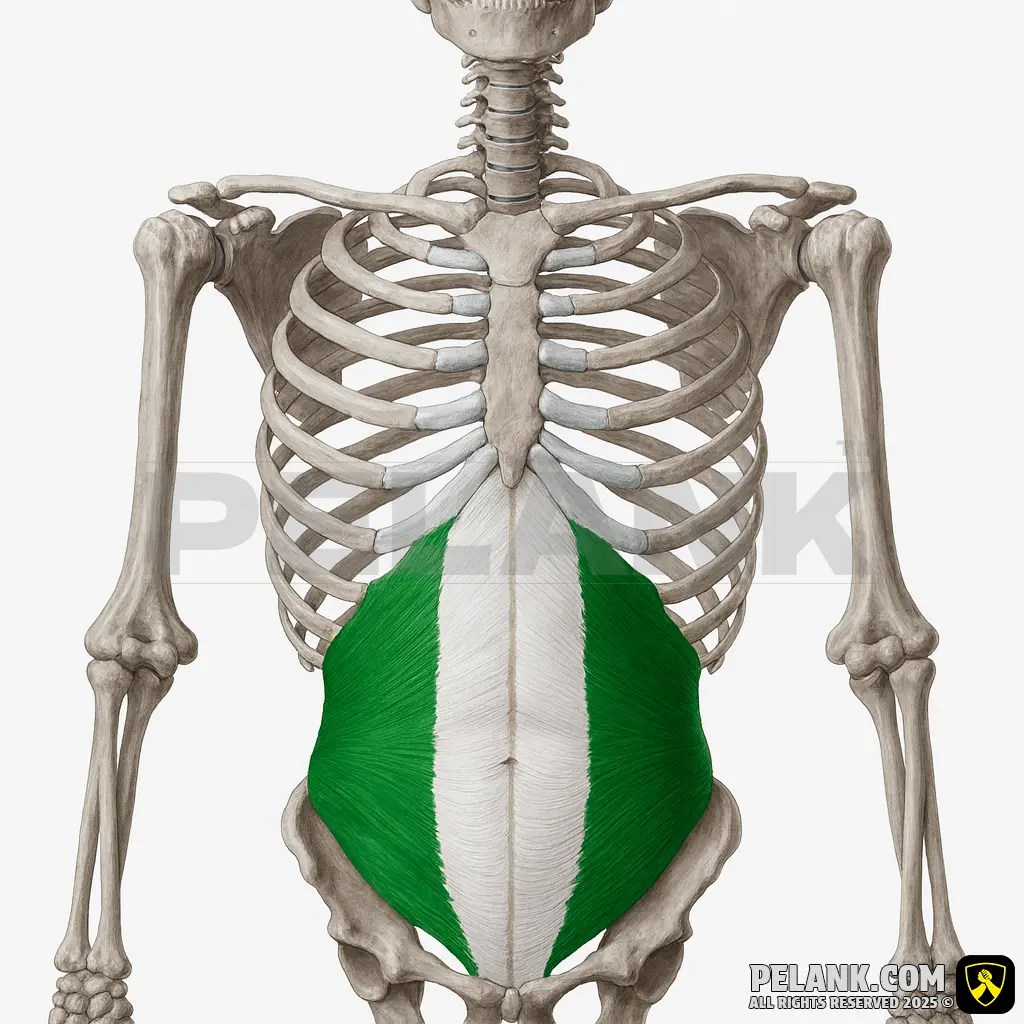
✅ Persian Name: Azole Mayel Dakheli
✅ Latin Name: Internal Oblique
✅ Common Name: Deep Side Abs | Internal Obliques
✅ Location:
🟡 This muscle lies beneath the external oblique, extending from the lower ribs to the pelvis and the Linea Alba.
🟡 It is deeper than the external oblique, but in some areas, it lies on top of the transverse abdominis muscle.
🟡 Its fibers run diagonally from bottom to top, opposite to the external oblique.
✅ 🦾 Origin
✔ Iliac Crest – The upper portion of the pelvic bone.
✔ Thoracolumbar Fascia – A strong connective tissue in the lumbar region.
✔ Inguinal Ligament – A band running between the pelvis and the groin.
✅ 🦿 Insertion
✔ Ribs 10-12
✔ Linea Alba – Located at the center of the abdomen and connected to the rectus abdominis muscle.
✅ 📌 Classification and Function
✔ Trunk Rotation – Works with the opposite external oblique muscle to create abdominal rotation (such as in Russian twists).
✔ Lateral Flexion – Assists in bending the sides, like in side planks.
✔ Compression of Abdominal Contents – Plays a role in strong exhalation and increasing intra-abdominal pressure.
✔ Maintaining trunk stability and supporting the spine during heavy movements such as deadlifts and squats.
✅ 💪🏻 Muscle Fiber Type
✔ A combination of ✔ A combination of slow-twitch fibers (Type I) and fast-twitch fibers (Type II). For maintaining endurance and power movements.
✅ 🏋🏻♂️ Role in Motor and Athletic Performance
✔ Active in all rotational and lateral movements such as bicycle crunches and Russian twists.
✔ Plays a key role in stabilizing the body’s core during weightlifting and athletic movements.
✅ 🧗🏻♂️ Muscle Strength and Endurance
✔ It has high endurance and plays a vital role in maintaining spinal and trunk stability.
✔ Weakness in this muscle can lead to trunk imbalance and reduced spinal stability.
🧠 Innervation
✔ Intercostal Nerves T8-T12
✔ Iliohypogastric & Ilioinguinal Nerves
🩸 Blood Supply
✔ Posterior Intercostal Arteries
✔ Inferior Epigastric Artery
✅ 🤼♂️ Role in Sports and Physical Activities
✔ Bodybuilding and Fitness: Plays an important role in rotational and lateral movements such as Russian twists and side planks.
✔ Martial Arts: This muscle plays a key role in rotation and body stability during boxing, kickboxing, wrestling, and MMA.
✔ Yoga and Pilates: Helps in stretching movements and improving body balance.
✅ 🏌🏻♂️ Connection with Other Muscles and Joints
✔ Interacts with the external oblique muscles, rectus abdominis, and transverse abdominis to create rotational and lateral trunk movements.
✔ Works together with the gluteal muscles and erector spinae in trunk stability and spinal balance.
✅ 💉 Vulnerability and Potential Issues
✔ Weakness in this muscle can lead to reduced body balance and increased risk of lower back pain.
✔ Muscle strain may occur due to sudden rotational movements or intense exercises.
✅ 🏋🏻♂️ Main exercises to strengthen the internal oblique muscle:
1️⃣ Russian Twists – Enhance rotational power of the torso
2️⃣ Bicycle Crunches – Combine rotation and endurance
3️⃣ Side Plank – Improve core stability and side strength
4️⃣ Oblique Crunches – Increase size and strength in the sides
5️⃣ Dumbbell Side Bends – Build strength in lateral movements
✅ 🧘🏻♀️ Stretching and Recovery Movements
✔ Cobra Stretch – Enhances torso flexibility
✔ Side Stretch – Reduces tension and improves range of motion
✅ Interesting Fact
✔ The internal oblique muscle works in conjunction with the opposite external oblique; that is, the right internal oblique coordinates with the left external oblique in trunk rotation!
✅ Practical Tip
✔ To have strong and firm sides, combine rotational and lateral exercises with weights for better muscle growth!
🟠 Anatomy: Fibers run opposite to the external oblique, extending upward and inward
🟡 Function: Rotation, lateral flexion, abdominal compression
🟢 Physiology: A combination of slow-twitch and fast-twitch fibers
🔵 Innervation: Intercostal nerves T8-T12 and lumbar nerves
🟣 Importance: Plays a key role in martial arts, bodybuilding, and yoga
🟤 Exercises: Russian Twists, Side Planks, Bicycle Crunches, Dumbbell Side Bends
⚫ Interesting Fact: Works with the opposite external oblique for trunk rotation.
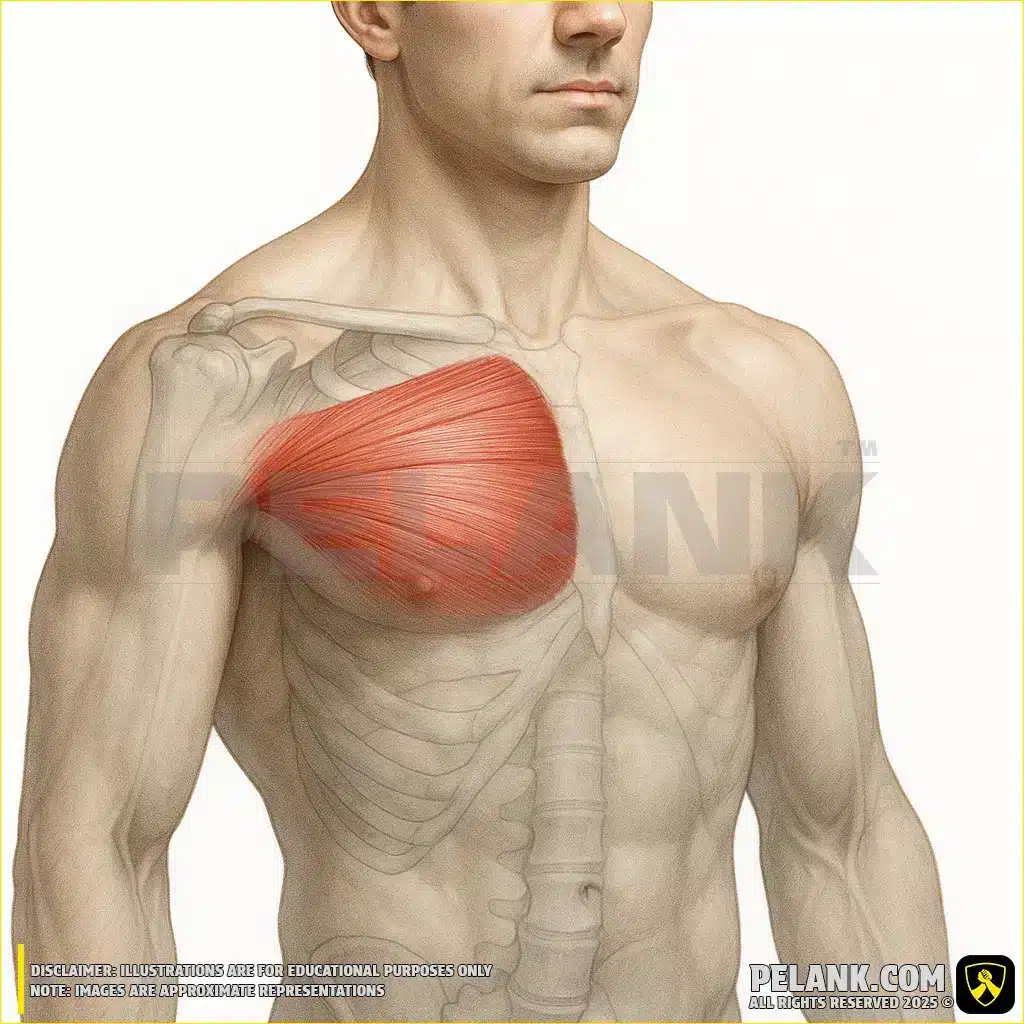
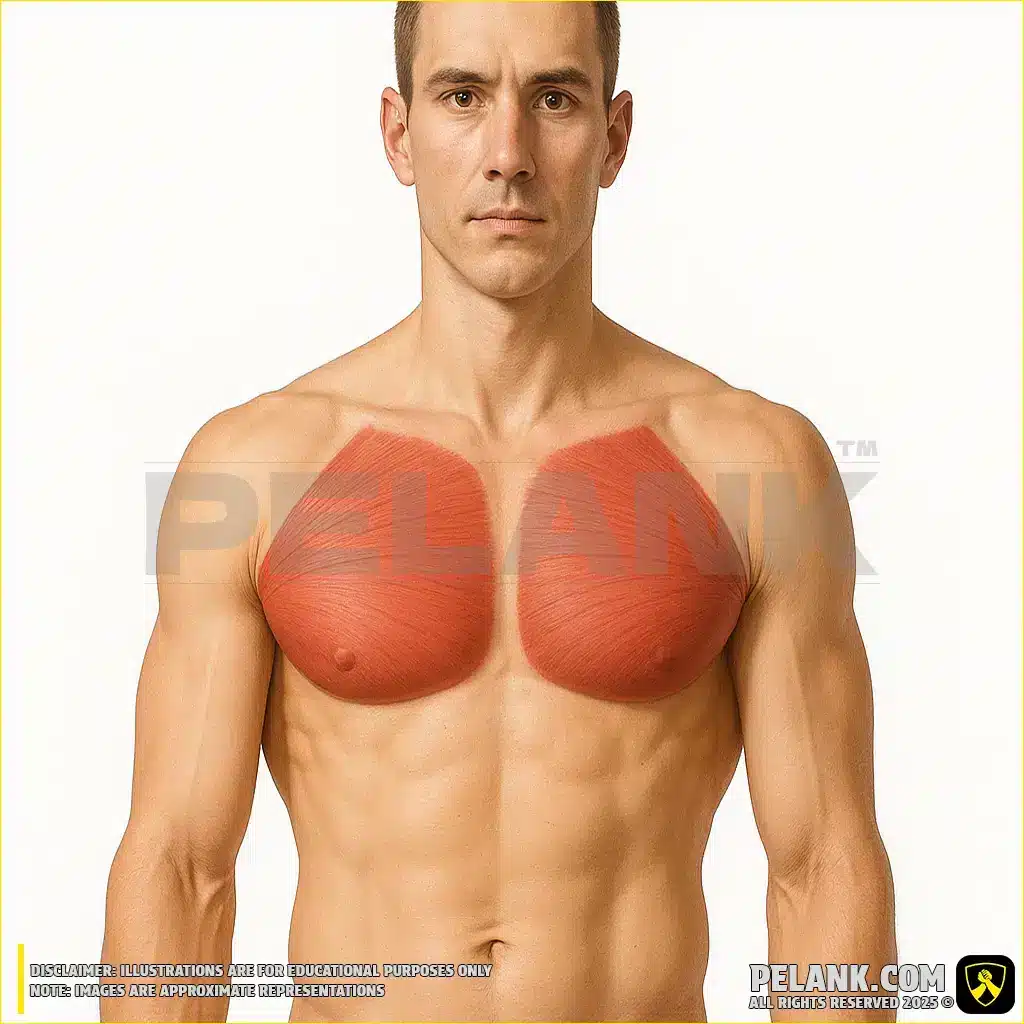
Pectoralis major Muscle
The pectoralis major, or large chest muscle, is one of the most important muscles of the thoracic region, located on the anterior part of the chest. This muscle is responsible for various shoulder movements such as adduction, rotation, and flexion of the arm. It plays a key role in pushing movements such as the bench press and push-ups. Strengthening this muscle improves upper-body strength, enhances chest aesthetics, and increases stability in strength training exercises.


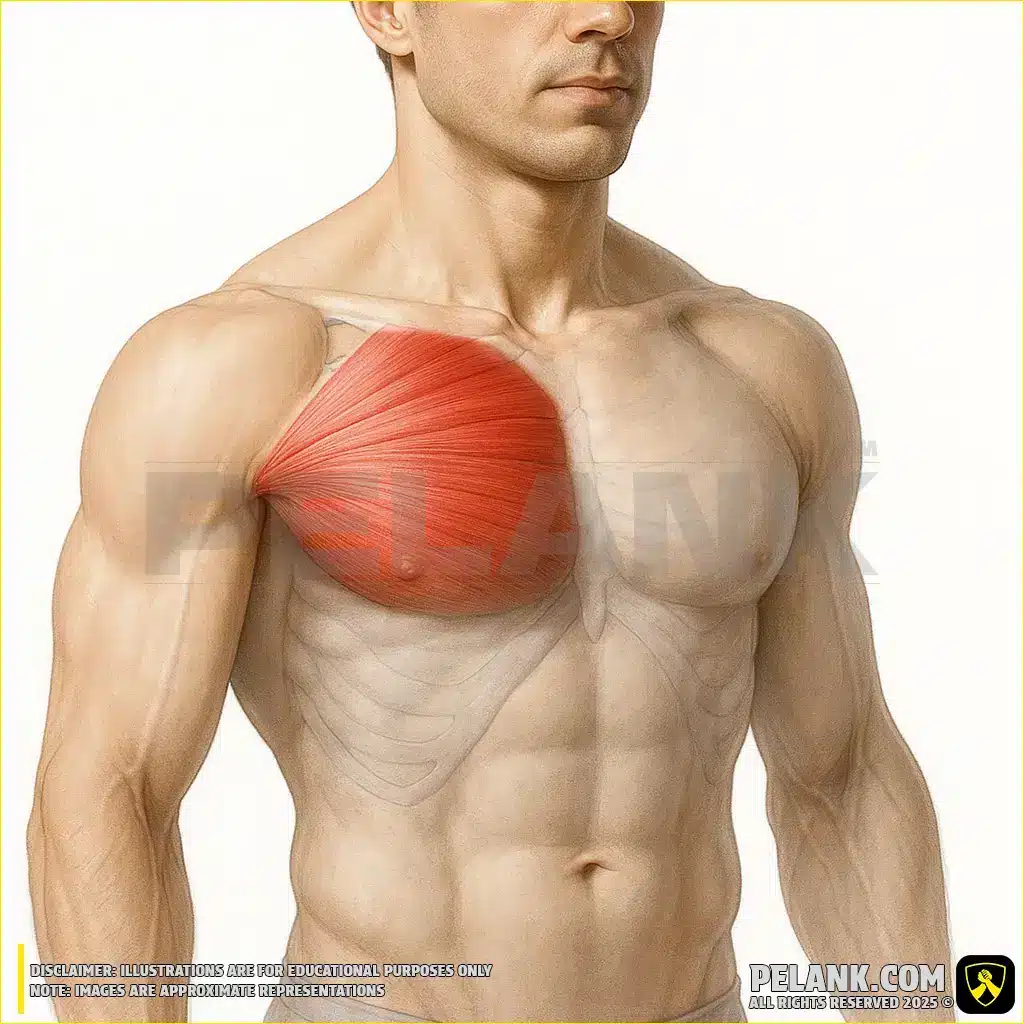

✅ Persian Name: Sinei Bozorg
✅ Latin Name: Pectoralis Major
✅ Common Name: Chest Muscle | Pecs
✅ Location
🟡 Positioned at the front of the chest, lying over the pectoralis minor muscle.
🟡 Originates from the clavicle, sternum, and ribs, and attaches to the humerus.
🟡 Plays a key role in pushing movements such as the bench press and push-ups.
✅ 🦾 Origin
✔ Medial part of the clavicle
✔ Sternum
✔ Ribs 1 to 6
✅ 🦿 Insertion
✔ Bicipital groove of the humerus
✅ 📌 Classification and Function
The pectoralis major muscle consists of two main parts:
1️⃣ Clavicular Head
✔ Responsible for raising the arm and moving it forward
✔ Active in movements such as the incline bench press
2️⃣ Sternocostal Head
✔ Responsible for adducting the arm inward and downward
✔ Active in movements such as the flat bench press and push-ups
✅ Main Functions:
✔ Flexion of the arm at the shoulder joint
✔ Adduction of the arm toward the body
✔ Internal rotation of the arm
✔ Assisting in pushing movements such as the bench press and push-ups
✅ 💪🏻 Muscle Fiber Type
✔ A combination of fast-twitch fibers for generating explosive power
✔ A small amount of slow-twitch fibers for maintaining muscular endurance
✅ 🏋🏻♂️ Role in Movement and Athletic Performance
✔ Primary muscle involved in bench press, parallel bar dips, push-ups, and cable flys
✔ Enhances upper body strength in bodybuilding, CrossFit, and boxing
✅ 🧗🏻♂️ Muscle Strength and Endurance
✔ A large and powerful muscle responsible for explosive upper body movements
✔ Strengthening it improves performance in all pushing exercises and helps prevent shoulder injuries
🧠 Innervation
✔ Medial & Lateral Pectoral Nerves
🩸 Blood Supply
✔ Lateral Thoracic Artery
✔ Internal Thoracic Artery
✅ 🤼♂️ Role in Sports and Physical Activities
✔ Bodybuilding: Bench press, parallel bar dips, cable crossovers
✔ Boxing & MMA: Delivering powerful punches and maintaining a defensive guard
✔ Pushing sports: Push-ups, dips, upper-body strength exercises
✅ 🏌🏻♂️ Interaction with Other Muscles and Joints
✔ Works in coordination with the anterior deltoid, triceps brachii, and pectoralis minor during pushing movements
✔ Strengthening it helps reduce stress on the shoulder joint and prevents injuries
✅ 💉 Vulnerability and Potential Issues
✔ Weakness in the muscle can lead to reduced upper body strength and poor posture
✔ Overstretching may result in tendon inflammation or partial tears
✅ 🏋🏻♂️ Main Exercises to Strengthen the Pectoralis Major
1️⃣ Barbell Bench Press
The best exercise for increasing chest strength and size
2️⃣ Incline Bench Press
Strengthens the clavicular head of the chest muscle
3️⃣ Parallel Bar Dips
Develop the size and strength of the pectoralis major muscle
4️⃣ Cable Crossover
Focuses on adducting and contracting the muscle
5️⃣ Dumbbell Fly
Stretches and strengthens the chest muscles
✅ 🧘🏻♀️ Stretching and Recovery Movements
✔ Chest stretch on the wall | Improves chest flexibility
✔ Standing chest stretch | Increases the range of motion of the shoulder and chest
✅ Fun Fact
✔ The pectoralis major is one of the strongest upper body muscles and plays a vital role in all strength-based sports.
✅ Practical Tip
✔ To build a well-developed and symmetrical chest, combine pushing exercises with stretching movements and focus on all areas of the muscle.
🔴 Name & Location
A large, superficial muscle at the front of the chest
🟠 Anatomy
Consists of two heads (clavicular and sternocostal) with different functions
🟡 Function
Adduction, internal rotation of the arm, and assistance in pushing movements
🟢 Physiology
A combination of fast- and slow-twitch fibers for power and endurance
🔵 Innervation
Medial and lateral pectoral nerves
🟣 Importance
Key in bodybuilding, boxing, swimming, and pushing movements
🟤 Exercises
Bench press, dips, cable crossovers, dumbbell flys
⚫ Fun Facts
The most important muscle for building upper-body strength and chest
Deltoideus Muscle
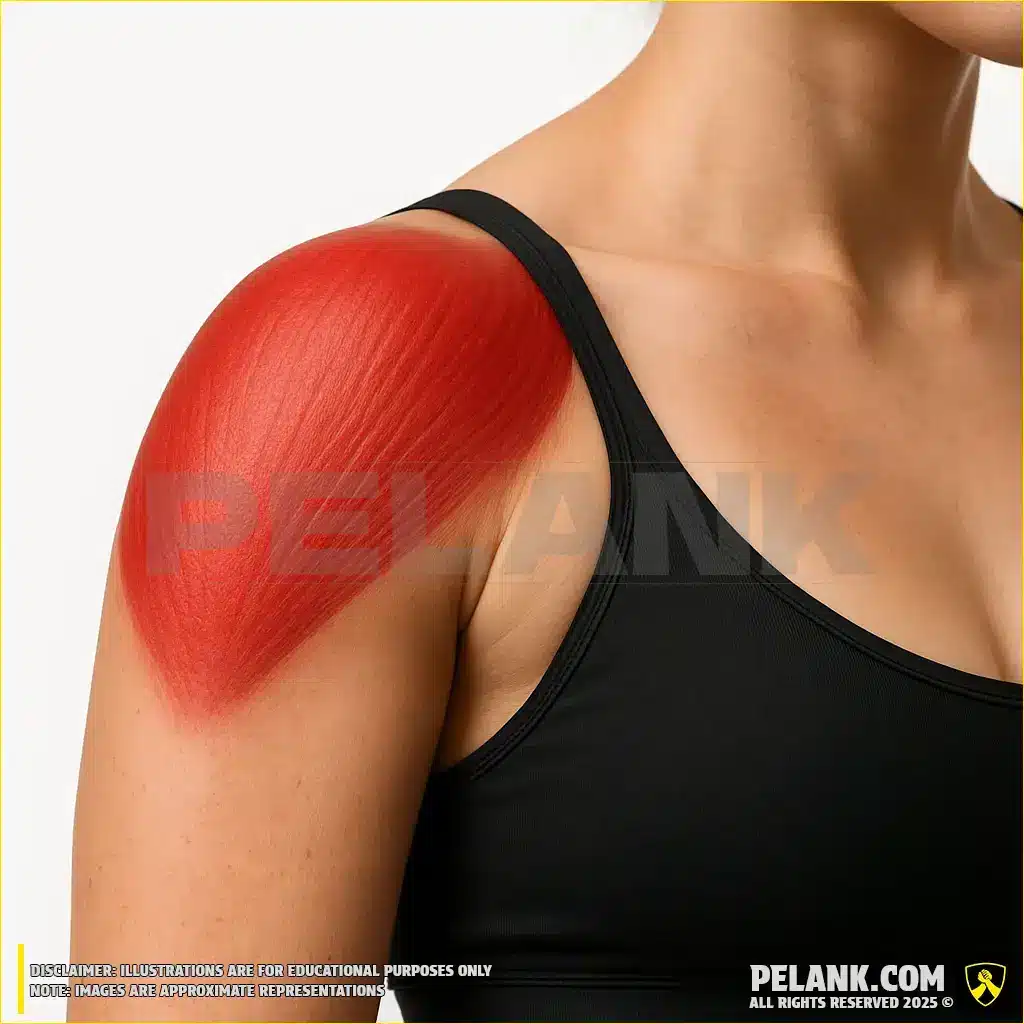
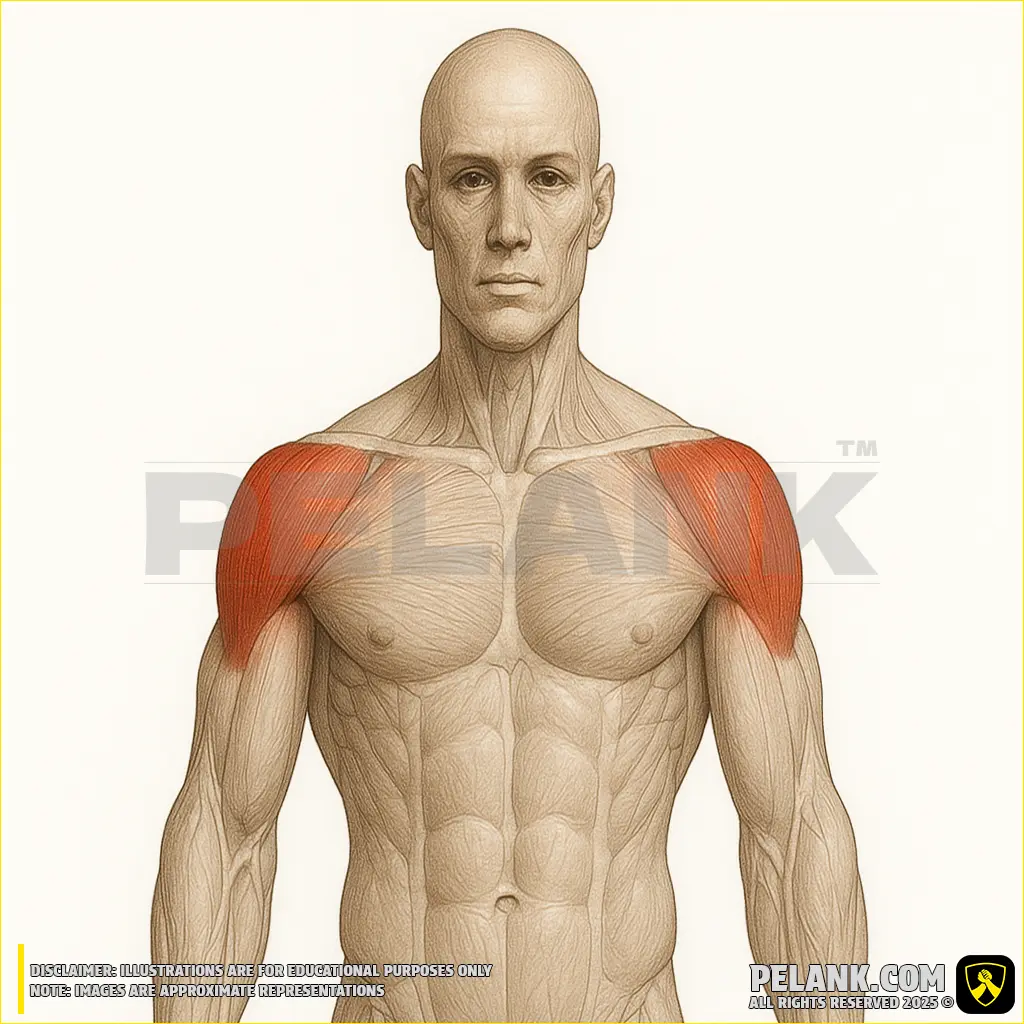
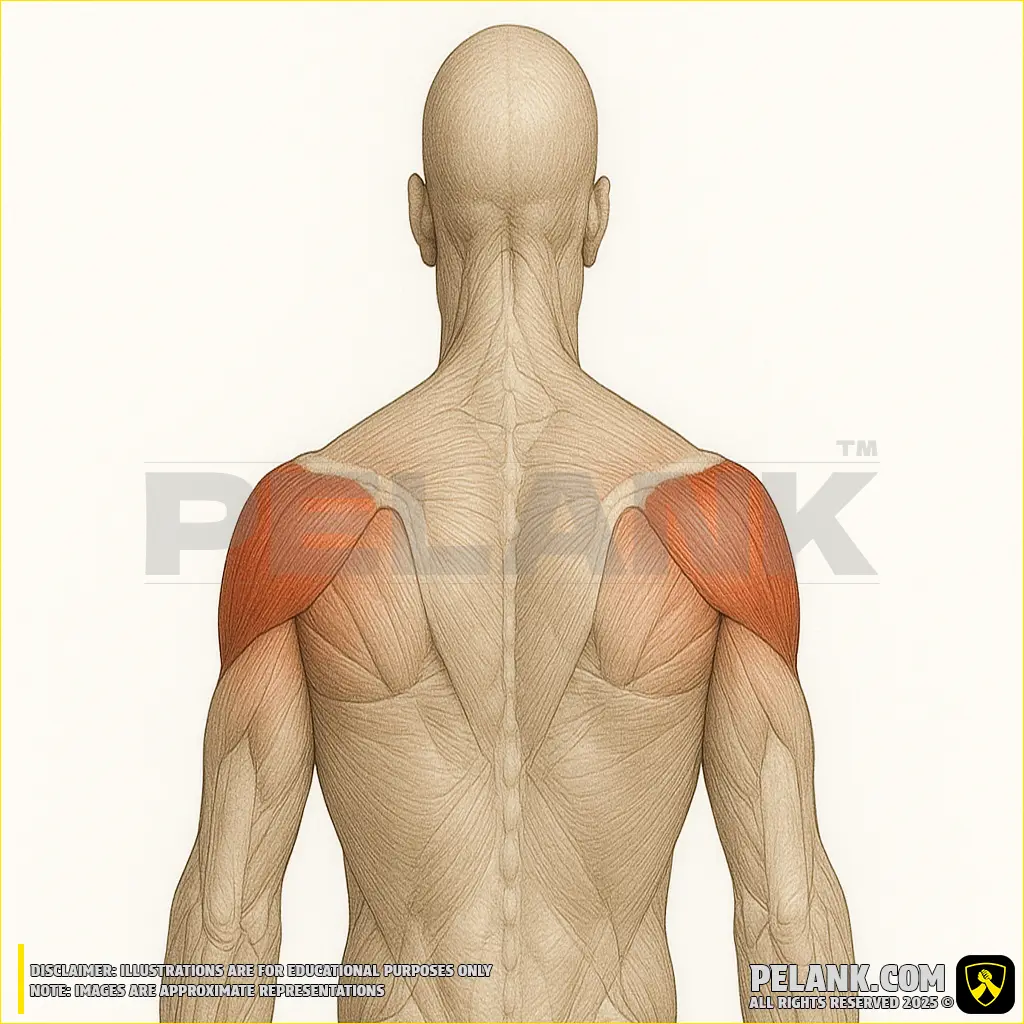
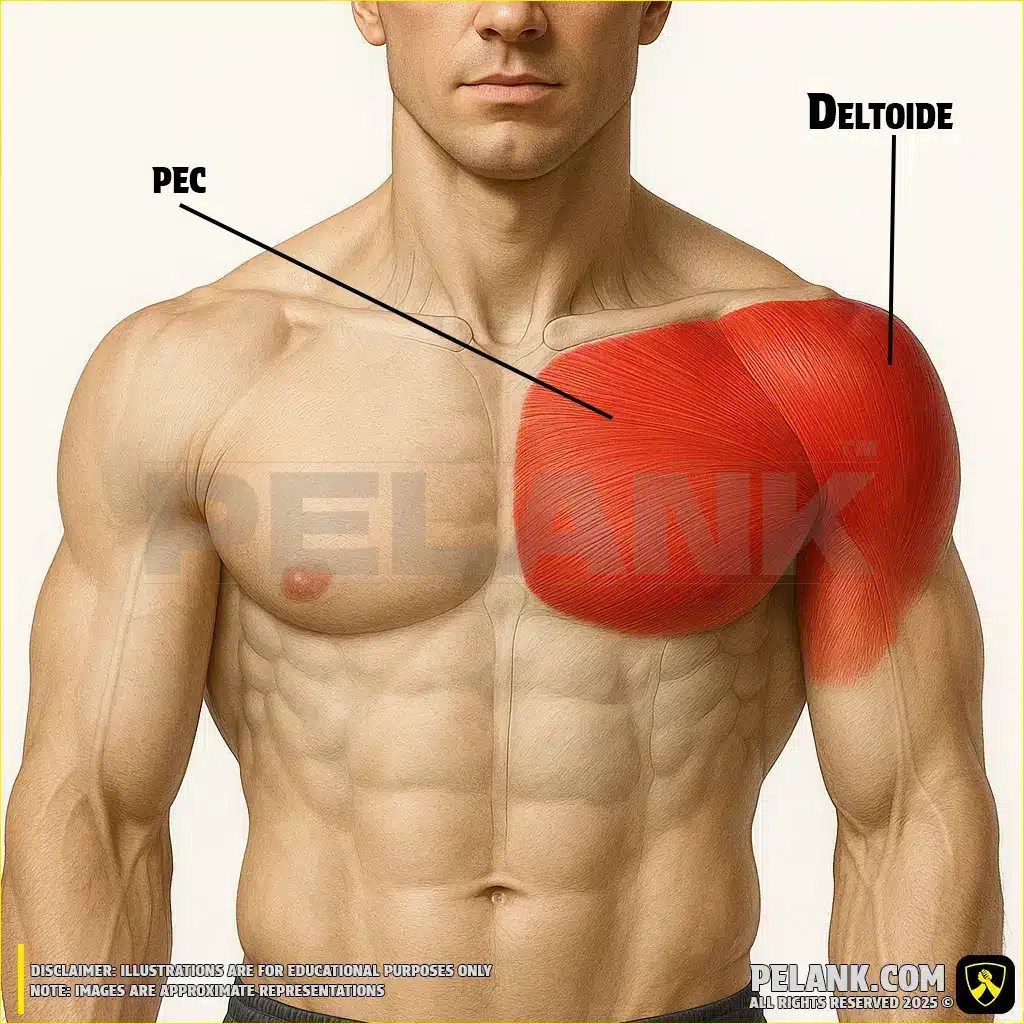
🔹 The deltoid muscle is one of the most important and voluminous muscles of the shoulder region. Its primary function is to move the arm in various directions and stabilize the shoulder joint. Due to its triangular shape, it is named “deltoid,” derived from the Greek word “Δέλτα” (delta), meaning triangle.
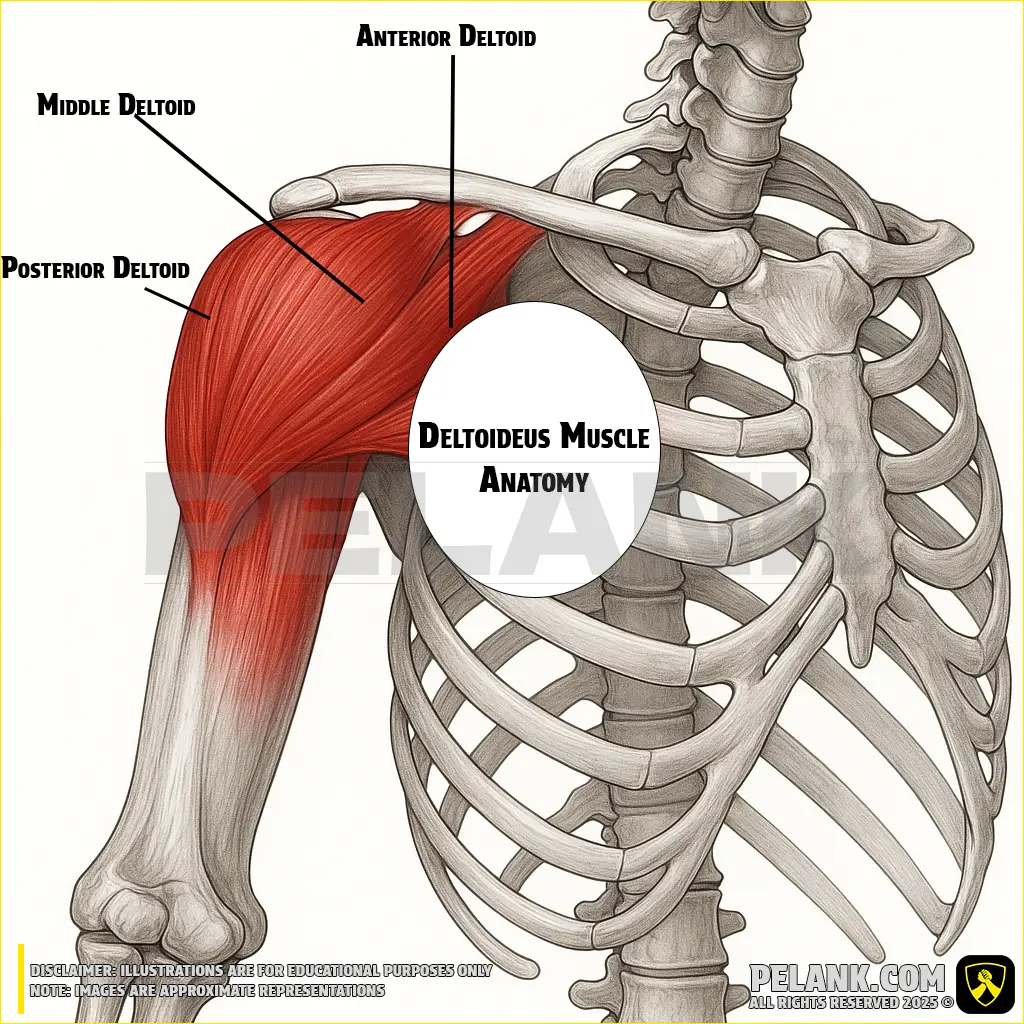
🔹 The deltoid muscle is divided into three distinct heads, each playing a specific role in shoulder movement. The anterior head assists in forward motions and arm flexion, the middle head is responsible for abduction and lifting the arm, and the posterior head supports extension and movements behind the body. This muscle is essential for the stability and strength of the shoulder joint, and its weakness can lead to limited range of motion, reduced shoulder power, and an increased risk of injury.



✅ Persian Name: Deltoeid
✅ Latin Name: Deltoideus
✅ Common Name: Shoulder Muscle
✅ Location:
🟡 A superficial muscle located at the top of the upper arm, covering the shoulder joint.
🟡 It forms a cap-like structure over the shoulder joint.
🟡 It directly overlays the head of the humerus and originates from the clavicle, scapula, and the upper part of the arm.
✅ 🔹 Origin
✔ Anterior part: from the outer surface of the clavicle
✔ Middle part: from the acromion, a portion of the scapula
✔ Posterior part: from the spine of the scapula
✅ 🔹 Insertion
✔ All parts of the deltoid muscle insert onto the deltoid tuberosity of the humerus.
✅ 🔹 Function
📌 The deltoid muscle is divided into three parts, each with a specific function:
1️⃣ Anterior Head
- ✔ Moving the arm forward (shoulder flexion)
- ✔ Internal rotation of the arm
- ✔ Assists in horizontal adduction of the arm (moving the arm forward across the body)
2️⃣ Middle Head
- ✔ Lifting the arm outward (shoulder abduction)
- ✔ Assists in stabilizing the shoulder during arm elevation
3️⃣ Posterior Head
- ✔ Moving the arm backward (shoulder extension)
- ✔ External rotation of the arm
- ✔ Assists in horizontal abduction of the arm (moving the arm backward across the body)
📌 Function Summary: The deltoid muscle plays a key role in all shoulder movements and is one of the primary muscles responsible for moving the arm in various directions.
✅ 💪🏻 Muscle Fiber Types
✔ The deltoid muscle consists of a combination of fiber types. ✔ A combination of slow-twitch fibers (Type I) and fast-twitch fibers (Type II). ✔ It is composed of both fiber types.
✔ The anterior and posterior heads contain more fast-twitch fibers, which are suited for powerful and rapid movements.
✔ The middle head has a higher proportion of slow-twitch fibers, which help maintain muscular endurance during sustained activity.
✅ 🏋🏻♂️ Role in Sports and Physical Activities
✔ Plays a key role in all overhead movements, such as shoulder press and bench press.
✔ Crucial for sports like weightlifting, swimming, gymnastics, and wrestling.
✔ Considered one of the primary muscles involved in carrying heavy objects, throwing, and raising the arm.
✅ 🧗🏻♂️ Strength and Endurance
✔ The deltoid plays a vital role in maintaining shoulder joint stability, and its weakness can reduce control over shoulder movements.
✔ This muscle is well-suited for both strength and endurance activities and is heavily engaged in many professional sports.
✅ 🧠 Innervation
✔ Axillary Nerve (also known as the underarm nerve) – responsible for controlling deltoid muscle movements and providing sensation to the shoulder area.
✅ 🩸 Blood Supply
✔ Posterior Circumflex Humeral Artery
✔ Thoracoacromial Artery
✅ 🤼♂️ Role in Sports and Physical Activities
✔ Directly involved in all shoulder and arm movements.
✔ A key muscle for athletes in bodybuilding, weightlifting, swimming, boxing, and combat sports.
✔ Strengthening this muscle improves shoulder shape, prevents injuries, and boosts upper body strength.
✅ 🏌🏻♂️ Interaction with Other Muscles and Joints
✔ Works closely with the rotator cuff muscles, back muscles, and pectoralis major.
✔ Weakness in this muscle can lead to excessive strain on the shoulder and scapular joints, increasing the risk of injury.
✅ 💉 Vulnerability and Potential Issues
✔ One of the most injury-prone muscles in bodybuilding and strength sports due to its crucial role in heavy movements.
✔ Common injuries include tears, strains, tendon inflammation, and cramps—often caused by improper use of heavy weights.
✅ 🏋🏻♂️ Strength Training Exercises for the Deltoid Muscle
1️⃣ Dumbbell or Barbell Shoulder Press – Strengthens all parts of the deltoid
2️⃣ Lateral Raise – Targets the middle head of the deltoid
3️⃣ Bent-Over Reverse Fly – Strengthens the posterior head of the deltoid
4️⃣ Front Raise with Dumbbell or Barbell – Focuses on the anterior head
5️⃣ Arnold Press – Activates all heads of the deltoid simultaneously
✅ 🧘🏻♀️ Stretching and Recovery
✔ Forward and backward shoulder stretches
✔ Wall walks with the hand to improve flexibility
✅ Fun Fact
✔ The deltoid muscle is actually one of the key muscles that shapes and enhances the appearance of the upper body.
✅ Practical Tip
✔ Overtraining the deltoid without strengthening the back and rotator cuff muscles can disrupt shoulder muscle balance.
🔴 Name and Location: A superficial muscle that covers the shoulder joint and originates from the clavicle, scapula, and humerus.
🟠 Anatomy: Composed of three parts—anterior, middle, and posterior—each responsible for different shoulder movements.
🟡 Function:
✔ Anterior: Arm flexion and internal rotation
✔ Middle: Arm abduction and elevation
✔ Posterior: Arm extension and external rotation
🟢 Physiology: A combination of slow- and fast-twitch fibers, allowing for both endurance and explosive power movements.
🔵 Innervation: Axillary nerve, which controls the muscle’s movement and sensation in the shoulder area.
🟣 Importance: Active in all upper-body movements, bodybuilding, weightlifting, swimming, boxing, and combat sports.
🟤 Exercises: Shoulder press, lateral raise, front raise, bent-over raise, Arnold press.
⚫ Fun Fact: A key muscle for shoulder strength and aesthetics, yet one of the most injury-prone muscles during heavy training.
Pelank Life | Body Health Assessment
The Best Body Health Calculators Using Scientific Methods
Developed by Pelank Life ©
Muscle training
Pelank is a comprehensive encyclopedia of the body’s muscles, providing an accurate and scientific review of all muscles. Below, you can find muscle groups. By clicking on each muscle group, you will have access to complete information about it, including:
1️⃣ Basic information about the muscle
2️⃣ Muscle anatomy
3️⃣ Muscle physiology
4️⃣ Innervation and blood supply
5️⃣ Importance of the muscle in the body and sports
6️⃣ Strengthening exercises
7️⃣ Scientific and interesting facts
📌 At the end, a summary review of each muscle will be provided.
Body muscles training guide link
🔹 The muscle group engaged in this movement is highlighted in color.
Sharing
References
✅ Official Physical Activity Guidelines
✅ General Overview and Recommendations for the Public
✅ Science-Based and Health-Oriented Education
✅ Policy Making and Comparative Data

Comments